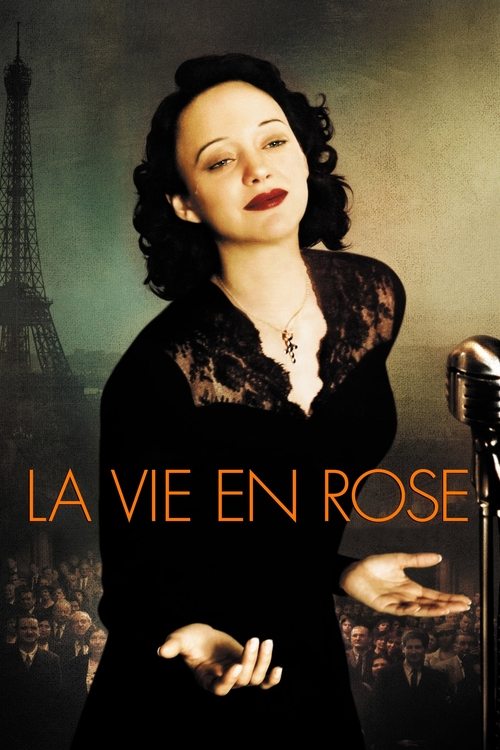
La Vie en Rose
From the mean streets of the Belleville district of Paris to the dazzling limelight of New York's most famous concert halls, Edith Piaf's life was a constant battle to sing and survive, to live and love. Raised in her grandmother's brothel, Piaf was discovered in 1935 by nightclub owner Louis Leplee, who persuaded her to sing despite her extreme nervousness. Piaf became one of France's immortal icons, her voice one of the indelible signatures of the 20th century.
Despite a moderate budget of $25.0M, La Vie en Rose became a financial success, earning $86.3M worldwide—a 245% return.
2 Oscars. 48 wins & 61 nominations


Plot Structure
Story beats plotted across runtime


Narrative Arc
Emotional journey through the story's key moments
Story Circle
Blueprint 15-beat structure
Arcplot Score Breakdown
Weighted: Precision (70%) + Arc (15%) + Theme (15%)
La Vie en Rose (2007) reveals precise narrative design, characteristic of Olivier Dahan's storytelling approach. This structural analysis examines how the film's 15-point plot structure maps to proven narrative frameworks across 2 hours and 20 minutes. With an Arcplot score of 7.4, the film balances conventional beats with creative variation.
Characters
Cast & narrative archetypes

Édith Piaf
Marcel Cerdan
Louis Barrier
Titine
Raymond Asso
Mômone
Louis Gassion
Main Cast & Characters
Édith Piaf
Played by Marion Cotillard
The legendary French singer who rises from poverty to international stardom, battling addiction and heartbreak throughout her turbulent life.
Marcel Cerdan
Played by Jean-Pierre Martins
The married French-Algerian boxer who becomes the love of Édith's life, offering her rare happiness before his tragic death.
Louis Barrier
Played by Gérard Depardieu
Édith's loyal manager and friend who discovers her potential and guides her career while trying to protect her from self-destruction.
Titine
Played by Emmanuelle Seigner
Édith's childhood friend and lifelong companion who remains devoted despite Édith's difficult behavior and addiction struggles.
Raymond Asso
Played by Marc Barbé
Édith's first manager and mentor who transforms her from a street singer into a professional artist and becomes her lover.
Mômone
Played by Sylvie Testud
Édith's friend from her street-singing days who becomes increasingly troubled by Édith's fame and eventually betrays her trust.
Louis Gassion
Played by Jean-Paul Rouve
Édith's father, a street acrobat who abandons her as a child and later tries to exploit her success.
Structural Analysis
The Status Quo at 2 minutes (1% through the runtime) establishes Elderly, dying Édith collapses backstage after a performance, establishing her broken state at life's end - the world she must transcend through memory and art.. Structural examination shows that this early placement immediately immerses viewers in the story world.
The inciting incident occurs at 17 minutes when Louis Leplée discovers young Édith singing on the street and offers her a contract to perform at his cabaret - the external event that disrupts her street life and offers escape from poverty.. At 12% through the film, this Disruption aligns precisely with traditional story structure. This beat shifts the emotional landscape, launching the protagonist into the central conflict.
The First Threshold at 35 minutes marks the transition into Act II, occurring at 25% of the runtime. This demonstrates the protagonist's commitment to Édith chooses to continue performing despite the scandal of Leplée's murder and public suspicion. Raymond Asso takes her on, marking her active decision to pursue stardom no matter the cost., moving from reaction to action.
At 72 minutes, the Midpoint arrives at 51% of the runtime—precisely centered, creating perfect narrative symmetry. Structural examination shows that this crucial beat Édith reaches the peak of artistic and romantic fulfillment - triumphant performance at the Versailles, deeply in love with Marcel. False victory: she believes she can have both love and career, but the stakes are about to raise catastrophically., fundamentally raising what's at risk. The emotional intensity shifts, dividing the narrative into clear before-and-after phases.
The Collapse moment at 104 minutes (74% through) represents the emotional nadir. Here, Marcel Cerdan dies in a plane crash while flying to see Édith - literal death of her one true love, the "whiff of death" that shatters her completely and accelerates her self-destructive spiral., illustrates the protagonist at their lowest point. This beat's placement in the final quarter sets up the climactic reversal.
The Second Threshold at 112 minutes initiates the final act resolution at 80% of the runtime. Despite her broken body and spirit, Édith realizes her art is the only immortality available - she chooses to perform "Non, je ne regrette rien" and synthesizes her suffering into transcendent performance., demonstrating the transformation achieved throughout the journey.
Emotional Journey
La Vie en Rose's emotional architecture traces a deliberate progression across 15 carefully calibrated beats.
Narrative Framework
This structural analysis employs structural analysis methodology used to understand storytelling architecture. By mapping La Vie en Rose against these established plot points, we can identify how Olivier Dahan utilizes or subverts traditional narrative conventions. The plot point approach reveals not only adherence to structural principles but also creative choices that distinguish La Vie en Rose within the music genre.
Olivier Dahan's Structural Approach
Among the 3 Olivier Dahan films analyzed on Arcplot, the average structural score is 7.2, reflecting strong command of classical structure. La Vie en Rose represents one of the director's most structurally precise works. For comparative analysis, explore the complete Olivier Dahan filmography.
Comparative Analysis
Additional music films include South Pacific, Dirty Dancing: Havana Nights and Yesterday. For more Olivier Dahan analyses, see Crimson Rivers II: Angels of the Apocalypse, Grace of Monaco.
Plot Points by Act
Act I
SetupStatus Quo
Elderly, dying Édith collapses backstage after a performance, establishing her broken state at life's end - the world she must transcend through memory and art.
Theme
Young Édith's father tells her "You have to feel it, live it" about singing - establishing the film's central theme that true artistry requires suffering and complete emotional surrender.
Worldbuilding
Nonlinear establishment of Édith's brutal childhood: abandoned by mother, raised in grandmother's brothel, traveling with circus father, childhood blindness and recovery. Sets up the poverty, neglect, and street survival that forged her.
Disruption
Louis Leplée discovers young Édith singing on the street and offers her a contract to perform at his cabaret - the external event that disrupts her street life and offers escape from poverty.
Resistance
Leplée mentors Édith, teaching her stagecraft and refinement. She resists changing her raw style. Her debut is successful but she struggles with fame's demands. Leplée's murder creates scandal that nearly destroys her career before it begins.
Act II
ConfrontationFirst Threshold
Édith chooses to continue performing despite the scandal of Leplée's murder and public suspicion. Raymond Asso takes her on, marking her active decision to pursue stardom no matter the cost.
Mirror World
Marcel Cerdan, the married boxer, enters Édith's life - the great love that will teach her both the heights of genuine connection and the depths of devastating loss, embodying the theme's promise and price.
Premise
The "promise of the premise" - Édith's meteoric rise to fame. World tours, adoring crowds, artistic triumphs, passionate affair with Marcel. The glamour and artistry the audience came to see, intercut with her later decline.
Midpoint
Édith reaches the peak of artistic and romantic fulfillment - triumphant performance at the Versailles, deeply in love with Marcel. False victory: she believes she can have both love and career, but the stakes are about to raise catastrophically.
Opposition
Édith's demons close in: jealousy, addiction, controlling behavior, health deterioration. Marcel's obligations to his family create conflict. Her impossible demands on those around her intensify. The morphine addiction takes hold.
Collapse
Marcel Cerdan dies in a plane crash while flying to see Édith - literal death of her one true love, the "whiff of death" that shatters her completely and accelerates her self-destructive spiral.
Crisis
Édith's dark night - complete emotional breakdown, deepening addiction, physical deterioration, desperate attempts to contact Marcel's spirit. She processes the unbearable loss through drugs and denial.
Act III
ResolutionSecond Threshold
Despite her broken body and spirit, Édith realizes her art is the only immortality available - she chooses to perform "Non, je ne regrette rien" and synthesizes her suffering into transcendent performance.
Synthesis
Édith's final performances and days. She transforms pain into art one last time, reconciles with her past, and faces death having given everything to her music. Her suffering becomes inseparable from her genius.
Transformation
Édith, now at peace, smiles as she remembers being young and in love - the transformation shows she has transcended regret. Where the Status Quo showed her broken and dying, the Transformation shows her eternal through art and memory.