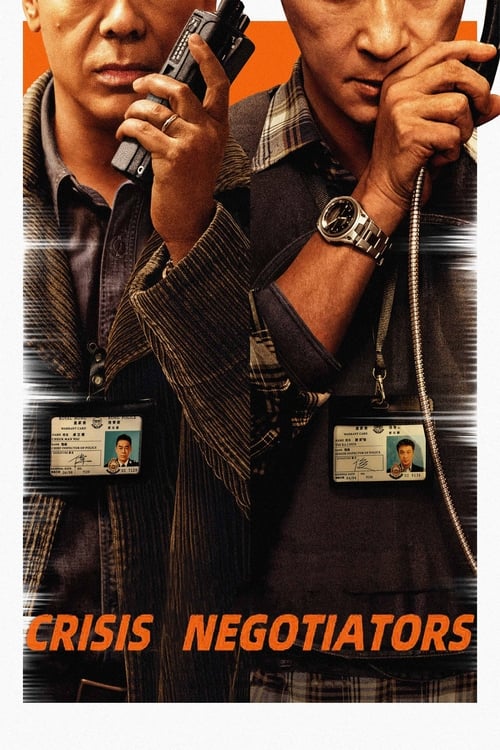
Crisis Negotiators
Negotiator expert Cheuk Man Wai unexpectedly becomes the prime suspect in a murder case. Forced into a corner, he occupies the police station, taking officers hostage, and demands negotiations with the former negotiator Tse Ka Chun. With Tse's expertise in psychological manipulation and Check's exceptional skills, they engage in a battle of wits. As the verbal sparring deepens, their positions and mindsets gradually change.
The film earned $21.9M at the global box office.
Plot Structure
Story beats plotted across runtime


Narrative Arc
Emotional journey through the story's key moments
Story Circle
Blueprint 15-beat structure
Structural Analysis
The Status Quo at 1 minutes (1% through the runtime) establishes Tse Ka-chun is established as an elite police negotiator in Hong Kong, successfully resolving a tense hostage situation using his psychological expertise and calm demeanor, showcasing his ordinary world of high-stakes verbal combat.. Of particular interest, this early placement immediately immerses viewers in the story world.
The inciting incident occurs at 14 minutes when A major crisis erupts when a building is seized by armed assailants, and Ka-chun discovers his trusted friend and fellow officer is somehow connected to the hostage-takers, shattering his sense of trust and stability.. At 12% through the film, this Disruption aligns precisely with traditional story structure. This beat shifts the emotional landscape, launching the protagonist into the central conflict.
The First Threshold at 30 minutes marks the transition into Act II, occurring at 25% of the runtime. This illustrates the protagonist's commitment to Ka-chun makes the irreversible choice to enter the building himself as lead negotiator despite the personal conflict of interest, crossing from his safe world of protocol into a dangerous situation where professional and personal stakes collide., moving from reaction to action.
At 60 minutes, the Midpoint arrives at 50% of the runtime—precisely centered, creating perfect narrative symmetry. The analysis reveals that this crucial beat False defeat: Ka-chun discovers the full scope of the conspiracy - his friend didn't betray them but was framed, and the real threat is far larger than a simple hostage situation. The stakes escalate dramatically as he realizes powerful forces are manipulating events., fundamentally raising what's at risk. The emotional intensity shifts, dividing the narrative into clear before-and-after phases.
The Collapse moment at 90 minutes (75% through) represents the emotional nadir. Here, All is lost when Ka-chun's friend is killed protecting hostages, and Ka-chun is framed as a collaborator with the criminals. He loses his badge, his reputation, and the trust of everyone he worked to protect - a death of his identity as a negotiator., shows the protagonist at their lowest point. This beat's placement in the final quarter sets up the climactic reversal.
The Second Threshold at 96 minutes initiates the final act resolution at 80% of the runtime. Ka-chun synthesizes his negotiator training with the personal lessons learned - that trust must be earned through action, not words. He devises a plan to expose the real criminals by using himself as bait, choosing to negotiate not for the police but for the truth., demonstrating the transformation achieved throughout the journey.
Emotional Journey
Crisis Negotiators's emotional architecture traces a deliberate progression across 15 carefully calibrated beats.
Narrative Framework
This structural analysis employs systematic plot point analysis that identifies crucial turning points. By mapping Crisis Negotiators against these established plot points, we can identify how Herman Yau utilizes or subverts traditional narrative conventions. The plot point approach reveals not only adherence to structural principles but also creative choices that distinguish Crisis Negotiators within the action genre.
Herman Yau's Structural Approach
Among the 2 Herman Yau films analyzed on Arcplot, the average structural score is 6.8, demonstrating varied approaches to story architecture. Crisis Negotiators exemplifies the director's characteristic narrative technique. For comparative analysis, explore the complete Herman Yau filmography.
Comparative Analysis
Additional action films include The Bad Guys, Puss in Boots and Venom: The Last Dance. For more Herman Yau analyses, see Shock Wave 2.
Plot Points by Act
Act I
SetupStatus Quo
Tse Ka-chun is established as an elite police negotiator in Hong Kong, successfully resolving a tense hostage situation using his psychological expertise and calm demeanor, showcasing his ordinary world of high-stakes verbal combat.
Theme
A senior colleague tells Ka-chun that "the hardest person to negotiate with is yourself" - foreshadowing his internal struggle between duty and personal loyalty that will define his journey.
Worldbuilding
The setup establishes Ka-chun's position in the Negotiation Cadre, his relationships with fellow officers including his mentor and close friend, the hierarchical police structure, and his reputation as one of the best negotiators on the force.
Disruption
A major crisis erupts when a building is seized by armed assailants, and Ka-chun discovers his trusted friend and fellow officer is somehow connected to the hostage-takers, shattering his sense of trust and stability.
Resistance
Ka-chun grapples with the revelation about his friend while being assigned to lead negotiations. He debates whether to report his suspicions or investigate quietly, receiving guidance from his mentor about the complexities of loyalty versus duty.
Act II
ConfrontationFirst Threshold
Ka-chun makes the irreversible choice to enter the building himself as lead negotiator despite the personal conflict of interest, crossing from his safe world of protocol into a dangerous situation where professional and personal stakes collide.
Mirror World
Ka-chun encounters a hostage who reflects his own internal conflict - someone forced to choose between self-preservation and protecting others. This relationship will teach him that true negotiation requires vulnerability and trust.
Premise
The promise of the premise delivers intense negotiation sequences, tactical maneuvering, and psychological warfare. Ka-chun uses his skills to buy time, establish rapport with the hostage-takers, and secretly investigate the conspiracy while navigating the deadly standoff.
Midpoint
False defeat: Ka-chun discovers the full scope of the conspiracy - his friend didn't betray them but was framed, and the real threat is far larger than a simple hostage situation. The stakes escalate dramatically as he realizes powerful forces are manipulating events.
Opposition
The true antagonists close in as Ka-chun's investigation threatens to expose them. Negotiations break down, hostages are endangered, his team loses trust in him, and the mastermind begins eliminating loose ends. Every tactical advantage Ka-chun gained is systematically dismantled.
Collapse
All is lost when Ka-chun's friend is killed protecting hostages, and Ka-chun is framed as a collaborator with the criminals. He loses his badge, his reputation, and the trust of everyone he worked to protect - a death of his identity as a negotiator.
Crisis
In the dark night of the soul, Ka-chun processes the death of his friend and the destruction of his career. Stripped of his authority and resources, he must confront whether he can still fight for justice when the system has turned against him.
Act III
ResolutionSecond Threshold
Ka-chun synthesizes his negotiator training with the personal lessons learned - that trust must be earned through action, not words. He devises a plan to expose the real criminals by using himself as bait, choosing to negotiate not for the police but for the truth.
Synthesis
The finale unleashes as Ka-chun executes his plan, confronting the mastermind in a final negotiation where words become weapons. He outmaneuvers the villain psychologically, secures evidence of the conspiracy, and clears his friend's name in a climactic showdown.
Transformation
Ka-chun stands at his friend's memorial, no longer the by-the-book negotiator but someone who understands that true justice sometimes requires breaking protocol. He has transformed from a man who negotiated for the system to one who negotiates for human truth.