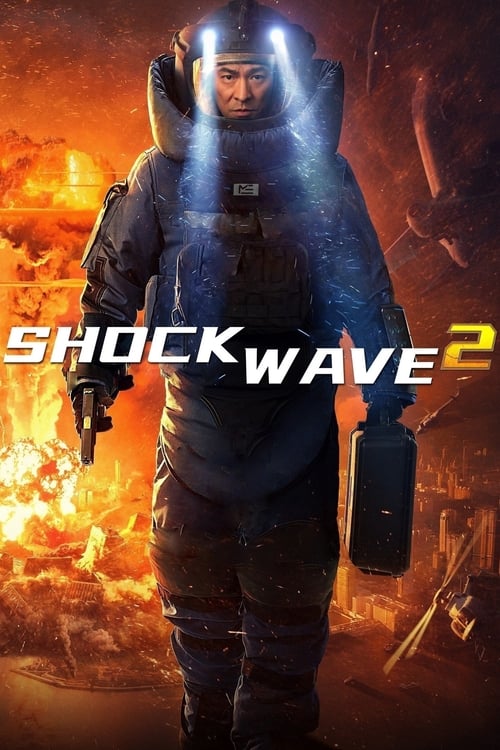
Shock Wave 2
After suffering life changing injuries in the line of duty, bomb disposal officer Fung turns his back on the police. But when a devastating series of bombings sweep Hong Kong, the police suspect their former ally may be involved after he is found unconscious at a crime scene. Now faced with memory loss and recalling only fragments of his former life, Fung sets out to uncover the truth and find out who he really is.
Despite a moderate budget of $40.0M, Shock Wave 2 became a commercial success, earning $226.4M worldwide—a 466% return.


Plot Structure
Story beats plotted across runtime


Narrative Arc
Emotional journey through the story's key moments
Story Circle
Blueprint 15-beat structure
Arcplot Score Breakdown
Weighted: Precision (70%) + Arc (15%) + Theme (15%)
Shock Wave 2 (2020) exhibits precise narrative architecture, characteristic of Herman Yau's storytelling approach. This structural analysis examines how the film's 15-point plot structure maps to proven narrative frameworks across 2 hours. With an Arcplot score of 6.8, the film balances conventional beats with creative variation.
Characters
Cast & narrative archetypes

Pong Ling
Pong Ling (Vengeful)
Tung Cheuk-man
Pong Ling's Ex-Wife
Dong Zhuowen
Main Cast & Characters
Pong Ling
Played by Andy Lau
Former bomb disposal expert who wakes with amnesia after an explosion and becomes the prime suspect in a terrorist bombing campaign
Pong Ling (Vengeful)
Played by Andy Lau
Alternate personality - the actual terrorist mastermind with intact memories seeking revenge against corruption
Tung Cheuk-man
Played by Lau Ching-wan
Police inspector leading the investigation into the bombing case, torn between duty and belief in Pong's innocence
Pong Ling's Ex-Wife
Played by Ni Ni
Pong's former wife who becomes entangled in the investigation and helps uncover the truth
Dong Zhuowen
Played by Ron Ng
Bomb disposal unit member and colleague who works to understand what happened to Pong
Structural Analysis
The Status Quo at 1 minutes (1% through the runtime) establishes Poon Shing-fung is shown as a dedicated bomb disposal officer, working with his team to defuse explosives. His identity as a skilled, honorable officer is established before everything changes.. Of particular interest, this early placement immediately immerses viewers in the story world.
The inciting incident occurs at 14 minutes when A massive explosion at the Hong Kong airport kills multiple officers and costs Poon his leg. He wakes from a coma with amnesia, unable to remember if he's a hero or the terrorist responsible for the bombing.. At 12% through the film, this Disruption aligns precisely with traditional story structure. This beat shifts the emotional landscape, launching the protagonist into the central conflict.
The First Threshold at 30 minutes marks the transition into Act II, occurring at 25% of the runtime. This demonstrates the protagonist's commitment to Poon escapes police custody when new evidence surfaces linking him to the terrorist organization Vendetta. He chooses to go underground to investigate his own past rather than face arrest, crossing into a world where he's a fugitive., moving from reaction to action.
At 60 minutes, the Midpoint arrives at 50% of the runtime—precisely centered, creating perfect narrative symmetry. Of particular interest, this crucial beat Poon recovers memories revealing he did join Vendetta, but the truth remains murky. Video evidence seems to show him planting bombs, raising the stakes as he realizes he may truly be guilty. False defeat as his hope of innocence crumbles., fundamentally raising what's at risk. The emotional intensity shifts, dividing the narrative into clear before-and-after phases.
The Collapse moment at 90 minutes (75% through) represents the emotional nadir. Here, Pong Ling is killed in an explosion meant for Poon. He loses the one person who believed in his innocence. His darkest moment combines grief with the crushing weight of guilt, whether he's responsible directly or not., demonstrates the protagonist at their lowest point. This beat's placement in the final quarter sets up the climactic reversal.
The Second Threshold at 96 minutes initiates the final act resolution at 80% of the runtime. Poon's full memory returns, revealing he was undercover the entire time. The real bomber is his former partner Tung Cheuk-man. Armed with the truth, Poon commits to stopping the final attack on Hong Kong's cross-harbor tunnel., demonstrating the transformation achieved throughout the journey.
Emotional Journey
Shock Wave 2's emotional architecture traces a deliberate progression across 15 carefully calibrated beats.
Narrative Framework
This structural analysis employs proven narrative structure principles that track dramatic progression. By mapping Shock Wave 2 against these established plot points, we can identify how Herman Yau utilizes or subverts traditional narrative conventions. The plot point approach reveals not only adherence to structural principles but also creative choices that distinguish Shock Wave 2 within the action genre.
Herman Yau's Structural Approach
Among the 2 Herman Yau films analyzed on Arcplot, the average structural score is 6.8, demonstrating varied approaches to story architecture. Shock Wave 2 exemplifies the director's characteristic narrative technique. For comparative analysis, explore the complete Herman Yau filmography.
Comparative Analysis
Additional action films include The Bad Guys, Puss in Boots and Venom: The Last Dance. For more Herman Yau analyses, see Crisis Negotiators.
Plot Points by Act
Act I
SetupStatus Quo
Poon Shing-fung is shown as a dedicated bomb disposal officer, working with his team to defuse explosives. His identity as a skilled, honorable officer is established before everything changes.
Theme
A colleague remarks about how one's true nature is revealed when pushed to extremes, questioning what defines a person's identity when memory and circumstance strip away everything familiar.
Worldbuilding
The bomb disposal unit's world is established through a tense airport operation. Poon's relationship with his girlfriend Pong Ling and his professional standing are shown, setting up the stakes of his ordinary life.
Disruption
A massive explosion at the Hong Kong airport kills multiple officers and costs Poon his leg. He wakes from a coma with amnesia, unable to remember if he's a hero or the terrorist responsible for the bombing.
Resistance
Poon struggles with his lost identity and prosthetic leg. Police suspect him of being the bomber. He debates whether to accept the terrorist identity others assign him or fight to uncover the truth about who he really is.
Act II
ConfrontationFirst Threshold
Poon escapes police custody when new evidence surfaces linking him to the terrorist organization Vendetta. He chooses to go underground to investigate his own past rather than face arrest, crossing into a world where he's a fugitive.
Mirror World
Pong Ling reconnects with Poon despite the danger, representing his lost life and the love that persists beyond memory. Their relationship becomes the emotional anchor as he questions his identity.
Premise
Poon investigates his own past while evading capture. He discovers fragments of memory suggesting he may have infiltrated Vendetta as an undercover operative. Action sequences showcase his retained bomb disposal skills despite his disability.
Midpoint
Poon recovers memories revealing he did join Vendetta, but the truth remains murky. Video evidence seems to show him planting bombs, raising the stakes as he realizes he may truly be guilty. False defeat as his hope of innocence crumbles.
Opposition
Vendetta escalates attacks on Hong Kong infrastructure. Poon is hunted by both police and terrorists. His former colleagues turn against him. The real mastermind manipulates events to frame Poon completely while executing a larger attack plan.
Collapse
Pong Ling is killed in an explosion meant for Poon. He loses the one person who believed in his innocence. His darkest moment combines grief with the crushing weight of guilt, whether he's responsible directly or not.
Crisis
Poon grieves and nearly surrenders to despair. Memories continue to surface as he processes Pong Ling's death. He must decide whether his life has any meaning or if he should simply let the authorities take him.
Act III
ResolutionSecond Threshold
Poon's full memory returns, revealing he was undercover the entire time. The real bomber is his former partner Tung Cheuk-man. Armed with the truth, Poon commits to stopping the final attack on Hong Kong's cross-harbor tunnel.
Synthesis
Poon races to the tunnel where multiple bombs threaten thousands. He confronts Tung in a climactic battle, using his bomb disposal expertise and accepting his identity as a protector. The finale combines his technical skills with his rediscovered sense of purpose.
Transformation
Poon sacrifices himself to detonate the final bomb away from civilians, completing his arc from confused amnesiac to self-aware hero. His identity is restored posthumously as a decorated officer who gave everything to protect Hong Kong.