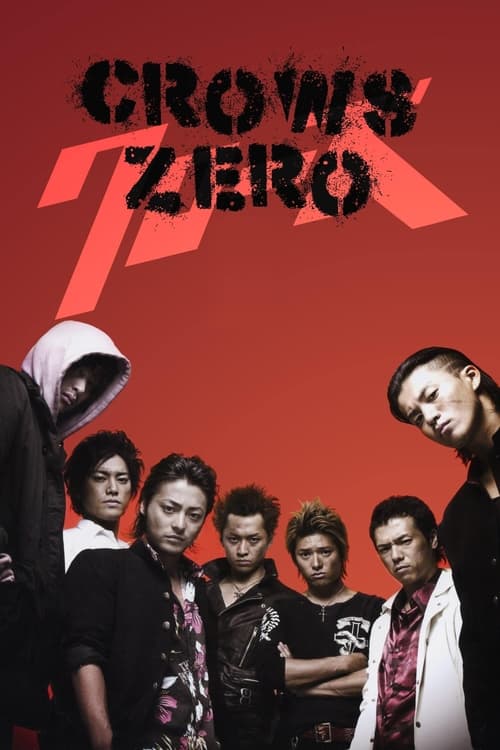
Crows Zero
The students of Suzuran High compete for the King of School title. An ex-graduate yakuza is sent to kill the son of a criminal group, but he can't make himself do it as he reminds him of his youth.
The film earned $22.0M at the global box office.
Plot Structure
Story beats plotted across runtime


Narrative Arc
Emotional journey through the story's key moments
Story Circle
Blueprint 15-beat structure
Arcplot Score Breakdown
Weighted: Precision (70%) + Arc (15%) + Theme (15%)
Crows Zero (2007) exhibits carefully calibrated plot construction, characteristic of Takashi Miike's storytelling approach. This structural analysis examines how the film's 15-point plot structure maps to proven narrative frameworks across 2 hours and 10 minutes. With an Arcplot score of 7.4, the film balances conventional beats with creative variation.
Structural Analysis
The Status Quo at 2 minutes (1% through the runtime) establishes Suzuran High School is introduced as an all-boys school that has never been unified under one leader. Students fight constantly for dominance in a chaotic, lawless environment.. Of particular interest, this early placement immediately immerses viewers in the story world.
The inciting incident occurs at 16 minutes when Genji witnesses Serizawa's overwhelming power firsthand when Serizawa and his GPS crew brutally defeat challengers. Genji realizes conquering Suzuran will be far more difficult than expected.. At 12% through the film, this Disruption aligns precisely with traditional story structure. This beat shifts the emotional landscape, launching the protagonist into the central conflict.
The First Threshold at 32 minutes marks the transition into Act II, occurring at 25% of the runtime. This reveals the protagonist's commitment to Genji makes his formal declaration to conquer Suzuran by challenging and defeating Tokio's faction. He commits fully to the war for dominance, establishing his GPS-rival faction and making himself a target., moving from reaction to action.
At 66 minutes, the Midpoint arrives at 50% of the runtime—precisely centered, creating perfect narrative symmetry. Notably, this crucial beat Genji successfully recruits Tokaji and gains enough strength to directly challenge Serizawa. His faction is now large enough to threaten GPS dominance. False victory: Genji believes he's ready to take on Serizawa., fundamentally raising what's at risk. The emotional intensity shifts, dividing the narrative into clear before-and-after phases.
The Collapse moment at 97 minutes (74% through) represents the emotional nadir. Here, Genji's close friend Chuta is severely injured in an ambush by a rival school (Housen). Genji realizes his quest for dominance has put his friends in danger. The "death" of his innocent motivation—he can't just fight for pride anymore., demonstrates the protagonist at their lowest point. This beat's placement in the final quarter sets up the climactic reversal.
The Second Threshold at 105 minutes initiates the final act resolution at 81% of the runtime. Genji unites all of Suzuran (including Serizawa's GPS) to fight together against the external threat from Housen. He chooses brotherhood over personal ambition, embodying true leadership. Serizawa and Genji agree to postpone their rivalry., demonstrating the transformation achieved throughout the journey.
Emotional Journey
Crows Zero's emotional architecture traces a deliberate progression across 15 carefully calibrated beats.
Narrative Framework
This structural analysis employs a 15-point narrative structure framework that maps key story moments. By mapping Crows Zero against these established plot points, we can identify how Takashi Miike utilizes or subverts traditional narrative conventions. The plot point approach reveals not only adherence to structural principles but also creative choices that distinguish Crows Zero within the action genre.
Takashi Miike's Structural Approach
Among the 8 Takashi Miike films analyzed on Arcplot, the average structural score is 7.0, reflecting strong command of classical structure. Crows Zero represents one of the director's most structurally precise works. For comparative analysis, explore the complete Takashi Miike filmography.
Comparative Analysis
Additional action films include The Ministry of Ungentlemanly Warfare, The Bad Guys and Lake Placid. For more Takashi Miike analyses, see One Missed Call, Crows Zero II and Lesson of the Evil.
Plot Points by Act
Act I
SetupStatus Quo
Suzuran High School is introduced as an all-boys school that has never been unified under one leader. Students fight constantly for dominance in a chaotic, lawless environment.
Theme
Ken Katagiri tells Genji that 'Leadership isn't about being the strongest fighter, it's about earning loyalty.' This establishes the central theme of true leadership versus brute force.
Worldbuilding
Genji Takiya arrives at Suzuran as a transfer student. We learn he's the son of a yakuza boss who wants him to conquer the school. The warring factions are introduced: Serizawa's GPS faction dominates, but other groups resist. Genji meets Ken, a dropout who becomes his advisor.
Disruption
Genji witnesses Serizawa's overwhelming power firsthand when Serizawa and his GPS crew brutally defeat challengers. Genji realizes conquering Suzuran will be far more difficult than expected.
Resistance
Ken advises Genji on strategy: recruit allies, build a faction, and take down Serizawa's supporting members first. Genji hesitates, unsure if he can inspire loyalty. He begins recruiting: first Chuta, then Makise, gradually building his own crew while learning about faction politics.
Act II
ConfrontationFirst Threshold
Genji makes his formal declaration to conquer Suzuran by challenging and defeating Tokio's faction. He commits fully to the war for dominance, establishing his GPS-rival faction and making himself a target.
Mirror World
Ruka is introduced as a potential love interest who works at a meteorology center. She represents the normal world outside Suzuran's violence and challenges Genji to think beyond fighting.
Premise
The fun of gang warfare: Genji systematically recruits fighters and defeats rival factions. Major recruitment victories include bringing in Izaki and the monstrous Chuta. Training montages, street fights, and faction battles. Genji's crew grows stronger and gains respect.
Midpoint
Genji successfully recruits Tokaji and gains enough strength to directly challenge Serizawa. His faction is now large enough to threaten GPS dominance. False victory: Genji believes he's ready to take on Serizawa.
Opposition
Serizawa retaliates by attacking Genji's allies. Internal conflicts emerge within Genji's faction as members question his leadership style. Genji's arrogance creates friction. Ken's past with Suzuran's legendary fighter Rindaman is revealed, adding complexity. The respect between Genji and Serizawa grows even as they prepare for war.
Collapse
Genji's close friend Chuta is severely injured in an ambush by a rival school (Housen). Genji realizes his quest for dominance has put his friends in danger. The "death" of his innocent motivation—he can't just fight for pride anymore.
Crisis
Genji reflects on what true leadership means. He visits Chuta in the hospital and confronts his own selfishness. Ken reminds him that Suzuran has never been unified because no one fought for their brothers—only for themselves.
Act III
ResolutionSecond Threshold
Genji unites all of Suzuran (including Serizawa's GPS) to fight together against the external threat from Housen. He chooses brotherhood over personal ambition, embodying true leadership. Serizawa and Genji agree to postpone their rivalry.
Synthesis
The massive Suzuran vs. Housen battle. Genji leads the unified school in an epic street war. Individual grudge matches resolve. The Suzuran fighters show unity and loyalty. Genji and Serizawa fight side by side, demonstrating the leadership transformation.
Transformation
After the battle, Genji and Serizawa finally have their one-on-one fight—but it's now about mutual respect rather than domination. The school remains unconquered, but Genji has transformed from a selfish fighter into a true leader who earned loyalty and brotherhood.