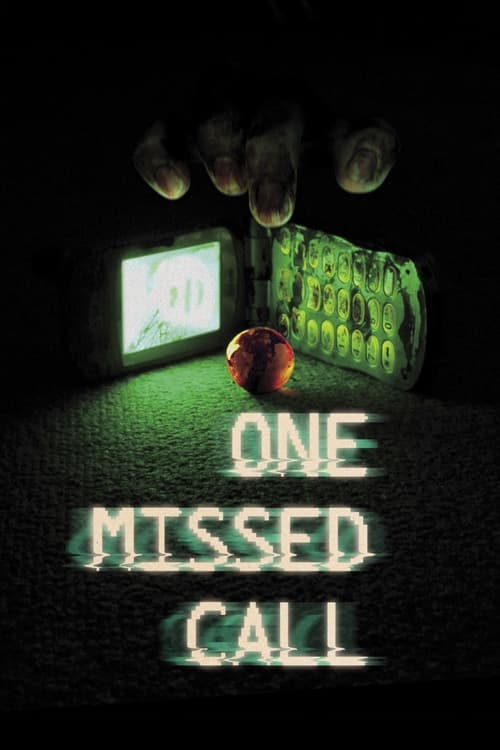
One Missed Call
People mysteriously start receiving voicemail messages from their future selves, in the form of the sound of them reacting to their own violent deaths, along with the exact date and time of their future death, listed on the message log. The plot thickens as the surviving characters pursue the answers to this mystery which could save their lives.
Despite its tight budget of $1.7M, One Missed Call became a massive hit, earning $17.6M worldwide—a remarkable 936% return. The film's unconventional structure connected with viewers, illustrating how strong storytelling can transcend budget limitations.


Plot Structure
Story beats plotted across runtime


Narrative Arc
Emotional journey through the story's key moments
Story Circle
Blueprint 15-beat structure
Arcplot Score Breakdown
Weighted: Precision (70%) + Arc (15%) + Theme (15%)
One Missed Call (2003) exhibits meticulously timed dramatic framework, characteristic of Takashi Miike's storytelling approach. This structural analysis examines how the film's 15-point plot structure maps to proven narrative frameworks across 1 hour and 52 minutes. With an Arcplot score of 6.7, the film balances conventional beats with creative variation.
Characters
Cast & narrative archetypes

Yumi Nakamura
Hiroshi Yamashita
Yoko Okazaki
Kenji Kawai
Natsumi Konishi
Marie Mizunuma
Main Cast & Characters
Yumi Nakamura
Played by Ko Shibasaki
A psychology student who becomes entangled in the deadly phone curse after her friends begin dying. She investigates the supernatural phenomenon while racing against time to break the curse.
Hiroshi Yamashita
Played by Shinichi Tsutsumi
A determined young detective whose sister was one of the early victims of the cursed phone calls. He partners with Yumi to uncover the truth behind the deaths.
Yoko Okazaki
Played by Anna Nagata
Yumi's close friend who becomes one of the first victims in their social circle to receive the deadly missed call, setting the terrifying chain of events in motion.
Kenji Kawai
Played by Atsushi Ida
A television producer who exploits the curse phenomenon for ratings, staging a live exorcism broadcast with tragic consequences.
Natsumi Konishi
Played by Kazue Fukiishi
A young woman chosen for the live TV exorcism who receives the cursed call, becoming a public spectacle as the deadline for her death approaches.
Marie Mizunuma
Played by Mariko Tsutsui
The ghostly source of the curse, a young girl who suffered terrible abuse at the hands of her mother and whose vengeful spirit perpetuates the deadly phone calls.
Structural Analysis
The Status Quo at 1 minutes (1% through the runtime) establishes Yoko receives a mysterious voicemail from the future on her cell phone, establishing the film's ordinary world of college students living normal lives in modern Tokyo.. Of particular interest, this early placement immediately immerses viewers in the story world.
The inciting incident occurs at 14 minutes when Yumi's friend Kenji dies after receiving a cursed call, proving the deadly pattern is real and targeting their friend group. Yumi can no longer dismiss this as coincidence.. At 13% through the film, this Disruption is delayed, allowing extended setup of the story world. This beat shifts the emotional landscape, launching the protagonist into the central conflict.
The First Threshold at 28 minutes marks the transition into Act II, occurring at 25% of the runtime. This demonstrates the protagonist's commitment to Yumi commits to fully investigating the curse when she discovers she has received the cursed voicemail herself, giving her only days to live. She actively chooses to fight rather than accept her fate., moving from reaction to action.
At 56 minutes, the Midpoint arrives at 50% of the runtime—precisely centered, creating perfect narrative symmetry. Significantly, this crucial beat The protagonists discover the origin: a murdered child whose vengeful spirit spreads the curse. False victory as they believe finding the source means they can stop it, but the curse proves more powerful than anticipated., fundamentally raising what's at risk. The emotional intensity shifts, dividing the narrative into clear before-and-after phases.
The Collapse moment at 84 minutes (75% through) represents the emotional nadir. Here, Yamashita is killed by the curse despite all efforts to save him. The "whiff of death" is literal—their ally and Yumi's connection dies, leaving her alone to face her prophesied death moment., demonstrates the protagonist at their lowest point. This beat's placement in the final quarter sets up the climactic reversal.
The Second Threshold at 90 minutes initiates the final act resolution at 80% of the runtime. Yumi realizes the curse spreads through emotional connection and that breaking the cycle requires confronting the root trauma—not just avoiding death, but addressing the spiritual wound that birthed the curse., demonstrating the transformation achieved throughout the journey.
Emotional Journey
One Missed Call's emotional architecture traces a deliberate progression across 15 carefully calibrated beats.
Narrative Framework
This structural analysis employs a 15-point narrative structure framework that maps key story moments. By mapping One Missed Call against these established plot points, we can identify how Takashi Miike utilizes or subverts traditional narrative conventions. The plot point approach reveals not only adherence to structural principles but also creative choices that distinguish One Missed Call within the horror genre.
Takashi Miike's Structural Approach
Among the 6 Takashi Miike films analyzed on Arcplot, the average structural score is 6.9, demonstrating varied approaches to story architecture. One Missed Call takes a more unconventional approach compared to the director's typical style. For comparative analysis, explore the complete Takashi Miike filmography.
Comparative Analysis
Additional horror films include Thinner, A Nightmare on Elm Street and Mary Reilly. For more Takashi Miike analyses, see The Great Yokai War, Laplace's Witch and Hara-Kiri: Death of a Samurai.
Plot Points by Act
Act I
SetupStatus Quo
Yoko receives a mysterious voicemail from the future on her cell phone, establishing the film's ordinary world of college students living normal lives in modern Tokyo.
Theme
A character states that "the dead won't leave us alone" or discusses how we can't escape our past, foreshadowing the theme of guilt, trauma, and unresolved sins haunting the present.
Worldbuilding
Introduction of Yumi and her circle of friends, the cell phone curse concept, and Yoko's death exactly as predicted by her voicemail. Establishes the supernatural rules and urban setting.
Disruption
Yumi's friend Kenji dies after receiving a cursed call, proving the deadly pattern is real and targeting their friend group. Yumi can no longer dismiss this as coincidence.
Resistance
Yumi hesitates but begins investigating the curse with detective Yamashita, whose sister was also a victim. They research the chain of deaths and try to understand the supernatural mechanism.
Act II
ConfrontationFirst Threshold
Yumi commits to fully investigating the curse when she discovers she has received the cursed voicemail herself, giving her only days to live. She actively chooses to fight rather than accept her fate.
Mirror World
Yumi's deepening partnership with Yamashita represents the thematic mirror—both are driven by loss and guilt. Their connection embodies the possibility of confronting trauma together rather than alone.
Premise
Yumi and Yamashita trace the curse to its source, investigating previous victims and discovering the connection to Marie Mizunuma and her abusive mother. The horror premise unfolds with escalating supernatural encounters.
Midpoint
The protagonists discover the origin: a murdered child whose vengeful spirit spreads the curse. False victory as they believe finding the source means they can stop it, but the curse proves more powerful than anticipated.
Opposition
The curse intensifies despite their efforts. Media circus around the curse makes things worse. Marie's vengeful ghost becomes more aggressive, and Yumi's deadline approaches while their solutions fail repeatedly.
Collapse
Yamashita is killed by the curse despite all efforts to save him. The "whiff of death" is literal—their ally and Yumi's connection dies, leaving her alone to face her prophesied death moment.
Crisis
Yumi faces her darkest moment alone, processing Yamashita's death and the seeming inevitability of the curse. She must find meaning in the tragedy and decide whether to surrender or make one final stand.
Act III
ResolutionSecond Threshold
Yumi realizes the curse spreads through emotional connection and that breaking the cycle requires confronting the root trauma—not just avoiding death, but addressing the spiritual wound that birthed the curse.
Synthesis
Yumi confronts Marie's spirit directly, attempting to break the curse through understanding and compassion rather than escape. The final supernatural confrontation reveals the true cyclical nature of trauma and vengeance.
Transformation
Yumi survives her death moment but the curse persists, revealing that some traumas cannot be fully resolved—they can only be endured. The cycle continues, transforming her from innocent to knowing survivor.