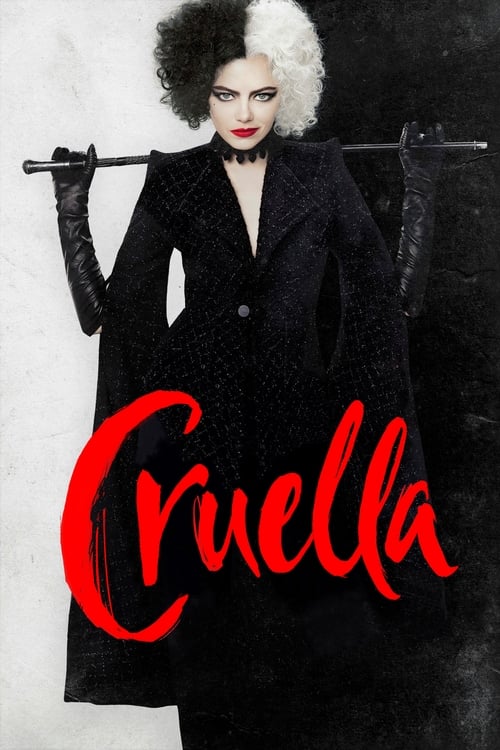
Cruella
In 1970s London amidst the punk rock revolution, a young grifter named Estella is determined to make a name for herself with her designs. She befriends a pair of young thieves who appreciate her appetite for mischief, and together they are able to build a life for themselves on the London streets. One day, Estella’s flair for fashion catches the eye of the Baroness von Hellman, a fashion legend who is devastatingly chic and terrifyingly haute. But their relationship sets in motion a course of events and revelations that will cause Estella to embrace her wicked side and become the raucous, fashionable and revenge-bent Cruella.
Working with a major studio investment of $200.0M, the film achieved a steady performer with $233.5M in global revenue (+17% profit margin).
1 Oscar. 28 wins & 43 nominations


Plot Structure
Story beats plotted across runtime


Narrative Arc
Emotional journey through the story's key moments
Story Circle
Blueprint 15-beat structure
Arcplot Score Breakdown
Weighted: Precision (70%) + Arc (15%) + Theme (15%)
Cruella (2021) demonstrates deliberately positioned narrative architecture, characteristic of Craig Gillespie's storytelling approach. This structural analysis examines how the film's 15-point plot structure maps to proven narrative frameworks across 2 hours and 14 minutes. With an Arcplot score of 7.0, the film balances conventional beats with creative variation.
Characters
Cast & narrative archetypes

Estella / Cruella
Baroness von Hellman
Jasper
Horace
Anita Darling
Artie
John the Valet
Main Cast & Characters
Estella / Cruella
Played by Emma Stone
A brilliant young fashion designer who transforms into the vengeful Cruella after discovering the truth about her mother's death
Baroness von Hellman
Played by Emma Thompson
A ruthless fashion icon and Estella's employer who murdered Estella's mother and becomes her primary antagonist
Jasper
Played by Joel Fry
Estella's loyal childhood friend and partner-in-crime who helps her pull off elaborate heists
Horace
Played by Paul Walter Hauser
Estella's childhood friend and getaway driver who supports her schemes with Jasper
Anita Darling
Played by Kirby Howell-Baptiste
A childhood friend of Estella who becomes a journalist and witness to Cruella's rise
Artie
Played by John McCrea
A flamboyant vintage shop owner and ally who provides Cruella with resources and support
John the Valet
Played by Mark Strong
The Baroness's loyal valet who eventually aids Cruella in her revenge
Structural Analysis
The Status Quo at 1 minutes (1% through the runtime) establishes Young Estella is introduced as a rebellious, creative girl with striking black and white hair, unable to fit into conventional society. Her mother Catherine tries to guide her toward conformity despite Estella's natural punk sensibility.. Notably, this early placement immediately immerses viewers in the story world.
The inciting incident occurs at 16 minutes when At the Baroness' gala, Estella witnesses her mother Catherine pushed off a cliff to her death by the Baroness' dalmatians. Estella believes it was her fault for causing the confrontation. This trauma destroys her old life and forces her to survive on the streets.. At 12% through the film, this Disruption aligns precisely with traditional story structure. This beat shifts the emotional landscape, launching the protagonist into the central conflict.
The First Threshold at 34 minutes marks the transition into Act II, occurring at 25% of the runtime. This reveals the protagonist's commitment to Estella actively chooses to pursue her dream when Jasper and Horace get her a job at Liberty department store. She makes the decision to stop hiding her talent and enter the fashion world, even if only as a cleaner. She crosses into the world she was always meant for., moving from reaction to action.
At 68 minutes, the Midpoint arrives at 50% of the runtime—precisely centered, creating perfect narrative symmetry. Significantly, this crucial beat False victory: Cruella's Black and White Ball is a massive success, and she fully embraces her Cruella identity, publicly claiming her place in the fashion world. She seems to have won, but this victory pushes her toward becoming the villain. The stakes raise as the Baroness declares war., fundamentally raising what's at risk. The emotional intensity shifts, dividing the narrative into clear before-and-after phases.
The Collapse moment at 101 minutes (76% through) represents the emotional nadir. Here, Estella discovers the Baroness is her biological mother who murdered Catherine to steal her necklace. The Baroness then has Estella arrested and stages her death by fire. Estella "dies" - literal whiff of death as the world believes Cruella perished. Everything Estella believed about herself and her past collapses., shows the protagonist at their lowest point. This beat's placement in the final quarter sets up the climactic reversal.
The Second Threshold at 108 minutes initiates the final act resolution at 81% of the runtime. Estella synthesizes her dual nature: she chooses to become Cruella fully, but on her own terms - not as a victim or monster, but as herself. She realizes she can be brilliant, bold, and ruthless while still loving her chosen family. New information about her birth unlocks her legal claim to the Baroness' estate., demonstrating the transformation achieved throughout the journey.
Emotional Journey
Cruella's emotional architecture traces a deliberate progression across 15 carefully calibrated beats.
Narrative Framework
This structural analysis employs a 15-point narrative structure framework that maps key story moments. By mapping Cruella against these established plot points, we can identify how Craig Gillespie utilizes or subverts traditional narrative conventions. The plot point approach reveals not only adherence to structural principles but also creative choices that distinguish Cruella within the comedy genre.
Craig Gillespie's Structural Approach
Among the 8 Craig Gillespie films analyzed on Arcplot, the average structural score is 7.2, reflecting strong command of classical structure. Cruella takes a more unconventional approach compared to the director's typical style. For comparative analysis, explore the complete Craig Gillespie filmography.
Comparative Analysis
Additional comedy films include The Bad Guys, Ella Enchanted and The Evening Star. For more Craig Gillespie analyses, see Fright Night, Dumb Money and I, Tonya.
Plot Points by Act
Act I
SetupStatus Quo
Young Estella is introduced as a rebellious, creative girl with striking black and white hair, unable to fit into conventional society. Her mother Catherine tries to guide her toward conformity despite Estella's natural punk sensibility.
Theme
Catherine tells young Estella: "You need to try to fit in... your brilliant, but you also need to control your more extreme side." The central theme: can you be your authentic self and still survive in society?
Worldbuilding
Establishment of 1960s-70s London, class divides, and fashion world hierarchy. Estella's expulsion from school, her mother's struggle to protect her, and their journey to London to seek help from the Baroness sets up the world of haute couture and social stratification.
Disruption
At the Baroness' gala, Estella witnesses her mother Catherine pushed off a cliff to her death by the Baroness' dalmatians. Estella believes it was her fault for causing the confrontation. This trauma destroys her old life and forces her to survive on the streets.
Resistance
Estella grows up on the streets with thieves Jasper and Horace, suppressing her creative ambitions and her "Cruella" side to honor her mother's dying wish to be a good person. She debates whether to pursue fashion or stay safe in her criminal life. The trio becomes a family of small-time cons.
Act II
ConfrontationFirst Threshold
Estella actively chooses to pursue her dream when Jasper and Horace get her a job at Liberty department store. She makes the decision to stop hiding her talent and enter the fashion world, even if only as a cleaner. She crosses into the world she was always meant for.
Mirror World
Estella meets and begins working directly for the Baroness von Hellman, the fashion icon she's idolized. The Baroness becomes both mentor and mirror - representing who Estella could become if she embraces ruthless ambition. This relationship will teach Estella what she truly values.
Premise
The "promise of the premise" - Estella creates the Cruella persona and stages spectacular punk-rock fashion disruptions that upstage the Baroness. The fun of watching Cruella's guerrilla fashion war, designing outrageous looks, and building her reputation while maintaining her double life. The creative rebellion the audience came to see.
Midpoint
False victory: Cruella's Black and White Ball is a massive success, and she fully embraces her Cruella identity, publicly claiming her place in the fashion world. She seems to have won, but this victory pushes her toward becoming the villain. The stakes raise as the Baroness declares war.
Opposition
The Baroness escalates attacks on Cruella, burning down her childhood hideout and nearly killing Jasper and Horace. Estella becomes increasingly consumed by the Cruella persona, alienating her friends. Her obsession blinds her to what matters. The antagonist closes in and Estella's flaws - her rage and need for revenge - threaten to consume her completely.
Collapse
Estella discovers the Baroness is her biological mother who murdered Catherine to steal her necklace. The Baroness then has Estella arrested and stages her death by fire. Estella "dies" - literal whiff of death as the world believes Cruella perished. Everything Estella believed about herself and her past collapses.
Crisis
In the emotional darkness after her "death," Estella processes the revelation that her birth mother is a murderer and that Catherine died protecting her. She must decide who she is: Estella trying to be good, or Cruella embracing her true nature. Her friends fear they've lost her to darkness.
Act III
ResolutionSecond Threshold
Estella synthesizes her dual nature: she chooses to become Cruella fully, but on her own terms - not as a victim or monster, but as herself. She realizes she can be brilliant, bold, and ruthless while still loving her chosen family. New information about her birth unlocks her legal claim to the Baroness' estate.
Synthesis
Cruella executes an elaborate plan at the Baroness' gala, using fashion and spectacle to expose the Baroness' crimes and reclaim her birthright. She orchestrates the Baroness' arrest while faking her own death a second time, legally inheriting the estate as Estella. She defeats her enemy using both Estella's heart and Cruella's cunning.
Transformation
Cruella stands in Hellman Hall with her dalmatians, having fully embraced her identity. Unlike the opening where Estella tried to suppress her nature, she now owns it completely. She's transformed from a girl trying to fit in to a woman who makes the world fit her - brilliant, bold, and unapologetically herself.