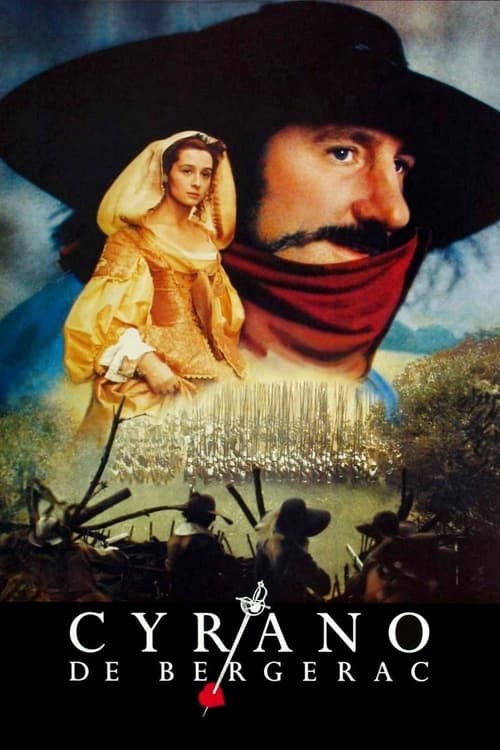
Cyrano de Bergerac
Famed swordsman and poet Cyrano de Bergerac is in love with his cousin Roxane. He has never expressed his love for her as he his large nose undermines his self-confidence. Then he finds a way to express his love to her, indirectly.
The film earned $5.8M at the global box office.
1 Oscar. 31 wins & 29 nominations


Plot Structure
Story beats plotted across runtime


Narrative Arc
Emotional journey through the story's key moments
Story Circle
Blueprint 15-beat structure
Arcplot Score Breakdown
Weighted: Precision (70%) + Arc (15%) + Theme (15%)
Cyrano de Bergerac (1990) showcases carefully calibrated plot construction, characteristic of Jean-Paul Rappeneau's storytelling approach. This structural analysis examines how the film's 15-point plot structure maps to proven narrative frameworks across 2 hours and 17 minutes. With an Arcplot score of 7.3, the film balances conventional beats with creative variation.
Characters
Cast & narrative archetypes

Cyrano de Bergerac
Roxane
Christian de Neuvillette
Le Bret
Comte de Guiche
Ragueneau
Main Cast & Characters
Cyrano de Bergerac
Played by Gérard Depardieu
A brilliant poet and swordsman with a large nose who loves Roxane but believes himself too ugly to be loved in return.
Roxane
Played by Anne Brochet
A beautiful and intelligent woman pursued by many men, cousin to Cyrano, who falls in love with Christian's words.
Christian de Neuvillette
Played by Vincent Perez
A handsome but inarticulate young soldier who loves Roxane and becomes the face of Cyrano's poetry.
Le Bret
Played by Philippe Morier-Genoud
Cyrano's best friend and confidant who encourages him to reveal his love for Roxane.
Comte de Guiche
Played by Jacques Weber
A powerful nobleman who desires Roxane and serves as antagonist by sending Christian to war.
Ragueneau
Played by Roland Bertin
A pastry chef and failed poet who admires Cyrano and provides comic relief.
Structural Analysis
The Status Quo at 2 minutes (1% through the runtime) establishes Cyrano arrives at the theater, displaying his wit, poetry, and swordsmanship. He halts the performance and duels with Valvert while composing a poem, establishing himself as a brilliant poet and fighter whose enormous nose defines his identity and insecurity.. Notably, this early placement immediately immerses viewers in the story world.
The inciting incident occurs at 16 minutes when Roxane asks to meet Cyrano privately, raising his hopes that she might love him. This disrupts his resigned acceptance of his situation and forces him to confront his feelings.. At 12% through the film, this Disruption aligns precisely with traditional story structure. This beat shifts the emotional landscape, launching the protagonist into the central conflict.
The First Threshold at 33 minutes marks the transition into Act II, occurring at 24% of the runtime. This reveals the protagonist's commitment to Cyrano makes the active choice to become Christian's poetic voice, sacrificing his own chance at love to give Roxane what she desires. He chooses to love her from the shadows, committing to a deception that will define the rest of his life., moving from reaction to action.
At 67 minutes, the Midpoint arrives at 49% of the runtime—precisely centered, creating perfect narrative symmetry. Of particular interest, this crucial beat Roxane and Christian marry in secret, seemingly achieving victory. However, this is a false victory: Roxane has married the wrong man, loving Cyrano's soul in Christian's body. The deception is now locked in place by sacred vows., fundamentally raising what's at risk. The emotional intensity shifts, dividing the narrative into clear before-and-after phases.
The Collapse moment at 100 minutes (73% through) represents the emotional nadir. Here, Christian realizes Roxane loves Cyrano and insists Cyrano tell her the truth. Before this can happen, Christian is shot and killed in battle. He dies with the truth unspoken, and Cyrano vows to keep the secret forever. The "whiff of death" takes Christian and Cyrano's last chance at honesty., illustrates the protagonist at their lowest point. This beat's placement in the final quarter sets up the climactic reversal.
The Second Threshold at 108 minutes initiates the final act resolution at 79% of the runtime. Cyrano is mortally wounded by his enemies. He arrives for his final visit to Roxane, knowing he is dying. This forces the moment of truth: he can finally be honest or die with the secret intact., demonstrating the transformation achieved throughout the journey.
Emotional Journey
Cyrano de Bergerac's emotional architecture traces a deliberate progression across 15 carefully calibrated beats.
Narrative Framework
This structural analysis employs structural analysis methodology used to understand storytelling architecture. By mapping Cyrano de Bergerac against these established plot points, we can identify how Jean-Paul Rappeneau utilizes or subverts traditional narrative conventions. The plot point approach reveals not only adherence to structural principles but also creative choices that distinguish Cyrano de Bergerac within the drama genre.
Jean-Paul Rappeneau's Structural Approach
Among the 2 Jean-Paul Rappeneau films analyzed on Arcplot, the average structural score is 6.9, demonstrating varied approaches to story architecture. Cyrano de Bergerac represents one of the director's most structurally precise works. For comparative analysis, explore the complete Jean-Paul Rappeneau filmography.
Comparative Analysis
Additional drama films include After Thomas, South Pacific and Dirty Dancing: Havana Nights. For more Jean-Paul Rappeneau analyses, see The Horseman on the Roof.
Plot Points by Act
Act I
SetupStatus Quo
Cyrano arrives at the theater, displaying his wit, poetry, and swordsmanship. He halts the performance and duels with Valvert while composing a poem, establishing himself as a brilliant poet and fighter whose enormous nose defines his identity and insecurity.
Theme
Le Bret speaks to Cyrano about love and pride: "Your pride makes you reject the world before it can reject you." The theme of appearance versus inner beauty, and the courage to reveal one's true self, is established.
Worldbuilding
Establishment of 17th century Paris, the theatrical world, and key relationships. Cyrano's unrequited love for his cousin Roxane is revealed. Christian de Neuvillette arrives as a new cadet. Roxane is courted by the powerful Comte de Guiche.
Disruption
Roxane asks to meet Cyrano privately, raising his hopes that she might love him. This disrupts his resigned acceptance of his situation and forces him to confront his feelings.
Resistance
Cyrano prepares for the meeting with Roxane, wrestling with hope and fear. At Ragueneau's bakery, he debates whether to reveal his love. Roxane arrives and confesses she loves Christian, crushing Cyrano's hopes but he agrees to protect Christian.
Act II
ConfrontationFirst Threshold
Cyrano makes the active choice to become Christian's poetic voice, sacrificing his own chance at love to give Roxane what she desires. He chooses to love her from the shadows, committing to a deception that will define the rest of his life.
Mirror World
The partnership between Cyrano and Christian solidifies. Christian represents physical beauty without eloquence; Cyrano represents inner beauty and poetic soul. Together they embody the theme: true love requires both inner and outer truth.
Premise
The promise of the premise: Cyrano writes love letters for Christian, who woos Roxane with Cyrano's words. The balcony scene where Cyrano speaks Christian's love in the darkness represents the height of this beautiful deception. Roxane falls deeper in love with Christian's "soul."
Midpoint
Roxane and Christian marry in secret, seemingly achieving victory. However, this is a false victory: Roxane has married the wrong man, loving Cyrano's soul in Christian's body. The deception is now locked in place by sacred vows.
Opposition
De Guiche, enraged by the secret marriage, sends the cadets to the siege of Arras. Under siege, Cyrano risks his life daily to send love letters to Roxane. Christian begins to suspect the truth. Roxane arrives at the battlefield and reveals she loves Christian for his soul, not his beauty, intensifying the dramatic irony.
Collapse
Christian realizes Roxane loves Cyrano and insists Cyrano tell her the truth. Before this can happen, Christian is shot and killed in battle. He dies with the truth unspoken, and Cyrano vows to keep the secret forever. The "whiff of death" takes Christian and Cyrano's last chance at honesty.
Crisis
Cyrano mourns Christian and the death of truth. Fourteen years pass. Cyrano lives in poverty, visiting Roxane weekly at the convent where she mourns Christian. He remains silent, continuing the deception even as his own life fades into obscurity.
Act III
ResolutionSecond Threshold
Cyrano is mortally wounded by his enemies. He arrives for his final visit to Roxane, knowing he is dying. This forces the moment of truth: he can finally be honest or die with the secret intact.
Synthesis
Cyrano reads Christian's final letter aloud as darkness falls. Roxane realizes the truth: Cyrano wrote the letters, Cyrano spoke under the balcony, Cyrano's soul was the one she loved all along. In his final moments, Cyrano fights his old enemies—lies, prejudice, compromise—with his sword, dying on his feet as he lived.
Transformation
Cyrano dies in Roxane's arms, finally recognized and loved for who he truly is, but too late. The tragedy is complete: true love revealed only at death. Yet he dies with his "panache" intact, never having compromised his integrity or his soul.