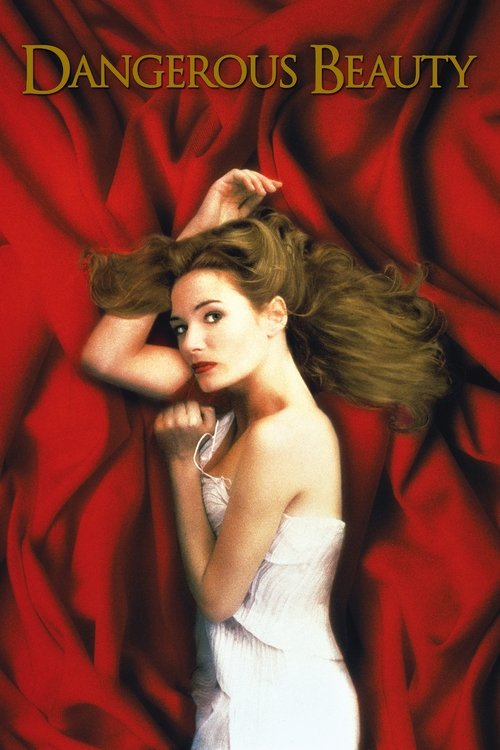
Dangerous Beauty
Veronica is brilliant, gifted and beautiful, but the handsome aristocrat she loves, Marco Venier, cannot marry her because she is penniless and of questionable family. So Veronica's mother, Paola, teaches her to become a courtesan, one of the exotic companions favored by the richest and most powerful Venetian men. Veronica courageously uses her charms to change destiny -- and to give herself a chance at true love.
The film earned $4.6M at the global box office.


Plot Structure
Story beats plotted across runtime


Narrative Arc
Emotional journey through the story's key moments
Story Circle
Blueprint 15-beat structure
Arcplot Score Breakdown
Weighted: Precision (70%) + Arc (15%) + Theme (15%)
Dangerous Beauty (1998) exemplifies deliberately positioned story structure, characteristic of Marshall Herskovitz's storytelling approach. This structural analysis examines how the film's 15-point plot structure maps to proven narrative frameworks across 1 hour and 51 minutes. With an Arcplot score of 7.3, the film balances conventional beats with creative variation.
Characters
Cast & narrative archetypes

Veronica Franco
Marco Venier
Paola Franco
Maffio Venier
King Henry of France
Beatrice Venier
Pietro Venier
Main Cast & Characters
Veronica Franco
Played by Catherine McCormack
An intelligent Venetian woman who becomes a courtesan to be with the man she loves while navigating Renaissance society.
Marco Venier
Played by Rufus Sewell
A nobleman torn between love for Veronica and family duty, who marries another but remains connected to her.
Paola Franco
Played by Jacqueline Bisset
Veronica's pragmatic mother and former courtesan who trains her daughter in the arts of courtesanship.
Maffio Venier
Played by Oliver Platt
Marco's cynical cousin and renowned poet who becomes Veronica's client, rival, and ultimately her accuser.
King Henry of France
Played by Jeroen Krabbé
The visiting French king who becomes captivated by Veronica's intelligence and helps defend Venice.
Beatrice Venier
Played by Naomi Watts
Marco's sheltered and conventional wife, chosen by his family for political and social advantage.
Pietro Venier
Played by Fred Ward
Marco's controlling father and powerful senator who orchestrates his son's marriage and opposes Veronica.
Structural Analysis
The Status Quo at 1 minutes (1% through the runtime) establishes Veronica Franco reads poetry in 1583 Venice, a beautiful young woman in love with Marco Venier, dreaming of marriage and a conventional life of love and learning.. Of particular interest, this early placement immediately immerses viewers in the story world.
The inciting incident occurs at 12 minutes when Marco's family arranges his marriage to a wealthy woman of proper status, destroying Veronica's dreams of marrying him and having a conventional life. Her one path to happiness is closed.. At 11% through the film, this Disruption aligns precisely with traditional story structure. This beat shifts the emotional landscape, launching the protagonist into the central conflict.
The First Threshold at 27 minutes marks the transition into Act II, occurring at 24% of the runtime. This illustrates the protagonist's commitment to Veronica makes the active choice to become a courtesan, entering Paola's home for training. She chooses power and self-determination over respectability, crossing into a new world., moving from reaction to action.
At 56 minutes, the Midpoint arrives at 50% of the runtime—precisely centered, creating perfect narrative symmetry. The analysis reveals that this crucial beat False victory: Veronica convinces the King of France to aid Venice against the Turks, achieving her greatest political triumph. She seems to have it all - power, love, respect, and influence. But this victory raises the stakes and attracts dangerous attention., fundamentally raising what's at risk. The emotional intensity shifts, dividing the narrative into clear before-and-after phases.
The Collapse moment at 82 minutes (74% through) represents the emotional nadir. Here, Veronica is arrested and charged with witchcraft by the Inquisition. Everything she built is destroyed - her home ransacked, her career ended, her life threatened. The whiff of death: she faces execution, and her mother's courtesan past is exposed, destroying her family., illustrates the protagonist at their lowest point. This beat's placement in the final quarter sets up the climactic reversal.
The Second Threshold at 88 minutes initiates the final act resolution at 80% of the runtime. Marco and the other courtesans rally to defend Veronica. She realizes she must defend not just herself but all women's right to choose their paths. She synthesizes her courtesan's wit with her authentic self to fight back., demonstrating the transformation achieved throughout the journey.
Emotional Journey
Dangerous Beauty's emotional architecture traces a deliberate progression across 15 carefully calibrated beats.
Narrative Framework
This structural analysis employs systematic plot point analysis that identifies crucial turning points. By mapping Dangerous Beauty against these established plot points, we can identify how Marshall Herskovitz utilizes or subverts traditional narrative conventions. The plot point approach reveals not only adherence to structural principles but also creative choices that distinguish Dangerous Beauty within the drama genre.
Comparative Analysis
Additional drama films include After Thomas, South Pacific and Dirty Dancing: Havana Nights.
Plot Points by Act
Act I
SetupStatus Quo
Veronica Franco reads poetry in 1583 Venice, a beautiful young woman in love with Marco Venier, dreaming of marriage and a conventional life of love and learning.
Theme
Veronica's mother reveals she was a courtesan: "We can refuse to be what other people want us to be, or we can be ourselves." The theme of choosing one's own path versus society's constraints is established.
Worldbuilding
Establishment of 16th century Venice, rigid class structure, Veronica's love for Marco, his family's refusal of her due to her lower status, and the revelation that her mother was a courtesan. Veronica's world of poetry, wit, and limited options as an unmarried woman.
Disruption
Marco's family arranges his marriage to a wealthy woman of proper status, destroying Veronica's dreams of marrying him and having a conventional life. Her one path to happiness is closed.
Resistance
Veronica resists her mother's suggestion to become a courtesan. Her mother and the courtesan Paola guide her, teaching that this path offers freedom, education, and power unavailable to wives. Veronica debates whether to sacrifice respectability for autonomy.
Act II
ConfrontationFirst Threshold
Veronica makes the active choice to become a courtesan, entering Paola's home for training. She chooses power and self-determination over respectability, crossing into a new world.
Mirror World
Veronica reunites with Marco at a social gathering as a courtesan. Their relationship transforms into the mirror world subplot - he becomes both lover and intellectual equal, representing the theme of authentic connection versus societal roles.
Premise
The promise of the premise: Veronica thrives as Venice's most celebrated courtesan. She enjoys wealth, education, political influence, passionate romance with Marco, and intellectual freedom. She navigates high society, influences politics, and experiences the power her choice has given her.
Midpoint
False victory: Veronica convinces the King of France to aid Venice against the Turks, achieving her greatest political triumph. She seems to have it all - power, love, respect, and influence. But this victory raises the stakes and attracts dangerous attention.
Opposition
Venice loses the war despite French aid. The Church and conservative forces seek scapegoats. Veronica's success and independence make her a target. Marco's cousin Maffio, rejected by her, plots revenge. Plague strikes Venice. The Inquisition rises in power, and Veronica's world begins to collapse.
Collapse
Veronica is arrested and charged with witchcraft by the Inquisition. Everything she built is destroyed - her home ransacked, her career ended, her life threatened. The whiff of death: she faces execution, and her mother's courtesan past is exposed, destroying her family.
Crisis
Veronica imprisoned, awaiting trial. She processes her dark night, facing the reality that her choice to live freely may cost her life. Marco and her supporters debate how to save her. She must decide whether to recant her life choices or defend them.
Act III
ResolutionSecond Threshold
Marco and the other courtesans rally to defend Veronica. She realizes she must defend not just herself but all women's right to choose their paths. She synthesizes her courtesan's wit with her authentic self to fight back.
Synthesis
Veronica's trial before the Inquisition. She defends herself with intelligence and courage, turning the accusation back on the men who used courtesans then condemned them. She shames the hypocritical council, and Marco's family supports her. She is acquitted, winning freedom for herself and dignity for all courtesans.
Transformation
Veronica returns to her life, forever changed. She walks through Venice with dignity, no longer defined by others' judgment. She has transformed from a girl seeking love and acceptance into a woman who claimed her own voice and changed society. Marco remains her partner, their love now equal.