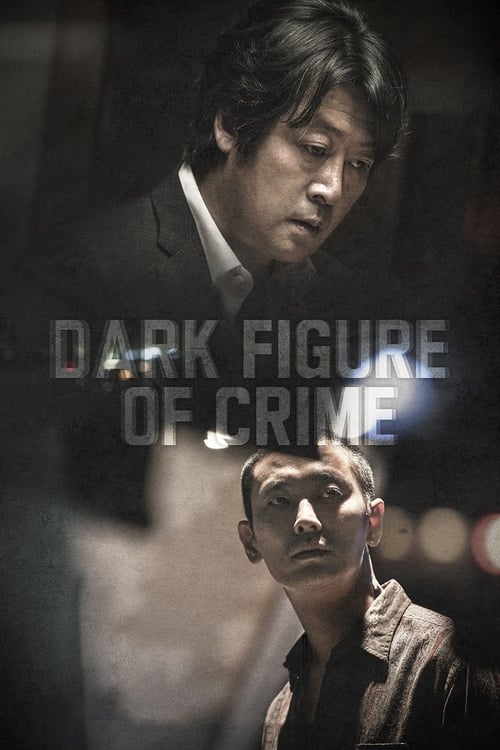
Dark Figure of Crime
A serial killer is caught for his seventh murder. A cop tries to solve the first six cases with the killer's help, but starts to suspect that he has ulterior motives. Based on a true story.
Despite its tight budget of $7.1M, Dark Figure of Crime became a commercial success, earning $29.4M worldwide—a 313% return. The film's distinctive approach engaged audiences, proving that strong storytelling can transcend budget limitations.


Plot Structure
Story beats plotted across runtime


Narrative Arc
Emotional journey through the story's key moments
Story Circle
Blueprint 15-beat structure
Arcplot Score Breakdown
Weighted: Precision (70%) + Arc (15%) + Theme (15%)
Dark Figure of Crime (2018) exemplifies carefully calibrated plot construction, characteristic of Kim Tae-gyoon's storytelling approach. This structural analysis examines how the film's 15-point plot structure maps to proven narrative frameworks across 1 hour and 51 minutes. With an Arcplot score of 7.3, the film balances conventional beats with creative variation.
Characters
Cast & narrative archetypes

Kim Hyung-min
Kang Tae-oh
Jung Soo-young
Park Min-soo
Main Cast & Characters
Kim Hyung-min
Played by Kim Yoon-seok
A determined detective nearing retirement who investigates a serial killer's confessions to solve cold cases.
Kang Tae-oh
Played by Ju Ji-hoon
A manipulative serial killer who confesses to multiple murders while imprisoned, playing psychological games with investigators.
Jung Soo-young
Played by Jin Seon-kyu
A fellow detective who works alongside Kim Hyung-min on the investigation.
Park Min-soo
Played by Kim Hong-pa
A prosecutor involved in handling the serial killer case.
Structural Analysis
The Status Quo at 1 minutes (1% through the runtime) establishes Kang Tae-oh is shown being arrested for the murder of his girlfriend, establishing the initial crime that will serve as the gateway to uncovering his dark past.. Structural examination shows that this early placement immediately immerses viewers in the story world.
The inciting incident occurs at 13 minutes when Kang Tae-oh sends a letter from prison claiming he has killed seven additional people, disrupting Detective Kim's routine and launching the investigation into the dark figure of unreported murders.. At 12% through the film, this Disruption aligns precisely with traditional story structure. This beat shifts the emotional landscape, launching the protagonist into the central conflict.
The First Threshold at 28 minutes marks the transition into Act II, occurring at 25% of the runtime. This reveals the protagonist's commitment to Detective Kim makes the active choice to visit Kang in prison and begin a direct investigation, defying his superiors' orders to drop the case and entering into a psychological game with the killer., moving from reaction to action.
At 56 minutes, the Midpoint arrives at 50% of the runtime—precisely centered, creating perfect narrative symmetry. Of particular interest, this crucial beat Detective Kim successfully proves one of Kang's confessed murders, finding the victim's remains. A false victory—he believes the pattern will continue, but Kang's game is about to become more sinister., fundamentally raising what's at risk. The emotional intensity shifts, dividing the narrative into clear before-and-after phases.
The Collapse moment at 83 minutes (75% through) represents the emotional nadir. Here, Kim discovers Kang has been lying about key details, using the investigation to satisfy his ego and torment the detective. The department officially shuts down the investigation. Kim's obsession has cost him professionally., indicates the protagonist at their lowest point. This beat's placement in the final quarter sets up the climactic reversal.
The Second Threshold at 89 minutes initiates the final act resolution at 80% of the runtime. Kim realizes that Kang's lies contain partial truths—a pattern emerges. Armed with this insight and testimony from victims' families, he builds a new approach to corner Kang and extract the final confessions., demonstrating the transformation achieved throughout the journey.
Emotional Journey
Dark Figure of Crime's emotional architecture traces a deliberate progression across 15 carefully calibrated beats.
Narrative Framework
This structural analysis employs systematic plot point analysis that identifies crucial turning points. By mapping Dark Figure of Crime against these established plot points, we can identify how Kim Tae-gyoon utilizes or subverts traditional narrative conventions. The plot point approach reveals not only adherence to structural principles but also creative choices that distinguish Dark Figure of Crime within the crime genre.
Comparative Analysis
Additional crime films include The Bad Guys, Rustom and The Whole Ten Yards.
Plot Points by Act
Act I
SetupStatus Quo
Kang Tae-oh is shown being arrested for the murder of his girlfriend, establishing the initial crime that will serve as the gateway to uncovering his dark past.
Theme
During interrogation, Kang states that the truth doesn't matter to the police, only closing cases—foreshadowing the theme of pursuing justice when the system has abandoned it.
Worldbuilding
The world of overworked detectives and bureaucratic police procedures is established. Detective Kim is introduced as a dogged investigator. Kang Tae-oh is convicted and sentenced for his girlfriend's murder.
Disruption
Kang Tae-oh sends a letter from prison claiming he has killed seven additional people, disrupting Detective Kim's routine and launching the investigation into the dark figure of unreported murders.
Resistance
Detective Kim debates whether to pursue Kang's claims. His superiors dismiss the case, but Kim cannot let it go. He begins preliminary research into missing persons cases that might connect to Kang's confession.
Act II
ConfrontationFirst Threshold
Detective Kim makes the active choice to visit Kang in prison and begin a direct investigation, defying his superiors' orders to drop the case and entering into a psychological game with the killer.
Mirror World
Kim meets with the families of potential victims, seeing their years of anguish and uncertainty. These encounters embody the theme—justice means giving closure to those left behind, not just punishing criminals.
Premise
The cat-and-mouse game between Detective Kim and Kang Tae-oh unfolds. Prison visits become psychological battles where Kang drops hints and Kim races to verify them. The detective uncovers evidence of the first additional murder.
Midpoint
Detective Kim successfully proves one of Kang's confessed murders, finding the victim's remains. A false victory—he believes the pattern will continue, but Kang's game is about to become more sinister.
Opposition
Kang begins manipulating Kim more aggressively, giving false leads and wasting police resources. The department pressures Kim to abandon the case. Evidence proves elusive for remaining victims. The statute of limitations threatens to expire.
Collapse
Kim discovers Kang has been lying about key details, using the investigation to satisfy his ego and torment the detective. The department officially shuts down the investigation. Kim's obsession has cost him professionally.
Crisis
Kim sits with the weight of failure, questioning whether his pursuit was worth it. He revisits case files alone, confronting the possibility that some victims may never be found and Kang will take his secrets to the grave.
Act III
ResolutionSecond Threshold
Kim realizes that Kang's lies contain partial truths—a pattern emerges. Armed with this insight and testimony from victims' families, he builds a new approach to corner Kang and extract the final confessions.
Synthesis
Kim confronts Kang one final time with his accumulated evidence and psychological insights. The detective turns Kang's manipulative nature against him. Additional murder sites are confirmed, bringing closure to grieving families.
Transformation
Text reveals the real case status: some victims remain unidentified, the killer never revealed all locations. Kim stands resolute but haunted—transformed from a by-the-book detective into someone who understands that justice is often incomplete.