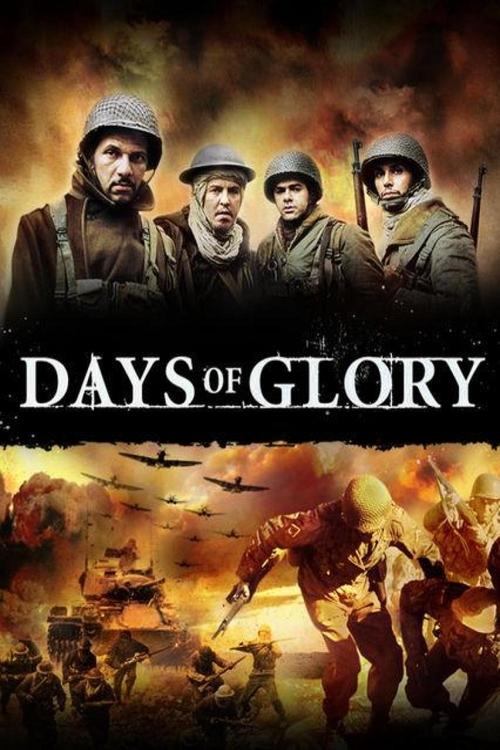
Days of Glory
1943. They have never stepped foot on French soil but because France was at war, Said, Abdelkader, Messaoud and Yassir enlist in the French Army, along with 130,000 other “indigenous” soldiers, to liberate the “fatherland” from the Nazi enemy. Heroes that history has forgotten…
Working with a tight budget of $14.5M, the film achieved a modest success with $23.0M in global revenue (+58% profit margin).
Nominated for 1 Oscar. 9 wins & 16 nominations


Plot Structure
Story beats plotted across runtime


Narrative Arc
Emotional journey through the story's key moments
Story Circle
Blueprint 15-beat structure
Arcplot Score Breakdown
Weighted: Precision (70%) + Arc (15%) + Theme (15%)
Days of Glory (2006) exhibits precise dramatic framework, characteristic of Rachid Bouchareb's storytelling approach. This structural analysis examines how the film's 15-point plot structure maps to proven narrative frameworks across 2 hours and 8 minutes. With an Arcplot score of 6.9, the film balances conventional beats with creative variation.
Characters
Cast & narrative archetypes

Abdelkader
Saïd
Messaoud
Yassir
Sergeant Martinez
Main Cast & Characters
Abdelkader
Played by Sami Bouajila
Idealistic corporal who believes fighting for France will earn him and his people equality and respect.
Saïd
Played by Jamel Debbouze
Pragmatic soldier focused on survival and collecting his military pay to support his mother.
Messaoud
Played by Roschdy Zem
Romantic sharpshooter who falls in love with a French woman, hoping for acceptance in French society.
Yassir
Played by Samy Naceri
Young, illiterate goat herder who joins the army seeking purpose and brotherhood.
Sergeant Martinez
Played by Bernard Blancan
French sergeant who leads the North African soldiers with a mixture of respect and military discipline.
Structural Analysis
The Status Quo at 1 minutes (1% through the runtime) establishes North African villages in 1943. Young men live under French colonial rule, performing traditional labor and religious practices, unaware of the coming war.. Significantly, this early placement immediately immerses viewers in the story world.
The inciting incident occurs at 14 minutes when The unit receives orders to ship out to Italy. The men realize this is real combat, not just training. Letters from home are read, marking the end of their old lives.. At 11% through the film, this Disruption aligns precisely with traditional story structure. This beat shifts the emotional landscape, launching the protagonist into the central conflict.
The First Threshold at 31 minutes marks the transition into Act II, occurring at 25% of the runtime. This shows the protagonist's commitment to First major battle in Italy. The unit actively chooses to charge enemy positions despite heavy fire. Blood is spilled, friends die. There is no turning back from being soldiers now., moving from reaction to action.
At 63 minutes, the Midpoint arrives at 49% of the runtime—precisely centered, creating perfect narrative symmetry. Notably, this crucial beat False victory: The unit liberates a French village and is celebrated as heroes. They are welcomed, fed, and honored. It appears their sacrifice is being recognized and equality is possible., fundamentally raising what's at risk. The emotional intensity shifts, dividing the narrative into clear before-and-after phases.
The Collapse moment at 95 minutes (75% through) represents the emotional nadir. Here, The massacre at the Vosges farmhouse. During the final assault, Yassir is killed. Messaoud is severely wounded. Abdelkader dies in the battle. The "whiff of death" - their dreams of equality die with their brothers., indicates the protagonist at their lowest point. This beat's placement in the final quarter sets up the climactic reversal.
The Second Threshold at 102 minutes initiates the final act resolution at 80% of the runtime. Time jump to present day. Saïd, now elderly, receives notice that France has frozen pensions for colonial veterans. The synthesis of understanding: nothing has changed, the fight continues., demonstrating the transformation achieved throughout the journey.
Emotional Journey
Days of Glory's emotional architecture traces a deliberate progression across 15 carefully calibrated beats.
Narrative Framework
This structural analysis employs proven narrative structure principles that track dramatic progression. By mapping Days of Glory against these established plot points, we can identify how Rachid Bouchareb utilizes or subverts traditional narrative conventions. The plot point approach reveals not only adherence to structural principles but also creative choices that distinguish Days of Glory within the drama genre.
Comparative Analysis
Additional drama films include After Thomas, South Pacific and Dirty Dancing: Havana Nights.
Plot Points by Act
Act I
SetupStatus Quo
North African villages in 1943. Young men live under French colonial rule, performing traditional labor and religious practices, unaware of the coming war.
Theme
A French officer states: "France is your mother" - establishing the film's central theme of whether colonized soldiers will receive equal treatment and recognition from their "motherland."
Worldbuilding
Introduction of four main characters: Saïd, Messaoud, Abdelkader, and Yassir. Their recruitment into the French army, basic training, and the formation of bonds between the diverse soldiers from different North African backgrounds.
Disruption
The unit receives orders to ship out to Italy. The men realize this is real combat, not just training. Letters from home are read, marking the end of their old lives.
Resistance
Journey to Italy and first experiences with warfare. Sergeant Martinez mentors the troops. The men debate whether fighting for France will earn them equality. First encounters with racism from French command.
Act II
ConfrontationFirst Threshold
First major battle in Italy. The unit actively chooses to charge enemy positions despite heavy fire. Blood is spilled, friends die. There is no turning back from being soldiers now.
Mirror World
Messaoud meets and develops feelings for an Italian woman who treats him with dignity and humanity, showing him what equality and respect could feel like - the thematic counterpoint to French colonial treatment.
Premise
The promise of the premise: North African soldiers proving themselves in combat. Battles through Italy and into France. Small victories, brotherhood forged in combat, moments of recognition for their bravery.
Midpoint
False victory: The unit liberates a French village and is celebrated as heroes. They are welcomed, fed, and honored. It appears their sacrifice is being recognized and equality is possible.
Opposition
Systematic discrimination intensifies. Tomatoes reserved only for white French soldiers. Promotions denied despite heroism. Abdelkader's political awakening. The gap between battlefield equality and actual treatment widens.
Collapse
The massacre at the Vosges farmhouse. During the final assault, Yassir is killed. Messaoud is severely wounded. Abdelkader dies in the battle. The "whiff of death" - their dreams of equality die with their brothers.
Crisis
Aftermath of the battle. Saïd and surviving soldiers process the loss. The emotional darkness of having sacrificed everything for a country that never saw them as equals.
Act III
ResolutionSecond Threshold
Time jump to present day. Saïd, now elderly, receives notice that France has frozen pensions for colonial veterans. The synthesis of understanding: nothing has changed, the fight continues.
Synthesis
Epilogue shows Saïd's life in poverty in France, still fighting for recognition. Archival footage and text reveal the real history of discrimination against colonial soldiers. The final confrontation is with history itself.
Transformation
Closing image: Saïd alone in his sparse apartment, a forgotten veteran. Mirrors the opening of young men full of hope, now reduced to an old man still waiting for the equality France promised but never delivered.