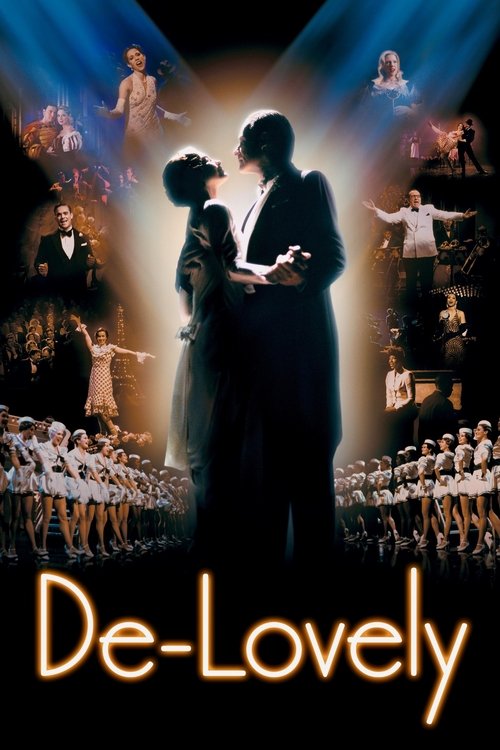
De-Lovely
From Paris to Venice to Broadway to Hollywood, the lives of Cole Porter and his wife, Linda Lee Thomas were never less than glamorous and wildly unconventional. And though Cole's thirst for life strained their marriage, Linda never stopped being his muse, inspiring some of the greatest songs of the twentieth century.
Working with a moderate budget of $15.0M, the film achieved a modest success with $18.4M in global revenue (+23% profit margin).
2 wins & 13 nominations


Plot Structure
Story beats plotted across runtime


Narrative Arc
Emotional journey through the story's key moments
Story Circle
Blueprint 15-beat structure
Arcplot Score Breakdown
Weighted: Precision (70%) + Arc (15%) + Theme (15%)
De-Lovely (2004) demonstrates strategically placed story structure, characteristic of Irwin Winkler's storytelling approach. This structural analysis examines how the film's 15-point plot structure maps to proven narrative frameworks across 2 hours and 5 minutes. With an Arcplot score of 6.4, the film takes an unconventional approach to traditional narrative frameworks.
Characters
Cast & narrative archetypes

Cole Porter
Linda Lee Porter
Gabe
Monty Woolley
Gerald Murphy
Sara Murphy
Boris Kochno
Main Cast & Characters
Cole Porter
Played by Kevin Kline
Legendary composer and songwriter reflecting on his life, loves, and career through a theatrical staging of his memories.
Linda Lee Porter
Played by Ashley Judd
Cole's wife and muse, a sophisticated divorced socialite who enters into an unconventional marriage while supporting his artistic genius.
Gabe
Played by Jonathan Pryce
The mysterious theatrical director who guides Cole through the retrospective of his life on stage.
Monty Woolley
Played by Allan Corduner
Cole's close friend and confidant, a witty theater personality who provides support throughout his journey.
Gerald Murphy
Played by Peter Polycarpou
Wealthy American expatriate and friend to Cole and Linda, part of the glamorous social circle in Paris.
Sara Murphy
Played by Sandra Nelson
Gerald's wife and close friend to Linda, a cultured member of the Lost Generation expatriate community.
Boris Kochno
Played by Mario Opinato
A male lover of Cole Porter who represents his hidden romantic relationships outside his marriage.
Structural Analysis
The Status Quo at 2 minutes (1% through the runtime) establishes Elderly Cole Porter sits in an empty theater as a mysterious figure named Gabe appears, inviting him to watch a musical review of his life. This framing establishes Cole at the end of his journey, reflecting on what has been.. Of particular interest, this early placement immediately immerses viewers in the story world.
The inciting incident occurs at 15 minutes when Cole meets Linda Lee Thomas at a Paris party. The attraction is immediate and transformative—she is beautiful, sophisticated, and sees through his façade. This meeting will change the course of his life forever.. At 12% through the film, this Disruption aligns precisely with traditional story structure. This beat shifts the emotional landscape, launching the protagonist into the central conflict.
The First Threshold at 31 minutes marks the transition into Act II, occurring at 25% of the runtime. This indicates the protagonist's commitment to Cole proposes to Linda, and she accepts. He makes an active choice to enter into this unconventional marriage, committing to make their relationship work despite the challenges. They marry, beginning their life together., moving from reaction to action.
At 63 minutes, the Midpoint arrives at 50% of the runtime—precisely centered, creating perfect narrative symmetry. The analysis reveals that this crucial beat Cole suffers a devastating horseback riding accident that crushes both his legs. This false defeat shatters the glamorous façade—his body is broken, his confidence destroyed, and the pain becomes both physical and existential. Everything changes., fundamentally raising what's at risk. The emotional intensity shifts, dividing the narrative into clear before-and-after phases.
The Collapse moment at 93 minutes (74% through) represents the emotional nadir. Here, Linda leaves Cole, unable to continue their arrangement. She tells him he never truly gave himself to their marriage, always holding back. This is Cole's "whiff of death"—losing the one person who truly loved and understood him, the death of their partnership., illustrates the protagonist at their lowest point. This beat's placement in the final quarter sets up the climactic reversal.
The Second Threshold at 100 minutes initiates the final act resolution at 80% of the runtime. Cole receives news that Linda is dying. This information crystallizes everything—he finally understands that the work meant nothing without her, that he should have chosen love over fear. He rushes to reconcile before it's too late., demonstrating the transformation achieved throughout the journey.
Emotional Journey
De-Lovely's emotional architecture traces a deliberate progression across 15 carefully calibrated beats.
Narrative Framework
This structural analysis employs systematic plot point analysis that identifies crucial turning points. By mapping De-Lovely against these established plot points, we can identify how Irwin Winkler utilizes or subverts traditional narrative conventions. The plot point approach reveals not only adherence to structural principles but also creative choices that distinguish De-Lovely within the drama genre.
Irwin Winkler's Structural Approach
Among the 4 Irwin Winkler films analyzed on Arcplot, the average structural score is 6.7, demonstrating varied approaches to story architecture. De-Lovely takes a more unconventional approach compared to the director's typical style. For comparative analysis, explore the complete Irwin Winkler filmography.
Comparative Analysis
Additional drama films include After Thomas, South Pacific and Dirty Dancing: Havana Nights. For more Irwin Winkler analyses, see The Net, Guilty by Suspicion and Life as a House.
Plot Points by Act
Act I
SetupStatus Quo
Elderly Cole Porter sits in an empty theater as a mysterious figure named Gabe appears, inviting him to watch a musical review of his life. This framing establishes Cole at the end of his journey, reflecting on what has been.
Theme
Gabe tells Cole, "It's about the work, but it's also about the life," establishing the central theme: the inseparability of art and love, creation and living, and whether success means anything without someone to share it with.
Worldbuilding
The staged review begins with young Cole at a Paris party in 1918, establishing him as a charming, talented American composer abroad, struggling for recognition. We see his sophistication, his music, and his world of artistic ambition and social circles.
Disruption
Cole meets Linda Lee Thomas at a Paris party. The attraction is immediate and transformative—she is beautiful, sophisticated, and sees through his façade. This meeting will change the course of his life forever.
Resistance
Cole pursues Linda through Paris and Venice, courting her with music and charm. She reveals she knows about his homosexuality but suggests they could have an unconventional arrangement. Cole debates whether he can balance his sexuality, ambition, and love for Linda.
Act II
ConfrontationFirst Threshold
Cole proposes to Linda, and she accepts. He makes an active choice to enter into this unconventional marriage, committing to make their relationship work despite the challenges. They marry, beginning their life together.
Mirror World
Linda and Cole settle into married life, establishing their unique partnership. She becomes his muse, collaborator, and protector. Their relationship embodies the thematic question: can love transcend convention and compromise?
Premise
The promise of the premise: Cole's career flourishes with hit shows like "Anything Goes" and "Kiss Me, Kate." We see the glamorous life—parties, performances, travel, success. Linda supports him while he navigates his double life, maintaining affairs with men while devoted to her.
Midpoint
Cole suffers a devastating horseback riding accident that crushes both his legs. This false defeat shatters the glamorous façade—his body is broken, his confidence destroyed, and the pain becomes both physical and existential. Everything changes.
Opposition
Cole struggles through years of pain, surgeries, and diminishing creative output. His relationship with Linda becomes strained as he grows more distant and self-destructive. His affairs become more reckless. Linda's patience wears thin as Cole refuses to truly let her in emotionally.
Collapse
Linda leaves Cole, unable to continue their arrangement. She tells him he never truly gave himself to their marriage, always holding back. This is Cole's "whiff of death"—losing the one person who truly loved and understood him, the death of their partnership.
Crisis
Cole sinks into despair and isolation. He continues working but without joy or purpose. The elderly Cole watching this in the theater is devastated, confronting what he lost and how his emotional distance destroyed the most important relationship in his life.
Act III
ResolutionSecond Threshold
Cole receives news that Linda is dying. This information crystallizes everything—he finally understands that the work meant nothing without her, that he should have chosen love over fear. He rushes to reconcile before it's too late.
Synthesis
Cole reunites with Linda on her deathbed. They reconcile, expressing their love openly and honestly. After her death, he continues to work, channeling his grief and love into music. He finally understands what Gabe meant—life and work are inseparable, and both are empty without love.
Transformation
The elderly Cole, having watched his life story, stands and walks toward a light where Linda awaits. The theatrical review ends, and Cole—transformed by witnessing and accepting his life's truth—is reunited with Linda in death, finally whole.