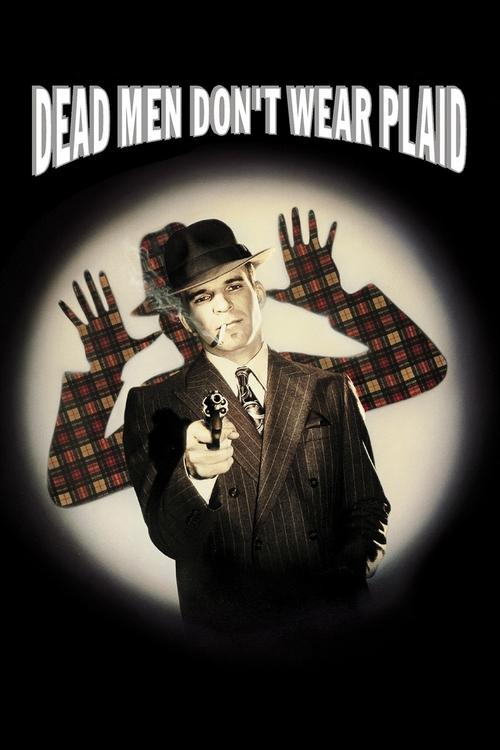
Dead Men Don't Wear Plaid
Juliet Forrest is convinced that the reported death of her father in a mountain car crash was no accident. Her father was a prominent cheese scientist working on a secret recipe. To prove it was murder, she enlists the services of private eye Rigby Reardon. He finds a slip of paper containing a list of people who are 'The Friends and Enemies of Carlotta'.
Despite its limited budget of $9.0M, Dead Men Don't Wear Plaid became a box office success, earning $18.2M worldwide—a 102% return.


Plot Structure
Story beats plotted across runtime


Narrative Arc
Emotional journey through the story's key moments
Story Circle
Blueprint 15-beat structure
Arcplot Score Breakdown
Weighted: Precision (70%) + Arc (15%) + Theme (15%)
Dead Men Don't Wear Plaid (1982) exemplifies precise story structure, characteristic of Carl Reiner's storytelling approach. This structural analysis examines how the film's 15-point plot structure maps to proven narrative frameworks across 1 hour and 29 minutes. With an Arcplot score of 7.4, the film balances conventional beats with creative variation.
Characters
Cast & narrative archetypes

Rigby Reardon
Juliet Forrest
Dr. Forrest
Carlotta
Main Cast & Characters
Rigby Reardon
Played by Steve Martin
A hard-boiled private detective investigating the mysterious death of a scientist and cheese magnate.
Juliet Forrest
Played by Rachel Ward
The beautiful daughter of the murdered scientist who hires Rigby to solve her father's death.
Dr. Forrest
Played by George Gaynes
Juliet's father, a brilliant scientist and cheese manufacturer whose death sets the mystery in motion.
Carlotta
Played by Reni Santoni
A mysterious woman connected to the conspiracy who appears throughout Rigby's investigation.
Structural Analysis
The Status Quo at 1 minutes (1% through the runtime) establishes Rigby Reardon sits alone in his shabby office, a down-on-his-luck private detective in 1940s Los Angeles, smoking and waiting for the next case that never comes.. Notably, this early placement immediately immerses viewers in the story world.
The inciting incident occurs at 10 minutes when Juliet Forrest arrives at Rigby's office seeking help to investigate her father's suspicious death. She believes scientist Dr. Forrest was murdered, disrupting Rigby's quiet existence with a dangerous case.. At 12% through the film, this Disruption aligns precisely with traditional story structure. This beat shifts the emotional landscape, launching the protagonist into the central conflict.
The First Threshold at 22 minutes marks the transition into Act II, occurring at 25% of the runtime. This reveals the protagonist's commitment to Rigby makes the active choice to fully pursue the case after discovering a list of names connected to Dr. Forrest. He commits to uncovering the truth, diving deep into the dangerous world of conspiracy and intrigue., moving from reaction to action.
At 44 minutes, the Midpoint arrives at 49% of the runtime—precisely centered, creating perfect narrative symmetry. Notably, this crucial beat Rigby discovers that Dr. Forrest's death is connected to a massive conspiracy involving Nazis and a plot called "The Carlotta Plan." What seemed like a simple murder investigation is revealed to be far more dangerous. False defeat: the stakes are higher than imagined., fundamentally raising what's at risk. The emotional intensity shifts, dividing the narrative into clear before-and-after phases.
The Collapse moment at 66 minutes (74% through) represents the emotional nadir. Here, Rigby is captured by the conspirators and faces certain death. His investigation appears to have failed, Juliet is in danger, and the Nazi plot will succeed. The whiff of death: Rigby believes he won't escape alive., reveals the protagonist at their lowest point. This beat's placement in the final quarter sets up the climactic reversal.
The Second Threshold at 70 minutes initiates the final act resolution at 79% of the runtime. Rigby escapes through wit and determination, synthesizing all the clues he's gathered. He realizes the full scope of the Carlotta Plan and knows exactly what he must do to stop it and save Juliet. Act 3 begins with clarity and purpose., demonstrating the transformation achieved throughout the journey.
Emotional Journey
Dead Men Don't Wear Plaid's emotional architecture traces a deliberate progression across 15 carefully calibrated beats.
Narrative Framework
This structural analysis employs a 15-point narrative structure framework that maps key story moments. By mapping Dead Men Don't Wear Plaid against these established plot points, we can identify how Carl Reiner utilizes or subverts traditional narrative conventions. The plot point approach reveals not only adherence to structural principles but also creative choices that distinguish Dead Men Don't Wear Plaid within the comedy genre.
Carl Reiner's Structural Approach
Among the 5 Carl Reiner films analyzed on Arcplot, the average structural score is 7.2, reflecting strong command of classical structure. Dead Men Don't Wear Plaid represents one of the director's most structurally precise works. For comparative analysis, explore the complete Carl Reiner filmography.
Comparative Analysis
Additional comedy films include The Bad Guys, Ella Enchanted and The Evening Star. For more Carl Reiner analyses, see All of Me, Oh, God! and Summer Rental.
Plot Points by Act
Act I
SetupStatus Quo
Rigby Reardon sits alone in his shabby office, a down-on-his-luck private detective in 1940s Los Angeles, smoking and waiting for the next case that never comes.
Theme
Juliet Forrest tells Rigby, "You can't trust appearances," foreshadowing the film's central theme about deception, false identities, and nothing being as it seems in the noir world.
Worldbuilding
Establishment of Rigby's world: his dingy office, his relationship with his cleaning woman Marlene, and the shadowy streets of 1940s LA. The film establishes its unique style of integrating classic noir footage.
Disruption
Juliet Forrest arrives at Rigby's office seeking help to investigate her father's suspicious death. She believes scientist Dr. Forrest was murdered, disrupting Rigby's quiet existence with a dangerous case.
Resistance
Rigby debates taking the case, examines the evidence of Dr. Forrest's death, and meets various noir characters who provide cryptic clues. He resists fully committing while gathering initial information about the mysterious circumstances.
Act II
ConfrontationFirst Threshold
Rigby makes the active choice to fully pursue the case after discovering a list of names connected to Dr. Forrest. He commits to uncovering the truth, diving deep into the dangerous world of conspiracy and intrigue.
Mirror World
Rigby's romantic connection with Juliet deepens in a playful scene involving wine and cheese. She represents trust and genuine emotion in contrast to the deceitful noir world, carrying the film's thematic heart.
Premise
The fun noir investigation: Rigby follows leads, encounters classic film noir characters, gets into fights, survives dangerous situations, and pieces together the conspiracy. The film delivers on its premise of parodying detective movies.
Midpoint
Rigby discovers that Dr. Forrest's death is connected to a massive conspiracy involving Nazis and a plot called "The Carlotta Plan." What seemed like a simple murder investigation is revealed to be far more dangerous. False defeat: the stakes are higher than imagined.
Opposition
The conspiracy tightens around Rigby. Enemies close in from all sides, attempts on his life increase, trusted contacts turn dangerous, and the web of deception becomes more complex. Pressure mounts as he struggles to stay alive and uncover the truth.
Collapse
Rigby is captured by the conspirators and faces certain death. His investigation appears to have failed, Juliet is in danger, and the Nazi plot will succeed. The whiff of death: Rigby believes he won't escape alive.
Crisis
Rigby's darkest moment of doubt and fear. He confronts his potential failure and mortality, processing what might be his final moments before finding renewed determination to fight back and save Juliet.
Act III
ResolutionSecond Threshold
Rigby escapes through wit and determination, synthesizing all the clues he's gathered. He realizes the full scope of the Carlotta Plan and knows exactly what he must do to stop it and save Juliet. Act 3 begins with clarity and purpose.
Synthesis
The finale: Rigby confronts the main conspirators, exposes the Nazi plot, engages in a climactic confrontation, and rescues Juliet. The cheese connection to the plan is revealed in absurdist fashion, and Rigby saves the day using his detective skills.
Transformation
Rigby and Juliet embrace, victorious. No longer the lonely, directionless detective from the opening, Rigby has found purpose, love, and proven his worth. The final image mirrors the opening but shows a transformed man with connection and meaning.