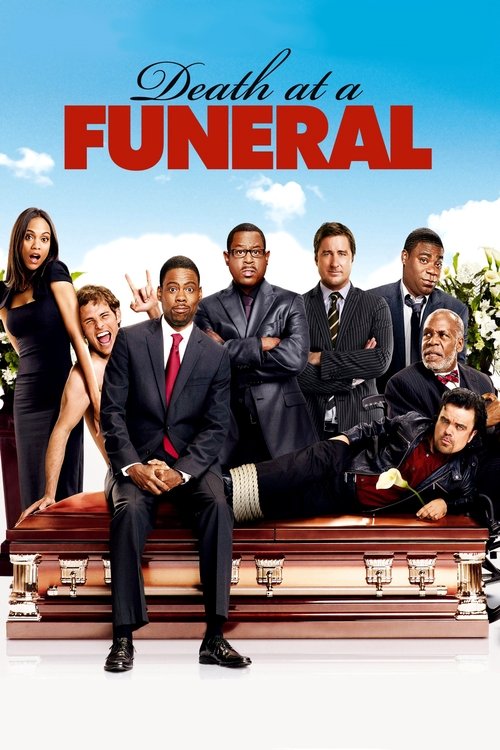
Death at a Funeral
Aaron's father's funeral is today at the family home, and everything goes wrong: the funeral home delivers the wrong body, his cousin accidentally drugs her fiancé, and Aaron's successful younger brother, Ryan, flies in from New York, broke but arrogant. To top it all off, a mysterious stranger wants a word with Aaron.
Despite a mid-range budget of $21.0M, Death at a Funeral became a commercial success, earning $49.1M worldwide—a 134% return.


Plot Structure
Story beats plotted across runtime


Narrative Arc
Emotional journey through the story's key moments
Story Circle
Blueprint 15-beat structure
Arcplot Score Breakdown
Weighted: Precision (70%) + Arc (15%) + Theme (15%)
Death at a Funeral (2010) demonstrates carefully calibrated narrative architecture, characteristic of Neil LaBute's storytelling approach. This structural analysis examines how the film's 15-point plot structure maps to proven narrative frameworks across 1 hour and 32 minutes. With an Arcplot score of 7.2, the film balances conventional beats with creative variation.
Structural Analysis
The Status Quo at 1 minutes (1% through the runtime) establishes Aaron arrives at his parents' home on the morning of his father's funeral, already stressed and overshadowed by expectations. The funeral home delivers the wrong body, immediately establishing the chaotic tone and Aaron's role as the responsible son trying to hold everything together.. Significantly, this early placement immediately immerses viewers in the story world.
The inciting incident occurs at 12 minutes when Frank, a mysterious dwarf, arrives at the funeral and privately confronts Aaron with photographs proving he was the deceased father's secret lover. Frank demands $30,000 for his silence, threatening to expose the affair to the entire family and congregation.. At 13% through the film, this Disruption is delayed, allowing extended setup of the story world. This beat shifts the emotional landscape, launching the protagonist into the central conflict.
The First Threshold at 23 minutes marks the transition into Act II, occurring at 25% of the runtime. This shows the protagonist's commitment to Aaron makes the fateful decision to pay Frank's blackmail money to protect his father's reputation and spare his mother the truth. He commits to the deception, crossing the threshold from grieving son to active participant in covering up family secrets., moving from reaction to action.
At 46 minutes, the Midpoint arrives at 50% of the runtime—precisely centered, creating perfect narrative symmetry. Significantly, this crucial beat In a confrontation gone wrong, Frank is accidentally knocked unconscious and appears to be dead. The family faces what seems like a catastrophic false defeat - they've potentially killed the blackmailer, compounding their problems exponentially. They must now hide a body during an ongoing funeral., fundamentally raising what's at risk. The emotional intensity shifts, dividing the narrative into clear before-and-after phases.
The Collapse moment at 69 minutes (75% through) represents the emotional nadir. Here, Frank regains consciousness and threatens to reveal everything to the funeral congregation. Aaron's carefully maintained facade crumbles completely - his father's secret, the blackmail, the cover-up, his brother's fraud, his own feelings of inadequacy all threaten to explode publicly. The "death" of Aaron's self-image and family honor., reveals the protagonist at their lowest point. This beat's placement in the final quarter sets up the climactic reversal.
The Second Threshold at 74 minutes initiates the final act resolution at 81% of the runtime. Aaron finds his voice and decides to deliver an authentic eulogy from the heart rather than the prepared speech. He synthesizes the day's chaos into wisdom - his father was imperfect but loved, and family means accepting messy truths. He chooses authenticity over reputation., demonstrating the transformation achieved throughout the journey.
Emotional Journey
Death at a Funeral's emotional architecture traces a deliberate progression across 15 carefully calibrated beats.
Narrative Framework
This structural analysis employs systematic plot point analysis that identifies crucial turning points. By mapping Death at a Funeral against these established plot points, we can identify how Neil LaBute utilizes or subverts traditional narrative conventions. The plot point approach reveals not only adherence to structural principles but also creative choices that distinguish Death at a Funeral within the comedy genre.
Neil LaBute's Structural Approach
Among the 6 Neil LaBute films analyzed on Arcplot, the average structural score is 7.2, reflecting strong command of classical structure. Death at a Funeral represents one of the director's most structurally precise works. For comparative analysis, explore the complete Neil LaBute filmography.
Comparative Analysis
Additional comedy films include The Bad Guys, Ella Enchanted and The Evening Star. For more Neil LaBute analyses, see The Wicker Man, Possession and Lakeview Terrace.
Plot Points by Act
Act I
SetupStatus Quo
Aaron arrives at his parents' home on the morning of his father's funeral, already stressed and overshadowed by expectations. The funeral home delivers the wrong body, immediately establishing the chaotic tone and Aaron's role as the responsible son trying to hold everything together.
Theme
Aaron's mother remarks that funerals have a way of bringing out the truth in families - people can't hide who they really are when death forces everyone together. This foreshadows the secrets about to be exposed and the theme of authenticity versus facades.
Worldbuilding
The extended family gathers: Aaron's successful author brother Ryan arrives to fanfare; cousin Elaine brings her uptight fiancé Oscar and unstable ex-boyfriend Derek; Uncle Russell complains from his wheelchair; Norman is tasked with watching Russell. Jeff accidentally takes Oscar's hallucinogenic pills thinking they're Valium.
Disruption
Frank, a mysterious dwarf, arrives at the funeral and privately confronts Aaron with photographs proving he was the deceased father's secret lover. Frank demands $30,000 for his silence, threatening to expose the affair to the entire family and congregation.
Resistance
Aaron grapples with Frank's blackmail while trying to maintain composure for the funeral. He confides in Ryan, who dismisses the problem. Meanwhile, Oscar's drug trip begins escalating, Derek lurks trying to win back Elaine, and Norman struggles to manage the cantankerous Uncle Russell. The family debates how to handle Frank.
Act II
ConfrontationFirst Threshold
Aaron makes the fateful decision to pay Frank's blackmail money to protect his father's reputation and spare his mother the truth. He commits to the deception, crossing the threshold from grieving son to active participant in covering up family secrets.
Mirror World
Oscar's hallucinogenic trip reaches full effect as he climbs onto the roof believing he can fly, creating a parallel storyline of absurdist chaos. His drug-induced loss of inhibition mirrors the theme of hidden truths being exposed - his true feelings about Elaine's family emerge without filter.
Premise
Funeral chaos escalates hilariously: Oscar strips naked on the roof; Derek schemes to sabotage the engagement; Norman accidentally drops Uncle Russell; Frank continues pressing for money; Aaron and Ryan argue about responsibility. The promise of the premise delivers dark comedy as the dignified funeral devolves into farce.
Midpoint
In a confrontation gone wrong, Frank is accidentally knocked unconscious and appears to be dead. The family faces what seems like a catastrophic false defeat - they've potentially killed the blackmailer, compounding their problems exponentially. They must now hide a body during an ongoing funeral.
Opposition
Desperate attempts to hide Frank's "body" while the funeral proceeds create mounting pressure. Ryan continues to steal spotlight from Aaron. The brothers' rivalry intensifies as Aaron discovers Ryan hasn't written his own books. Oscar's behavior becomes increasingly unhinged. Every secret threatens to surface.
Collapse
Frank regains consciousness and threatens to reveal everything to the funeral congregation. Aaron's carefully maintained facade crumbles completely - his father's secret, the blackmail, the cover-up, his brother's fraud, his own feelings of inadequacy all threaten to explode publicly. The "death" of Aaron's self-image and family honor.
Crisis
Aaron faces his darkest moment as everything falls apart. His wife Michelle questions their future, his mother remains oblivious to the chaos, and he must choose between maintaining lies or embracing painful truths. The weight of being the "responsible one" has brought him to breaking point.
Act III
ResolutionSecond Threshold
Aaron finds his voice and decides to deliver an authentic eulogy from the heart rather than the prepared speech. He synthesizes the day's chaos into wisdom - his father was imperfect but loved, and family means accepting messy truths. He chooses authenticity over reputation.
Synthesis
Aaron delivers a moving, honest eulogy that acknowledges imperfection while celebrating love. Frank is paid off and departs. Oscar and Elaine reconcile after his confession. Ryan acknowledges Aaron's strength. Uncle Russell is finally appeased. The family, having survived their trial by fire, finds genuine connection.
Transformation
Aaron stands with his wife Michelle, finally at peace. He has earned his place as family patriarch not through perfection but through authentic leadership during crisis. The closing image shows him confident and connected - transformed from anxious people-pleaser to self-assured head of family.