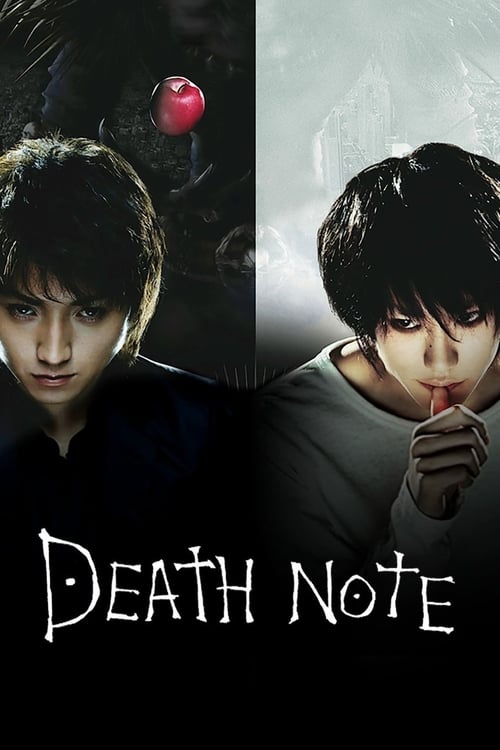
Death Note
Light Yagami finds the "Death Note," a notebook with the power to kill, and decides to create a Utopia by killing the world's criminals, and soon the world's greatest detective, "L," is hired to find the mysterious murderer. An all out battle between the two greatest minds on earth begins and the winner will control the world.
Working with a respectable budget of $20.0M, the film achieved a respectable showing with $29.7M in global revenue (+48% profit margin).
4 wins & 3 nominations
Plot Structure
Story beats plotted across runtime


Narrative Arc
Emotional journey through the story's key moments
Story Circle
Blueprint 15-beat structure
Arcplot Score Breakdown
Weighted: Precision (70%) + Arc (15%) + Theme (15%)
Death Note (2006) demonstrates strategically placed dramatic framework, characteristic of Shusuke Kaneko's storytelling approach. This structural analysis examines how the film's 15-point plot structure maps to proven narrative frameworks across 2 hours and 6 minutes. With an Arcplot score of 7.1, the film balances conventional beats with creative variation.
Characters
Cast & narrative archetypes

Light Yagami
L Lawliet
Misa Amane
Ryuk
Soichiro Yagami
Rem
Main Cast & Characters
Light Yagami
Played by Tatsuya Fujiwara
A brilliant high school student who discovers a supernatural notebook that kills anyone whose name is written in it, and becomes consumed by his quest to create a utopian world free of crime.
L Lawliet
Played by Kenichi Matsuyama
An eccentric genius detective who engages in an intense psychological battle with Light to uncover the identity of the mass murderer known as Kira.
Misa Amane
Played by Erika Toda
A pop idol and second Kira who becomes infatuated with Light and possesses her own Death Note, willing to sacrifice everything for him.
Ryuk
Played by Shido Nakamura
A shinigami (death god) who drops his Death Note into the human world out of boredom and observes Light's actions with detached amusement.
Soichiro Yagami
Played by Takeshi Kaga
Light's father and chief of the Japanese police, a man of unwavering moral integrity who leads the investigation to catch Kira.
Rem
Played by Shinnosuke Mitsushima
A female shinigami who cares deeply for Misa and gave her the Death Note, willing to break shinigami rules to protect her.
Structural Analysis
The Status Quo at 2 minutes (1% through the runtime) establishes Light Yagami is a brilliant but bored high school student, top of his class, observing the corrupt world with disdain. He embodies intellectual superiority disconnected from meaningful purpose.. Of particular interest, this early placement immediately immerses viewers in the story world.
The inciting incident occurs at 14 minutes when Light discovers the Death Note fallen from the sky. Testing it on a criminal holding hostages, he realizes the notebook's power is real - he can kill anyone by writing their name.. At 11% through the film, this Disruption aligns precisely with traditional story structure. This beat shifts the emotional landscape, launching the protagonist into the central conflict.
The First Threshold at 30 minutes marks the transition into Act II, occurring at 24% of the runtime. This shows the protagonist's commitment to Light fully commits to becoming Kira, declaring he will create a new world free of crime where he is god. He chooses to embrace the Death Note's power despite knowing there's no turning back., moving from reaction to action.
At 63 minutes, the Midpoint arrives at 50% of the runtime—precisely centered, creating perfect narrative symmetry. Of particular interest, this crucial beat L narrows the suspects to Light and publicly confronts him at university, beginning direct personal surveillance. The game becomes intimate and dangerous - false victory for L, but Light remains confident in his superiority., fundamentally raising what's at risk. The emotional intensity shifts, dividing the narrative into clear before-and-after phases.
The Collapse moment at 91 minutes (73% through) represents the emotional nadir. Here, Light's carefully constructed plans begin to crumble as L's deductions become increasingly accurate. The net closes around Light, and he faces the possibility of capture and execution for his crimes as Kira., indicates the protagonist at their lowest point. This beat's placement in the final quarter sets up the climactic reversal.
The Second Threshold at 100 minutes initiates the final act resolution at 79% of the runtime. Light devises his final gambit, using his understanding of both the Death Note's rules and L's psychology to set a trap that will either prove his innocence or doom him completely., demonstrating the transformation achieved throughout the journey.
Emotional Journey
Death Note's emotional architecture traces a deliberate progression across 15 carefully calibrated beats.
Narrative Framework
This structural analysis employs systematic plot point analysis that identifies crucial turning points. By mapping Death Note against these established plot points, we can identify how Shusuke Kaneko utilizes or subverts traditional narrative conventions. The plot point approach reveals not only adherence to structural principles but also creative choices that distinguish Death Note within the fantasy genre.
Shusuke Kaneko's Structural Approach
Among the 5 Shusuke Kaneko films analyzed on Arcplot, the average structural score is 6.8, demonstrating varied approaches to story architecture. Death Note represents one of the director's most structurally precise works. For comparative analysis, explore the complete Shusuke Kaneko filmography.
Comparative Analysis
Additional fantasy films include Thinner, Ella Enchanted and Conan the Barbarian. For more Shusuke Kaneko analyses, see Death Note: The Last Name, Gamera 3: Revenge of Iris and Gamera 2: Attack of Legion.
Plot Points by Act
Act I
SetupStatus Quo
Light Yagami is a brilliant but bored high school student, top of his class, observing the corrupt world with disdain. He embodies intellectual superiority disconnected from meaningful purpose.
Theme
Ryuk the shinigami states: "Humans are so interesting" - foreshadowing the exploration of what happens when a human gains god-like power and the corruption that follows absolute justice.
Worldbuilding
Establishment of Light's mundane life, his relationship with his father (police chief), introduction to the corrupt world that disgusts him, and the mysterious deaths of criminals beginning to occur worldwide.
Disruption
Light discovers the Death Note fallen from the sky. Testing it on a criminal holding hostages, he realizes the notebook's power is real - he can kill anyone by writing their name.
Resistance
Light debates the morality of using the Death Note, encounters Ryuk who explains the rules, and begins his campaign as "Kira" to purge the world of criminals. The world notices and reacts to Kira's vigilante justice.
Act II
ConfrontationFirst Threshold
Light fully commits to becoming Kira, declaring he will create a new world free of crime where he is god. He chooses to embrace the Death Note's power despite knowing there's no turning back.
Mirror World
L, the world's greatest detective, is introduced and challenges Kira publicly on television. This begins the cat-and-mouse game that will define the story - the battle between two brilliant minds.
Premise
The intellectual chess match between Light and L intensifies. Light joins the investigation task force (led by his father) to monitor L's progress while continuing as Kira. Each tries to outwit the other.
Midpoint
L narrows the suspects to Light and publicly confronts him at university, beginning direct personal surveillance. The game becomes intimate and dangerous - false victory for L, but Light remains confident in his superiority.
Opposition
L's surveillance intensifies. Light must operate under constant observation. The investigation closes in on Light's methods. Second Kira (Misa Amane) appears, complicating everything and threatening to expose Light.
Collapse
Light's carefully constructed plans begin to crumble as L's deductions become increasingly accurate. The net closes around Light, and he faces the possibility of capture and execution for his crimes as Kira.
Crisis
Light must confront the cost of his god complex. His relationship with his father is strained. L presents evidence that could expose him. Light faces the darkness of what he's become.
Act III
ResolutionSecond Threshold
Light devises his final gambit, using his understanding of both the Death Note's rules and L's psychology to set a trap that will either prove his innocence or doom him completely.
Synthesis
The final confrontation between Light and L unfolds. Both geniuses execute their endgame strategies. The truth about Kira's identity reaches its climax as the investigation reaches its conclusion.
Transformation
The closing image shows the aftermath of the battle between Light and L, with the world forever changed by Kira's existence. Light has transformed from bored student to calculating killer who believes himself a god.