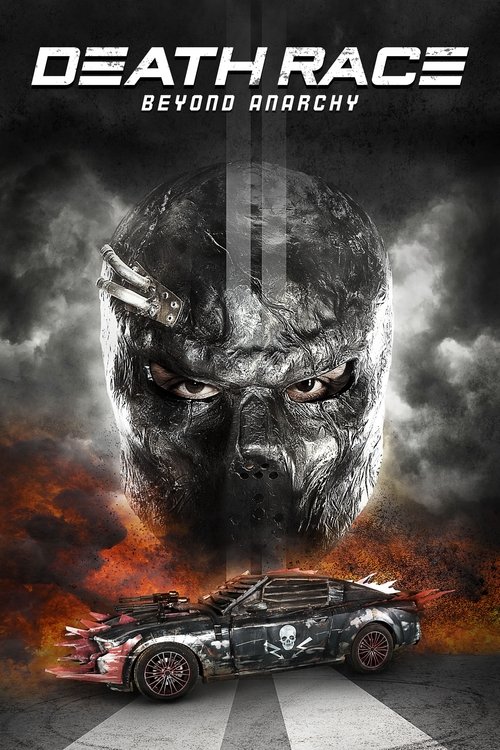
Death Race: Beyond Anarchy
Black Ops specialist Connor Gibson infiltrates a maximum security prison to take down legendary driver Frankenstein in a violent and brutal car race.


Plot Structure
Story beats plotted across runtime


Narrative Arc
Emotional journey through the story's key moments
Story Circle
Blueprint 15-beat structure
Arcplot Score Breakdown
Weighted: Precision (70%) + Arc (15%) + Theme (15%)
Death Race: Beyond Anarchy (2018) reveals precise narrative architecture, characteristic of Don Michael Paul's storytelling approach. This structural analysis examines how the film's 15-point plot structure maps to proven narrative frameworks across 1 hour and 51 minutes. With an Arcplot score of 6.7, the film balances conventional beats with creative variation.
Characters
Cast & narrative archetypes

Frankenstein
Baltimore Bob
Amber
Jed
Razor
Goldberg
Main Cast & Characters
Frankenstein
Played by Zach McGowan
A legendary Death Race driver who has become a symbol of rebellion in The Sprawl, forced back into racing to survive
Baltimore Bob
Played by Danny Trejo
The ruthless warlord who controls The Sprawl and forces Frankenstein back into the Death Race to maintain his power
Amber
Played by Christine Marzano
A fierce navigator and Frankenstein's partner who helps him survive the deadly races
Jed
Played by Folake Olowofoyeku
A tech-savvy mechanic and ally who provides crucial support to Frankenstein's team
Razor
Played by Velislav Pavlov
A dangerous rival racer competing against Frankenstein in the Death Race
Goldberg
Played by Danny Glover
Baltimore Bob's right-hand enforcer who ensures the Death Race operates according to Bob's rules
Structural Analysis
The Status Quo at 1 minutes (1% through the runtime) establishes The Sprawl is introduced as a lawless prison wasteland where Frankenstein reigns supreme as the undefeated Death Race champion. Government officials observe the chaos from the outside, desperate to end his cult-like control.. Significantly, this early placement immediately immerses viewers in the story world.
The inciting incident occurs at 13 minutes when Connor Gibson receives his mission: infiltrate the Sprawl undercover and assassinate Frankenstein. This suicide mission disrupts his life as a free agent and thrusts him into a world of chaos and violence.. At 12% through the film, this Disruption aligns precisely with traditional story structure. This beat shifts the emotional landscape, launching the protagonist into the central conflict.
The First Threshold at 28 minutes marks the transition into Act II, occurring at 25% of the runtime. This reveals the protagonist's commitment to Connor enters the Sprawl and commits to participating in the Death Race. There's no extraction plan; the only way out is to win. He actively chooses to compete, crossing the point of no return into this violent underworld., moving from reaction to action.
At 56 minutes, the Midpoint arrives at 50% of the runtime—precisely centered, creating perfect narrative symmetry. The analysis reveals that this crucial beat Connor wins a major qualifying race and earns the right to challenge Frankenstein directly. This false victory puts him in striking distance of his target, but also makes him a marked man with enemies on all sides., fundamentally raising what's at risk. The emotional intensity shifts, dividing the narrative into clear before-and-after phases.
The Collapse moment at 83 minutes (75% through) represents the emotional nadir. Here, Connor's cover is blown and he's captured by Frankenstein's forces. His allies are killed or scattered, his car is destroyed, and he faces torture and execution. The mission appears to have failed completely., demonstrates the protagonist at their lowest point. This beat's placement in the final quarter sets up the climactic reversal.
The Second Threshold at 89 minutes initiates the final act resolution at 80% of the runtime. Lists orchestrates Connor's escape. Connor realizes that defeating Frankenstein requires embracing the Death Race culture rather than fighting against it - he must become a legend to destroy one. He commits to the final confrontation., demonstrating the transformation achieved throughout the journey.
Emotional Journey
Death Race: Beyond Anarchy's emotional architecture traces a deliberate progression across 15 carefully calibrated beats.
Narrative Framework
This structural analysis employs structural analysis methodology used to understand storytelling architecture. By mapping Death Race: Beyond Anarchy against these established plot points, we can identify how Don Michael Paul utilizes or subverts traditional narrative conventions. The plot point approach reveals not only adherence to structural principles but also creative choices that distinguish Death Race: Beyond Anarchy within the action genre.
Don Michael Paul's Structural Approach
Among the 2 Don Michael Paul films analyzed on Arcplot, the average structural score is 7.1, reflecting strong command of classical structure. Death Race: Beyond Anarchy takes a more unconventional approach compared to the director's typical style. For comparative analysis, explore the complete Don Michael Paul filmography.
Comparative Analysis
Additional action films include The Bad Guys, Puss in Boots and Venom: The Last Dance. For more Don Michael Paul analyses, see Half Past Dead.
Plot Points by Act
Act I
SetupStatus Quo
The Sprawl is introduced as a lawless prison wasteland where Frankenstein reigns supreme as the undefeated Death Race champion. Government officials observe the chaos from the outside, desperate to end his cult-like control.
Theme
A government handler states that to defeat a monster, sometimes you have to become one. This establishes the theme of identity transformation and the moral cost of achieving justice through violence.
Worldbuilding
The brutal world of the Sprawl is established: a self-governing prison zone where Death Race determines hierarchy. Frankenstein's dominance, the government's failed attempts to control the situation, and Connor Gibson's background as an elite operative are introduced.
Disruption
Connor Gibson receives his mission: infiltrate the Sprawl undercover and assassinate Frankenstein. This suicide mission disrupts his life as a free agent and thrusts him into a world of chaos and violence.
Resistance
Connor is briefed on the Sprawl's rules and Frankenstein's legend. He debates the mission's impossibility but ultimately accepts. He's smuggled into the prison and begins to understand the Death Race culture and what it takes to survive.
Act II
ConfrontationFirst Threshold
Connor enters the Sprawl and commits to participating in the Death Race. There's no extraction plan; the only way out is to win. He actively chooses to compete, crossing the point of no return into this violent underworld.
Mirror World
Connor meets Lists, a resourceful mechanic and survivor within the Sprawl who becomes his ally. She represents an alternative path - survival through cunning rather than pure brutality - and embodies hope amid the violence.
Premise
Connor builds his car, forms his crew, and competes in qualifying Death Race events. He proves himself in brutal vehicular combat, earning a reputation and climbing the ranks toward the ultimate championship race against Frankenstein.
Midpoint
Connor wins a major qualifying race and earns the right to challenge Frankenstein directly. This false victory puts him in striking distance of his target, but also makes him a marked man with enemies on all sides.
Opposition
Frankenstein and his loyalists close in on Connor. Betrayals occur within Connor's crew, his true identity is suspected, and the government handlers consider abandoning him. The opposition intensifies as Connor gets closer to his target.
Collapse
Connor's cover is blown and he's captured by Frankenstein's forces. His allies are killed or scattered, his car is destroyed, and he faces torture and execution. The mission appears to have failed completely.
Crisis
Connor is imprisoned and beaten. He confronts the reality that he may have become as ruthless as the people he was sent to destroy. Lists and remaining allies must decide whether to risk everything to save him.
Act III
ResolutionSecond Threshold
Lists orchestrates Connor's escape. Connor realizes that defeating Frankenstein requires embracing the Death Race culture rather than fighting against it - he must become a legend to destroy one. He commits to the final confrontation.
Synthesis
The final Death Race unfolds. Connor and Frankenstein engage in a brutal vehicular duel across the Sprawl. Connor uses everything he's learned - combat skills, racing techniques, and the alliances he's forged - to defeat Frankenstein and end his reign.
Transformation
Connor defeats Frankenstein and is offered the chance to become the new Death Race champion - the new Frankenstein. He must decide whether to take the mask or walk away, having been transformed by his journey through the Sprawl.