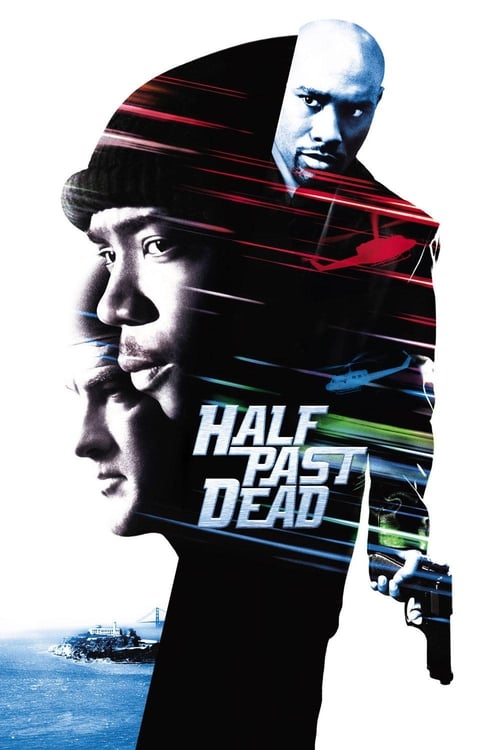
Half Past Dead
A man goes undercover in a hi-tech prison to find out information to help prosecute those who killed his wife. While there, he stumbles onto a plot involving a death-row inmate and his $200 million stash of gold.
The film disappointed at the box office against its moderate budget of $25.0M, earning $19.2M globally (-23% loss).


Plot Structure
Story beats plotted across runtime


Narrative Arc
Emotional journey through the story's key moments
Story Circle
Blueprint 15-beat structure
Arcplot Score Breakdown
Weighted: Precision (70%) + Arc (15%) + Theme (15%)
Half Past Dead (2002) demonstrates meticulously timed narrative design, characteristic of Don Michael Paul's storytelling approach. This structural analysis examines how the film's 15-point plot structure maps to proven narrative frameworks across 1 hour and 38 minutes. With an Arcplot score of 7.4, the film balances conventional beats with creative variation.
Characters
Cast & narrative archetypes

Sascha Petrosevitch
Nick Frazier
Donny Johnson
Lester McKenna
Ellen "Ellie" Sasha
49er One
Main Cast & Characters
Sascha Petrosevitch
Played by Steven Seagal
An undercover FBI agent posing as a criminal who infiltrates Alcatraz during a hostage crisis to stop a gold heist.
Nick Frazier
Played by Morris Chestnut
A master thief and Sascha's partner who becomes trapped in the prison takeover.
Donny Johnson
Played by Morris Chestnut
A ruthless criminal mastermind who orchestrates the takeover of New Alcatraz to steal hidden gold.
Lester McKenna
Played by Bruce Weitz
A convicted criminal who holds the secret to the location of $200 million in gold bars.
Ellen "Ellie" Sasha
Played by Claudia Christian
FBI handler and Sascha's love interest who coordinates the response from outside the prison.
49er One
Played by Ja Rule
A member of the criminal gang who takes over the prison, working with Donny Johnson.
Structural Analysis
The Status Quo at 1 minutes (1% through the runtime) establishes Sasha Petrosevitch works undercover as a car thief and criminal in a world of organized crime, establishing his identity as a skilled operative working with his partner Nick Frazier.. Structural examination shows that this early placement immediately immerses viewers in the story world.
The inciting incident occurs at 11 minutes when During a sting operation gone wrong, Nick is shot and critically wounded. Sasha is helpless as his partner dies, devastating him and changing everything.. At 11% through the film, this Disruption aligns precisely with traditional story structure. This beat shifts the emotional landscape, launching the protagonist into the central conflict.
The First Threshold at 23 minutes marks the transition into Act II, occurring at 24% of the runtime. This shows the protagonist's commitment to Terrorists led by Donny/49er One assault New Alcatraz during a Supreme Court Justice's visit, taking hostages. Sasha chooses to actively resist rather than comply, committing to fight back., moving from reaction to action.
At 48 minutes, the Midpoint arrives at 49% of the runtime—precisely centered, creating perfect narrative symmetry. Structural examination shows that this crucial beat The terrorists reveal their true objective: extracting the location of $200 million in gold from death row inmate Lester McKenna. The stakes escalate beyond a simple hostage situation—false defeat as the scope expands., fundamentally raising what's at risk. The emotional intensity shifts, dividing the narrative into clear before-and-after phases.
The Collapse moment at 72 minutes (74% through) represents the emotional nadir. Here, Lester McKenna is murdered by the terrorists after revealing the gold's location. An innocent is killed, hope seems lost, and Sasha faces the same helplessness he felt watching Nick die—a whiff of death., illustrates the protagonist at their lowest point. This beat's placement in the final quarter sets up the climactic reversal.
The Second Threshold at 78 minutes initiates the final act resolution at 79% of the runtime. Sasha synthesizes information about the terrorists' escape plan and realizes he can turn their strategy against them. He rallies remaining allies for a final coordinated assault., demonstrating the transformation achieved throughout the journey.
Emotional Journey
Half Past Dead's emotional architecture traces a deliberate progression across 15 carefully calibrated beats.
Narrative Framework
This structural analysis employs proven narrative structure principles that track dramatic progression. By mapping Half Past Dead against these established plot points, we can identify how Don Michael Paul utilizes or subverts traditional narrative conventions. The plot point approach reveals not only adherence to structural principles but also creative choices that distinguish Half Past Dead within the crime genre.
Don Michael Paul's Structural Approach
Among the 2 Don Michael Paul films analyzed on Arcplot, the average structural score is 7.1, reflecting strong command of classical structure. Half Past Dead represents one of the director's most structurally precise works. For comparative analysis, explore the complete Don Michael Paul filmography.
Comparative Analysis
Additional crime films include The Bad Guys, Rustom and The Whole Ten Yards. For more Don Michael Paul analyses, see Death Race: Beyond Anarchy.
Plot Points by Act
Act I
SetupStatus Quo
Sasha Petrosevitch works undercover as a car thief and criminal in a world of organized crime, establishing his identity as a skilled operative working with his partner Nick Frazier.
Theme
Nick tells Sasha about loyalty and trust in their partnership, foreshadowing the film's exploration of redemption, sacrifice, and what it means to protect those you care about.
Worldbuilding
Sasha and Nick infiltrate criminal operations, establishing their undercover work. The stakes are revealed as they work to get closer to major criminals while maintaining their cover.
Disruption
During a sting operation gone wrong, Nick is shot and critically wounded. Sasha is helpless as his partner dies, devastating him and changing everything.
Resistance
Eight years pass. Sasha, now convicted and imprisoned at the newly christened New Alcatraz, debates internally about his purpose. He meets fellow inmates including Twitch and encounters the prison's power dynamics.
Act II
ConfrontationFirst Threshold
Terrorists led by Donny/49er One assault New Alcatraz during a Supreme Court Justice's visit, taking hostages. Sasha chooses to actively resist rather than comply, committing to fight back.
Mirror World
Sasha encounters Lester McKenna and begins working with Ellen "Six" Williams, an FBI agent embedded in the prison. Their emerging partnership mirrors his lost relationship with Nick.
Premise
Sasha navigates the hijacked prison, using his skills to outmaneuver terrorists. Cat-and-mouse action sequences deliver on the premise: a wronged hero fighting overwhelming odds in a locked-down super-prison.
Midpoint
The terrorists reveal their true objective: extracting the location of $200 million in gold from death row inmate Lester McKenna. The stakes escalate beyond a simple hostage situation—false defeat as the scope expands.
Opposition
Pressure intensifies as terrorists execute hostages, outside forces attempt breaches, and Sasha's efforts are repeatedly countered. His allies are captured and the enemy closes in from all sides.
Collapse
Lester McKenna is murdered by the terrorists after revealing the gold's location. An innocent is killed, hope seems lost, and Sasha faces the same helplessness he felt watching Nick die—a whiff of death.
Crisis
Sasha processes the loss and confronts his inability to save everyone. In this dark moment, he must decide whether to give up or find a new way forward despite overwhelming odds.
Act III
ResolutionSecond Threshold
Sasha synthesizes information about the terrorists' escape plan and realizes he can turn their strategy against them. He rallies remaining allies for a final coordinated assault.
Synthesis
Sasha executes his plan, confronting the terrorist leader in an extended finale. He combines combat skills with tactical intelligence, saves the remaining hostages, and prevents the gold heist.
Transformation
Sasha stands among the freed hostages, having found redemption through protecting others. Unlike the opening where he was helpless to save Nick, he has now saved many lives—transformed from guilt-ridden operative to selfless hero.