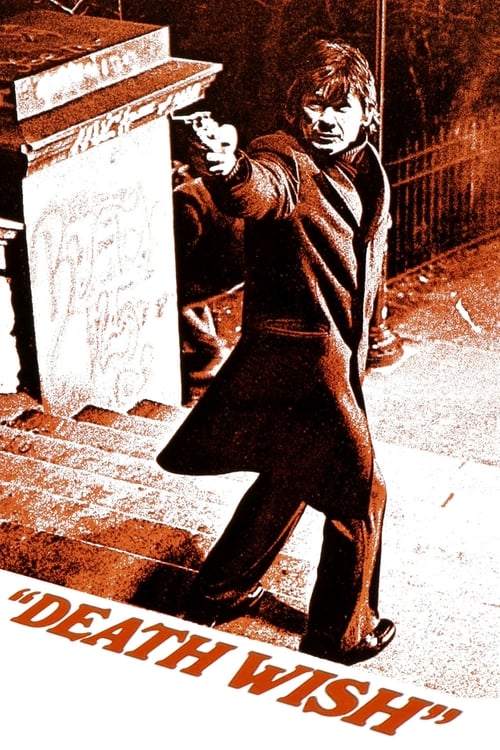
Death Wish
After his wife is murdered by street punks, a pacifistic New York City architect becomes a one-man vigilante squad, prowling the streets for would-be muggers after dark.
Despite its tight budget of $3.0M, Death Wish became a runaway success, earning $76.6M worldwide—a remarkable 2453% return. The film's unique voice found its audience, illustrating how strong storytelling can transcend budget limitations.
1 win & 2 nominations


Plot Structure
Story beats plotted across runtime


Narrative Arc
Emotional journey through the story's key moments
Story Circle
Blueprint 15-beat structure
Arcplot Score Breakdown
Weighted: Precision (70%) + Arc (15%) + Theme (15%)
Death Wish (1974) reveals meticulously timed story structure, characteristic of Michael Winner's storytelling approach. This structural analysis examines how the film's 15-point plot structure maps to proven narrative frameworks across 1 hour and 33 minutes. With an Arcplot score of 6.9, the film balances conventional beats with creative variation.
Characters
Cast & narrative archetypes

Paul Kersey
Frank Ochoa
Jack Toby
Joanna Kersey
Carol Toby
Ames Jainchill
Sam Kreutzer
Main Cast & Characters
Paul Kersey
Played by Charles Bronson
A liberal architect whose worldview is shattered after his wife is murdered and daughter is attacked, transforming him into a vigilante.
Frank Ochoa
Played by Vincent Gardenia
A compassionate police detective investigating the vigilante killings who develops a complicated relationship with Paul.
Jack Toby
Played by Steven Keats
Paul's business partner and loyal friend who supports him through his family tragedy.
Joanna Kersey
Played by Hope Lange
Paul's wife who is murdered during a home invasion, catalyzing his transformation.
Carol Toby
Played by Kathleen Tolan
Jack's wife and Joanna's daughter who is brutally attacked and left catatonic.
Ames Jainchill
Played by Stuart Margolin
A gun-loving Arizona developer who introduces Paul to firearms and self-defense.
Sam Kreutzer
Played by William Redfield
Paul's son-in-law who struggles with the aftermath of the attack on his wife.
Structural Analysis
The Status Quo at 1 minutes (1% through the runtime) establishes Paul Kersey vacations in Hawaii with his wife Joanna, enjoying an idyllic beach getaway. We see him as a successful, liberal architect living a comfortable upper-middle-class life in New York.. Structural examination shows that this early placement immediately immerses viewers in the story world.
The inciting incident occurs at 10 minutes when Three thugs invade Paul's apartment, brutally attacking Joanna and Carol. Joanna is murdered and Carol is sexually assaulted, leaving her catatonic. Paul receives the devastating phone call at work.. At 11% through the film, this Disruption aligns precisely with traditional story structure. This beat shifts the emotional landscape, launching the protagonist into the central conflict.
The First Threshold at 23 minutes marks the transition into Act II, occurring at 24% of the runtime. This indicates the protagonist's commitment to In Arizona, client Ames Jainchill takes Paul to a gun club and introduces him to shooting. Jainchill gives Paul a revolver as a gift before he returns to New York. Paul accepts the gun and brings it back to the city, marking his decision to enter a new world of violence., moving from reaction to action.
At 45 minutes, the Midpoint arrives at 49% of the runtime—precisely centered, creating perfect narrative symmetry. Notably, this crucial beat Public opinion shifts dramatically in favor of the vigilante. The media reports dropping crime rates and citizens expressing support. Paul seems vindicated - his actions are working. But the police intensify their investigation, and the stakes are raised as both sides close in., fundamentally raising what's at risk. The emotional intensity shifts, dividing the narrative into clear before-and-after phases.
The Collapse moment at 68 minutes (73% through) represents the emotional nadir. Here, Paul is shot and wounded by a mugger in an alley. He manages to escape but is injured. The police find his gun at the scene and trace it back to Arizona, definitively identifying Paul Kersey as the vigilante. His secret identity is dead., illustrates the protagonist at their lowest point. This beat's placement in the final quarter sets up the climactic reversal.
The Second Threshold at 74 minutes initiates the final act resolution at 80% of the runtime. The district attorney and police commissioner make a deal with Paul: leave New York permanently and they won't prosecute. They fear making him a martyr would cause public unrest given his popularity. Paul accepts, agreeing to relocate to Chicago., demonstrating the transformation achieved throughout the journey.
Emotional Journey
Death Wish's emotional architecture traces a deliberate progression across 15 carefully calibrated beats.
Narrative Framework
This structural analysis employs proven narrative structure principles that track dramatic progression. By mapping Death Wish against these established plot points, we can identify how Michael Winner utilizes or subverts traditional narrative conventions. The plot point approach reveals not only adherence to structural principles but also creative choices that distinguish Death Wish within the crime genre.
Michael Winner's Structural Approach
Among the 2 Michael Winner films analyzed on Arcplot, the average structural score is 7.0, reflecting strong command of classical structure. Death Wish takes a more unconventional approach compared to the director's typical style. For comparative analysis, explore the complete Michael Winner filmography.
Comparative Analysis
Additional crime films include The Bad Guys, Rustom and The Whole Ten Yards. For more Michael Winner analyses, see Death Wish II.
Plot Points by Act
Act I
SetupStatus Quo
Paul Kersey vacations in Hawaii with his wife Joanna, enjoying an idyllic beach getaway. We see him as a successful, liberal architect living a comfortable upper-middle-class life in New York.
Theme
At the office, colleagues discuss rising crime in New York. Paul's coworker Sam Kreutzer mentions he carries a gun, but Paul responds that he's a "bleeding-heart liberal" and conscientious objector, stating his father was killed in a hunting accident, establishing his anti-violence stance.
Worldbuilding
Paul returns to work at his Manhattan architecture firm. We meet his daughter Carol and son-in-law Jack. The family dynamic is warm and loving. Paul shops at D'Agostino's supermarket where three thugs spot Joanna and follow her home using the delivery address.
Disruption
Three thugs invade Paul's apartment, brutally attacking Joanna and Carol. Joanna is murdered and Carol is sexually assaulted, leaving her catatonic. Paul receives the devastating phone call at work.
Resistance
Paul struggles with grief and helplessness. He visits Carol in the hospital where she remains unresponsive. The police seem powerless to find the attackers. Paul attends Joanna's funeral. His boss sends him to Arizona on a project to help him cope with the trauma.
Act II
ConfrontationFirst Threshold
In Arizona, client Ames Jainchill takes Paul to a gun club and introduces him to shooting. Jainchill gives Paul a revolver as a gift before he returns to New York. Paul accepts the gun and brings it back to the city, marking his decision to enter a new world of violence.
Mirror World
Paul observes muggers and criminals on the street and subway with new awareness. The city itself becomes the mirror world - a violent landscape that challenges his liberal ideology and will force him to confront his beliefs about justice and revenge.
Premise
Paul begins his vigilante campaign. He encounters a mugger in Riverside Park and shoots him. He sets himself up as bait, getting mugged on the subway and killing his attackers. The media reports a mysterious vigilante. Paul continues hunting criminals nightly, executing multiple muggers and thieves.
Midpoint
Public opinion shifts dramatically in favor of the vigilante. The media reports dropping crime rates and citizens expressing support. Paul seems vindicated - his actions are working. But the police intensify their investigation, and the stakes are raised as both sides close in.
Opposition
The NYPD forms a special task force to catch the vigilante. Lieutenant Ochoa closes in on Paul through investigation. Paul becomes more brazen in his nighttime patrols. The political pressure mounts as the district attorney gets involved. Paul's double life becomes increasingly difficult to maintain.
Collapse
Paul is shot and wounded by a mugger in an alley. He manages to escape but is injured. The police find his gun at the scene and trace it back to Arizona, definitively identifying Paul Kersey as the vigilante. His secret identity is dead.
Crisis
Paul recovers in the hospital under police watch. Inspector Ochoa and the district attorney confront him with the evidence. Paul must face the consequences of his actions and decide who he has become through this campaign of violence.
Act III
ResolutionSecond Threshold
The district attorney and police commissioner make a deal with Paul: leave New York permanently and they won't prosecute. They fear making him a martyr would cause public unrest given his popularity. Paul accepts, agreeing to relocate to Chicago.
Synthesis
Paul prepares to leave New York. He says goodbye to his son-in-law Jack, who now understands what Paul did. Paul boards a plane to Chicago for his company transfer. His vigilante campaign is over, but the impact on New York City remains.
Transformation
At Chicago's airport, Paul sees thugs harassing a woman. He helps her with her bag, and when the thugs approach him, he makes a finger-gun gesture at them and smiles. Unlike the opening beach scene showing an innocent liberal, Paul is now transformed into a man defined by violence, suggesting his vigilantism will continue.