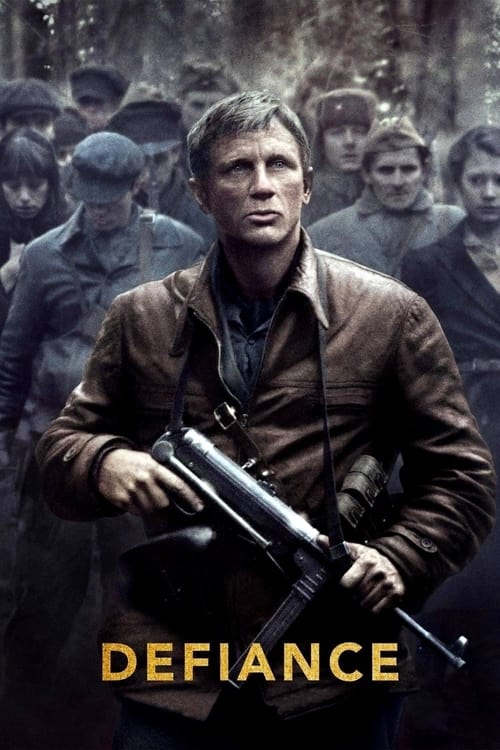
Defiance
Based on a true story, during World War II, four Jewish brothers escape their Nazi-occupied homeland of West Belarus in Poland and join the Soviet partisans to combat the Nazis. The brothers begin the rescue of roughly 1,200 Jews still trapped in the ghettos of Poland.
Working with a respectable budget of $32.0M, the film achieved a steady performer with $51.2M in global revenue (+60% profit margin).
Nominated for 1 Oscar. 2 wins & 5 nominations


Plot Structure
Story beats plotted across runtime


Narrative Arc
Emotional journey through the story's key moments
Story Circle
Blueprint 15-beat structure
Arcplot Score Breakdown
Weighted: Precision (70%) + Arc (15%) + Theme (15%)
Defiance (2008) demonstrates strategically placed narrative design, characteristic of Edward Zwick's storytelling approach. This structural analysis examines how the film's 15-point plot structure maps to proven narrative frameworks across 2 hours and 17 minutes. With an Arcplot score of 6.3, the film takes an unconventional approach to traditional narrative frameworks.
Characters
Cast & narrative archetypes

Tuvia Bielski
Zus Bielski
Asael Bielski
Lilka
Bella
Chaya
Shimon Haretz
Main Cast & Characters
Tuvia Bielski
Played by Daniel Craig
The eldest Bielski brother who leads Jewish refugees into the Belarusian forest and builds a survival community during WWII. A reluctant leader who prioritizes saving lives over revenge.
Zus Bielski
Played by Liev Schreiber
Tuvia's younger brother, a fierce warrior who believes in fighting back against the Nazis. He struggles with Tuvia's passive approach and eventually joins Soviet partisans.
Asael Bielski
Played by Jamie Bell
The youngest Bielski brother, impulsive and romantic. He grows from a hot-headed youth into a capable fighter and family man.
Lilka
Played by Alexa Davalos
A beautiful young woman who becomes Tuvia's love interest. She adapts to forest life and provides emotional support to the community.
Bella
Played by Iben Hjejle
Zus's wife, a strong woman who endures the hardships of forest life while maintaining hope and supporting her husband.
Chaya
Played by Mia Wasikowska
A young woman who catches Asael's eye and becomes his wife. She represents hope and new life in the forest community.
Shimon Haretz
Played by Allan Corduner
An intellectual who challenges Tuvia's leadership and represents the tension between survival and maintaining dignity.
Structural Analysis
The Status Quo at 2 minutes (1% through the runtime) establishes The Bielski brothers live in rural Belarus. German forces invade and murder their parents, destroying their peaceful world.. The analysis reveals that this early placement immediately immerses viewers in the story world.
The inciting incident occurs at 16 minutes when The brothers discover more Jewish refugees fleeing German death squads. They must decide whether to flee alone or take responsibility for others.. At 12% through the film, this Disruption aligns precisely with traditional story structure. This beat shifts the emotional landscape, launching the protagonist into the central conflict.
The First Threshold at 34 minutes marks the transition into Act II, occurring at 25% of the runtime. This shows the protagonist's commitment to Tuvia makes the active choice to build a community in the forest, declaring they will save as many Jews as possible. The mission shifts from survival to resistance through life., moving from reaction to action.
At 69 minutes, the Midpoint arrives at 50% of the runtime—precisely centered, creating perfect narrative symmetry. Significantly, this crucial beat Zus leaves to join the Soviet partisans, splitting the brothers. A German raid destroys part of the camp. The stakes escalate - survival is no longer guaranteed, and unity is broken., fundamentally raising what's at risk. The emotional intensity shifts, dividing the narrative into clear before-and-after phases.
The Collapse moment at 103 minutes (75% through) represents the emotional nadir. Here, Massive German assault on the forest camp. The community is forced to flee into the swamps. Many die. Tuvia's dream of sanctuary appears destroyed - metaphorical death of hope., shows the protagonist at their lowest point. This beat's placement in the final quarter sets up the climactic reversal.
The Second Threshold at 110 minutes initiates the final act resolution at 80% of the runtime. Zus returns with Soviet partisan support. The brothers reunite. Tuvia realizes that their survival itself - keeping the community alive - is the ultimate victory, regardless of the cost., demonstrating the transformation achieved throughout the journey.
Emotional Journey
Defiance's emotional architecture traces a deliberate progression across 15 carefully calibrated beats.
Narrative Framework
This structural analysis employs systematic plot point analysis that identifies crucial turning points. By mapping Defiance against these established plot points, we can identify how Edward Zwick utilizes or subverts traditional narrative conventions. The plot point approach reveals not only adherence to structural principles but also creative choices that distinguish Defiance within the action genre.
Edward Zwick's Structural Approach
Among the 10 Edward Zwick films analyzed on Arcplot, the average structural score is 6.8, demonstrating varied approaches to story architecture. Defiance takes a more unconventional approach compared to the director's typical style. For comparative analysis, explore the complete Edward Zwick filmography.
Comparative Analysis
Additional action films include The Bad Guys, Puss in Boots and Venom: The Last Dance. For more Edward Zwick analyses, see Courage Under Fire, Jack Reacher: Never Go Back and The Siege.
Plot Points by Act
Act I
SetupStatus Quo
The Bielski brothers live in rural Belarus. German forces invade and murder their parents, destroying their peaceful world.
Theme
A survivor tells Tuvia: "Our revenge is to live." This encapsulates the film's central question: Is survival itself an act of resistance?
Worldbuilding
Establishing the Nazi occupation of Belarus, the Bielski family dynamics, and the brothers' different personalities. Tuvia emerges as pragmatic leader, Zus as the warrior, Asael as the youngest.
Disruption
The brothers discover more Jewish refugees fleeing German death squads. They must decide whether to flee alone or take responsibility for others.
Resistance
Tuvia debates taking on leadership. The group struggles to survive in the forest. Internal conflict between Tuvia's protective instincts and Zus's desire for violent revenge.
Act II
ConfrontationFirst Threshold
Tuvia makes the active choice to build a community in the forest, declaring they will save as many Jews as possible. The mission shifts from survival to resistance through life.
Mirror World
Tuvia meets Lilka, who becomes his romantic interest. She represents the possibility of love and normalcy even in wartime, embodying the theme of choosing life over death.
Premise
The forest community grows. They build shelters, establish rules, celebrate weddings, and create a functioning society. The "promise of the premise" - building Jerusalem in the forest.
Midpoint
Zus leaves to join the Soviet partisans, splitting the brothers. A German raid destroys part of the camp. The stakes escalate - survival is no longer guaranteed, and unity is broken.
Opposition
Winter brings starvation and typhus. German forces close in. Internal dissent grows as people question Tuvia's leadership. The community faces collapse from external and internal pressures.
Collapse
Massive German assault on the forest camp. The community is forced to flee into the swamps. Many die. Tuvia's dream of sanctuary appears destroyed - metaphorical death of hope.
Crisis
Tuvia faces despair in the swamp. The survivors are starving, sick, and losing faith. He questions whether his choice to save people only led them to slower deaths.
Act III
ResolutionSecond Threshold
Zus returns with Soviet partisan support. The brothers reunite. Tuvia realizes that their survival itself - keeping the community alive - is the ultimate victory, regardless of the cost.
Synthesis
The Bielski partisans fight their way to safety. They combine Tuvia's protective leadership with Zus's warrior skills. The community survives together until liberation.
Transformation
Text reveals over 1,200 Jews survived because of the Bielski brothers. The image shows the community alive, transformed from victims into resistance fighters who chose life.