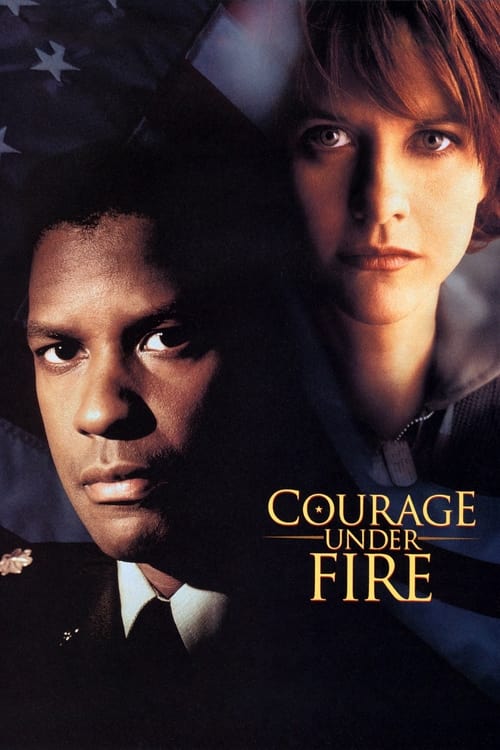
Courage Under Fire
A US Army officer, who made a "friendly fire" mistake that was covered up, has been reassigned to a desk job. He is tasked to investigate a female chopper commander's worthiness to be awarded the Medal of Honor. At first all seems in order. But then he begins to notice inconsistencies between the testimonies of the witnesses...
Despite a respectable budget of $46.0M, Courage Under Fire became a solid performer, earning $100.9M worldwide—a 119% return.
9 wins & 7 nominations


Plot Structure
Story beats plotted across runtime


Narrative Arc
Emotional journey through the story's key moments
Story Circle
Blueprint 15-beat structure
Arcplot Score Breakdown
Weighted: Precision (70%) + Arc (15%) + Theme (15%)
Courage Under Fire (1996) reveals strategically placed narrative design, characteristic of Edward Zwick's storytelling approach. This structural analysis examines how the film's 15-point plot structure maps to proven narrative frameworks across 1 hour and 56 minutes. With an Arcplot score of 6.8, the film balances conventional beats with creative variation.
Characters
Cast & narrative archetypes

Lt. Col. Nathaniel Serling
Capt. Karen Walden
Staff Sgt. John Monfriez
Specialist Andrew Ilario
Specialist Donald Rady
Lt. Col. Tony Gartner
Meredith Serling
Main Cast & Characters
Lt. Col. Nathaniel Serling
Played by Denzel Washington
Gulf War veteran haunted by friendly fire incident, investigating a Medal of Honor case while struggling with PTSD and guilt.
Capt. Karen Walden
Played by Meg Ryan
Medevac helicopter pilot being posthumously considered for Medal of Honor; the subject of Serling's investigation.
Staff Sgt. John Monfriez
Played by Lou Diamond Phillips
Crew member under Walden's command with a conflicted account of events; aggressive and defensive during interviews.
Specialist Andrew Ilario
Played by Matt Damon
Young medic who served with Walden; traumatized and struggles to recall events clearly.
Specialist Donald Rady
Played by Scott Glenn
Injured crew member whose testimony provides key pieces of the puzzle about Walden's final hours.
Lt. Col. Tony Gartner
Played by Michael Moriarty
Serling's superior officer who pressures him to complete the investigation favorably for political reasons.
Meredith Serling
Played by Regina Taylor
Nathaniel's wife who struggles to support her husband through his PTSD and alcoholism.
Structural Analysis
The Status Quo at 1 minutes (1% through the runtime) establishes The chaotic night battle in Desert Storm where Lt. Col. Serling commands his tank unit. The fog of war and confusion establish a world where truth is obscured and split-second decisions have fatal consequences.. Significantly, this early placement immediately immerses viewers in the story world.
The inciting incident occurs at 14 minutes when Serling receives the assignment to investigate Captain Karen Walden's Medal of Honor case. This disrupts his attempt to bury his own trauma by forcing him to confront questions of heroism, truth, and moral courage through another soldier's story.. At 12% through the film, this Disruption aligns precisely with traditional story structure. This beat shifts the emotional landscape, launching the protagonist into the central conflict.
The First Threshold at 29 minutes marks the transition into Act II, occurring at 25% of the runtime. This reveals the protagonist's commitment to Serling actively chooses to dig deeper when he notices contradictions in the witness testimonies. Rather than rubber-stamping the Medal of Honor, he commits to finding the real truth—mirroring his own need to face what really happened with Boylar., moving from reaction to action.
At 58 minutes, the Midpoint arrives at 50% of the runtime—precisely centered, creating perfect narrative symmetry. Of particular interest, this crucial beat Serling discovers that Monfriez has been coaching witnesses and that the "official" story is a coordinated lie. This false defeat reveals the investigation is far more complex and dark than expected. The cover-up suggests Walden may not have been a hero at all—or that something far worse happened., fundamentally raising what's at risk. The emotional intensity shifts, dividing the narrative into clear before-and-after phases.
The Collapse moment at 87 minutes (75% through) represents the emotional nadir. Here, Monfriez dies by suicide rather than face the truth, taking his secrets with him. Serling has lost his key witness and may never know what really happened. The "whiff of death" is literal—another soldier destroyed by the weight of hidden truth, mirroring what Serling's guilt could do to him., illustrates the protagonist at their lowest point. This beat's placement in the final quarter sets up the climactic reversal.
The Second Threshold at 93 minutes initiates the final act resolution at 80% of the runtime. Ilario finally breaks down and tells the complete truth: Walden was wounded and ordered her crew to leave her behind, then called in the napalm strike on her own position to save them from the Iraqis. Her courage was real—she sacrificed herself. This revelation gives Serling the clarity he needs., demonstrating the transformation achieved throughout the journey.
Emotional Journey
Courage Under Fire's emotional architecture traces a deliberate progression across 15 carefully calibrated beats.
Narrative Framework
This structural analysis employs structural analysis methodology used to understand storytelling architecture. By mapping Courage Under Fire against these established plot points, we can identify how Edward Zwick utilizes or subverts traditional narrative conventions. The plot point approach reveals not only adherence to structural principles but also creative choices that distinguish Courage Under Fire within the drama genre.
Edward Zwick's Structural Approach
Among the 10 Edward Zwick films analyzed on Arcplot, the average structural score is 6.8, demonstrating varied approaches to story architecture. Courage Under Fire takes a more unconventional approach compared to the director's typical style. For comparative analysis, explore the complete Edward Zwick filmography.
Comparative Analysis
Additional drama films include After Thomas, South Pacific and Dirty Dancing: Havana Nights. For more Edward Zwick analyses, see Jack Reacher: Never Go Back, The Siege and Love & Other Drugs.
Plot Points by Act
Act I
SetupStatus Quo
The chaotic night battle in Desert Storm where Lt. Col. Serling commands his tank unit. The fog of war and confusion establish a world where truth is obscured and split-second decisions have fatal consequences.
Theme
General Hershberg tells Serling about the Medal of Honor investigation: "The army needs heroes right now." The theme is stated—the tension between institutional need for heroic narratives and the actual truth of what happened.
Worldbuilding
We learn Serling killed one of his own men (Boylar) in the friendly fire incident. He's struggling with guilt, drinking, and his marriage is strained. He's assigned to investigate Captain Walden's Medal of Honor recommendation—a rescue mission where she allegedly died heroically.
Disruption
Serling receives the assignment to investigate Captain Karen Walden's Medal of Honor case. This disrupts his attempt to bury his own trauma by forcing him to confront questions of heroism, truth, and moral courage through another soldier's story.
Resistance
Serling begins his investigation, interviewing the first witnesses. He meets Walden's crew members and gets the "official" heroic version of events. Meanwhile, he struggles with whether to pursue discrepancies or accept the convenient narrative. Reporter Tony Gartner begins pressuring him about the Boylar incident.
Act II
ConfrontationFirst Threshold
Serling actively chooses to dig deeper when he notices contradictions in the witness testimonies. Rather than rubber-stamping the Medal of Honor, he commits to finding the real truth—mirroring his own need to face what really happened with Boylar.
Mirror World
Serling's investigation into Walden becomes a mirror for his own struggle. Her story—a soldier facing an impossible situation and the question of whether she acted heroically—reflects his trauma. The parallel narratives interweave, with Walden's truth becoming inseparable from Serling's need for redemption.
Premise
Serling interviews multiple witnesses, each giving conflicting accounts through Rashomon-style flashbacks. Monfriez claims Walden panicked; Ilario says she was a hero; Altameyer is traumatized and evasive. Each interview reveals new contradictions while Serling's own guilt and drinking intensify.
Midpoint
Serling discovers that Monfriez has been coaching witnesses and that the "official" story is a coordinated lie. This false defeat reveals the investigation is far more complex and dark than expected. The cover-up suggests Walden may not have been a hero at all—or that something far worse happened.
Opposition
Pressure mounts from all sides. The Army wants the investigation closed. Gartner threatens to expose the Boylar incident. Serling's marriage collapses. Monfriez actively obstructs. Ilario's story keeps changing. Serling's drinking worsens as he realizes that finding the truth may destroy both Walden's legacy and his own career.
Collapse
Monfriez dies by suicide rather than face the truth, taking his secrets with him. Serling has lost his key witness and may never know what really happened. The "whiff of death" is literal—another soldier destroyed by the weight of hidden truth, mirroring what Serling's guilt could do to him.
Crisis
Serling hits rock bottom. With Monfriez dead and the investigation seemingly at a dead end, he faces the possibility that the truth will never be known. He must confront whether to accept a convenient lie or continue fighting for truth at the cost of everything.
Act III
ResolutionSecond Threshold
Ilario finally breaks down and tells the complete truth: Walden was wounded and ordered her crew to leave her behind, then called in the napalm strike on her own position to save them from the Iraqis. Her courage was real—she sacrificed herself. This revelation gives Serling the clarity he needs.
Synthesis
Armed with the truth, Serling completes his report recommending Walden for the Medal of Honor. He attends the White House ceremony where her daughter accepts the medal. He also chooses to tell the Boylar family the truth about their son's death, accepting responsibility for his own actions.
Transformation
Serling stands at Walden's grave and salutes—honoring her true courage. Unlike the opening chaos and moral ambiguity, he now stands in clarity and peace. By finding Walden's truth, he's found his own redemption. The courage under fire wasn't just hers—it was his courage to face the truth.