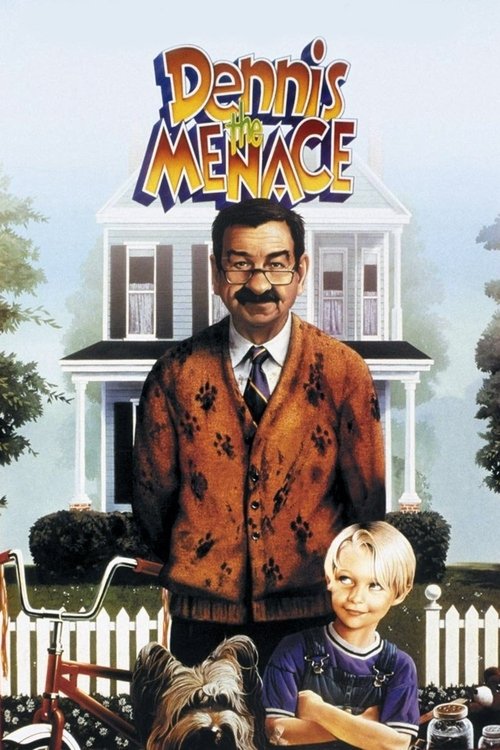
Dennis the Menace
Mr. Wilson's ever-present annoyance comes in the form of one mischievous kid named Dennis. But he'll need Dennis's tricks to uncover a collection of gold coins that go missing when a shady drifter named Switchblade Sam comes to town.
Despite a mid-range budget of $35.0M, Dennis the Menace became a financial success, earning $117.3M worldwide—a 235% return.
3 wins & 3 nominations


Plot Structure
Story beats plotted across runtime


Narrative Arc
Emotional journey through the story's key moments
Story Circle
Blueprint 15-beat structure
Arcplot Score Breakdown
Weighted: Precision (70%) + Arc (15%) + Theme (15%)
Dennis the Menace (1993) exhibits meticulously timed narrative design, characteristic of Nick Castle's storytelling approach. This structural analysis examines how the film's 15-point plot structure maps to proven narrative frameworks across 1 hour and 34 minutes. With an Arcplot score of 6.8, the film balances conventional beats with creative variation.
Characters
Cast & narrative archetypes

Dennis Mitchell
George Wilson
Switchblade Sam
Martha Wilson
Alice Mitchell
Henry Mitchell
Main Cast & Characters
Dennis Mitchell
Played by Mason Gamble
A well-meaning but troublesome five-year-old boy whose curiosity and mischief constantly disrupts his neighborhood, especially tormenting his next-door neighbor Mr. Wilson.
George Wilson
Played by Walter Matthau
A grumpy, retired businessman who dreams of peace and quiet but is constantly plagued by Dennis's antics. Deep down, he develops an unexpected bond with the boy.
Switchblade Sam
Played by Christopher Lloyd
A drifter and petty thief who comes to town with criminal intentions, targeting the Wilson home for robbery. He becomes the true antagonist of the story.
Martha Wilson
Played by Joan Plowright
George's patient and kind-hearted wife who sees the good in Dennis and often mediates between her husband and the boy.
Alice Mitchell
Played by Lea Thompson
Dennis's loving mother who struggles to balance understanding her son's spirited nature with addressing the chaos he creates.
Henry Mitchell
Played by Robert Stanton
Dennis's father, a hardworking man who loves his son but is often exhausted by his mischievous behavior.
Structural Analysis
The Status Quo at 1 minutes (1% through the runtime) establishes Dennis Mitchell wakes up and immediately begins causing chaos in his household, establishing him as a well-meaning but troublesome five-year-old. His elderly neighbor Mr. Wilson is introduced tending his pristine garden, representing order and peace that Dennis will disrupt.. Notably, this early placement immediately immerses viewers in the story world.
The inciting incident occurs at 12 minutes when Alice's mother becomes ill, and Alice must leave town immediately to care for her. Henry has a critical business trip he cannot cancel. Their regular babysitter is unavailable, creating a childcare crisis that will force Dennis into closer proximity with Mr. Wilson.. At 12% through the film, this Disruption aligns precisely with traditional story structure. This beat shifts the emotional landscape, launching the protagonist into the central conflict.
The First Threshold at 24 minutes marks the transition into Act II, occurring at 26% of the runtime. This illustrates the protagonist's commitment to Dennis's parents leave him with the Wilsons. Mr. Wilson reluctantly accepts his fate, and Dennis crosses the threshold into the Wilson household with his suitcase. The "mirror world" of living with the grumpy neighbor officially begins., moving from reaction to action.
At 47 minutes, the Midpoint arrives at 50% of the runtime—precisely centered, creating perfect narrative symmetry. Structural examination shows that this crucial beat Mr. Wilson's prized rare plant (a 40-year-old orchid he's been cultivating) is destroyed by Dennis's well-meaning but disastrous attempt to help. Mr. Wilson explodes in rage, their relationship hits its lowest point, and the stakes are raised—can they ever coexist peacefully?., fundamentally raising what's at risk. The emotional intensity shifts, dividing the narrative into clear before-and-after phases.
The Collapse moment at 70 minutes (74% through) represents the emotional nadir. Here, Dennis, feeling completely rejected and unwanted, runs away from the Wilson house into the woods. He is kidnapped by Switchblade Sam. Mr. Wilson discovers Dennis is missing and is devastated, realizing he drove the boy away and may have lost him forever—the "whiff of death."., demonstrates the protagonist at their lowest point. This beat's placement in the final quarter sets up the climactic reversal.
The Second Threshold at 76 minutes initiates the final act resolution at 81% of the runtime. Mr. Wilson realizes where Dennis might be (from earlier conversations) and takes charge of the rescue mission. He synthesizes his newfound love for Dennis with his determination and knowledge, becoming the unlikely hero. He sets out to save the boy he now understands he cherishes., demonstrating the transformation achieved throughout the journey.
Emotional Journey
Dennis the Menace's emotional architecture traces a deliberate progression across 15 carefully calibrated beats.
Narrative Framework
This structural analysis employs a 15-point narrative structure framework that maps key story moments. By mapping Dennis the Menace against these established plot points, we can identify how Nick Castle utilizes or subverts traditional narrative conventions. The plot point approach reveals not only adherence to structural principles but also creative choices that distinguish Dennis the Menace within the family genre.
Nick Castle's Structural Approach
Among the 5 Nick Castle films analyzed on Arcplot, the average structural score is 7.3, reflecting strong command of classical structure. Dennis the Menace takes a more unconventional approach compared to the director's typical style. For comparative analysis, explore the complete Nick Castle filmography.
Comparative Analysis
Additional family films include The Black Stallion, The Bad Guys and Ella Enchanted. For more Nick Castle analyses, see Tap, Major Payne and The Boy Who Could Fly.
Plot Points by Act
Act I
SetupStatus Quo
Dennis Mitchell wakes up and immediately begins causing chaos in his household, establishing him as a well-meaning but troublesome five-year-old. His elderly neighbor Mr. Wilson is introduced tending his pristine garden, representing order and peace that Dennis will disrupt.
Theme
Mr. Wilson complains to his wife Martha about Dennis, saying "He's a menace!" Martha responds that Mr. Wilson needs to learn patience and tolerance, hinting at the core theme: intergenerational understanding and finding joy despite irritation.
Worldbuilding
The neighborhood dynamics are established: Dennis's parents (Henry and Alice) work hard and love their son but struggle with his energy; Mr. Wilson treasures his garden and retirement peace; Martha Wilson is kind and patient. Dennis's innocent destructiveness is shown through various mishaps around the neighborhood.
Disruption
Alice's mother becomes ill, and Alice must leave town immediately to care for her. Henry has a critical business trip he cannot cancel. Their regular babysitter is unavailable, creating a childcare crisis that will force Dennis into closer proximity with Mr. Wilson.
Resistance
Dennis's parents desperately search for someone to watch Dennis. Multiple options fall through. Mr. Wilson overhears their dilemma, and Martha volunteers them to watch Dennis despite George's protests. George resists but is guilted into accepting, dreading the inevitable chaos.
Act II
ConfrontationFirst Threshold
Dennis's parents leave him with the Wilsons. Mr. Wilson reluctantly accepts his fate, and Dennis crosses the threshold into the Wilson household with his suitcase. The "mirror world" of living with the grumpy neighbor officially begins.
Mirror World
Martha Wilson becomes Dennis's primary caregiver and emotional anchor, showing him unconditional kindness. She represents the thematic counterpoint: acceptance and finding joy in childlike wonder. Meanwhile, a drifter named Switchblade Sam arrives in town, establishing the external threat.
Premise
The "fun and games" of Dennis living with Mr. Wilson: Dennis ruins Mr. Wilson's garden party, accidentally destroys his rare plant, causes chaos at every turn, yet also shows genuine affection for "Mr. Wilson." George oscillates between fury and reluctant softening. Switchblade Sam cases the neighborhood.
Midpoint
Mr. Wilson's prized rare plant (a 40-year-old orchid he's been cultivating) is destroyed by Dennis's well-meaning but disastrous attempt to help. Mr. Wilson explodes in rage, their relationship hits its lowest point, and the stakes are raised—can they ever coexist peacefully?
Opposition
Mr. Wilson becomes increasingly bitter and rejecting of Dennis. Dennis feels the pain of Mr. Wilson's anger and tries harder to please him, which only makes things worse. Meanwhile, Switchblade Sam intensifies his plans to rob the town. The emotional and physical dangers both escalate.
Collapse
Dennis, feeling completely rejected and unwanted, runs away from the Wilson house into the woods. He is kidnapped by Switchblade Sam. Mr. Wilson discovers Dennis is missing and is devastated, realizing he drove the boy away and may have lost him forever—the "whiff of death."
Crisis
Mr. Wilson experiences his dark night of the soul, consumed with guilt and fear for Dennis's safety. He confronts what Dennis truly meant to him and recognizes his own cruelty. The town mobilizes to search for Dennis while Mr. Wilson processes his transformation.
Act III
ResolutionSecond Threshold
Mr. Wilson realizes where Dennis might be (from earlier conversations) and takes charge of the rescue mission. He synthesizes his newfound love for Dennis with his determination and knowledge, becoming the unlikely hero. He sets out to save the boy he now understands he cherishes.
Synthesis
Mr. Wilson tracks down Switchblade Sam and Dennis in the woods. A confrontation ensues where Mr. Wilson risks himself to save Dennis. Dennis, in turn, uses his "menacing" creativity to help defeat Sam. Together, they overcome the threat, and their bond is cemented through shared danger and sacrifice.
Transformation
The closing image mirrors the opening: Mr. Wilson is in his garden, but now Dennis is welcome there. Mr. Wilson smiles as Dennis "helps" him garden, showing patience and genuine affection. The grumpy old man has learned to embrace the chaos and love the menace.