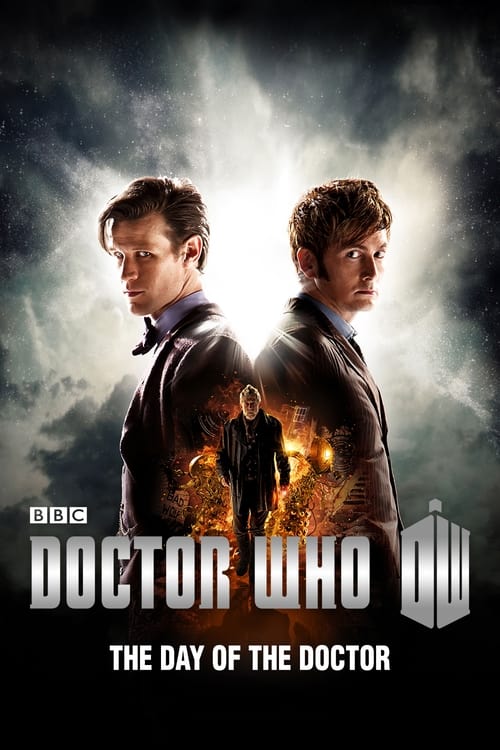
Doctor Who: The Day of the Doctor
In 2013, something terrible is awakening in London's National Gallery; in 1562, a murderous plot is afoot in Elizabethan England; and somewhere in space an ancient battle reaches its devastating conclusion. All of reality is at stake as the Doctor's own dangerous past comes back to haunt him.
The film earned $10.0M at the global box office.
Plot Structure
Story beats plotted across runtime


Narrative Arc
Emotional journey through the story's key moments
Story Circle
Blueprint 15-beat structure
Arcplot Score Breakdown
Weighted: Precision (70%) + Arc (15%) + Theme (15%)
Doctor Who: The Day of the Doctor (2013) showcases meticulously timed story structure, characteristic of Nick Hurran's storytelling approach. This structural analysis examines how the film's 15-point plot structure maps to proven narrative frameworks across 1 hour and 17 minutes. With an Arcplot score of 6.2, the film takes an unconventional approach to traditional narrative frameworks.
Characters
Cast & narrative archetypes

The Eleventh Doctor
The Tenth Doctor
The War Doctor
Clara Oswald
Rose Tyler
Kate Stewart
Main Cast & Characters
The Eleventh Doctor
Played by Matt Smith
The current Doctor, energetic and quirky, facing the consequences of the Time War alongside his past incarnations.
The Tenth Doctor
Played by David Tennant
A previous incarnation of the Doctor, haunted by the Time War and the destruction of Gallifrey.
The War Doctor
Played by John Hurt
A forgotten incarnation who fought in the Time War and made the terrible choice to end it by destroying Gallifrey.
Clara Oswald
Played by Jenna Coleman
The Eleventh Doctor's companion, resourceful and brave, who helps unite the three Doctors.
Rose Tyler
Played by Billie Piper
The Tenth Doctor's former companion, appearing as the conscience of the Moment weapon.
Kate Stewart
Played by Jemma Redgrave
Head of UNIT, dealing with the Zygon threat while coordinating with the Doctors.
Structural Analysis
The Status Quo at 1 minutes (1% through the runtime) establishes The original 1963 title sequence and Coal Hill School sign establish the Doctor's legacy, then the Eleventh Doctor and Clara are summoned by UNIT via helicopter-lifted TARDIS, showing their adventurous but restless existence.. Of particular interest, this early placement immediately immerses viewers in the story world.
The inciting incident occurs at 9 minutes when The War Doctor activates the Moment, the sentient weapon of mass destruction, intending to end the Time War by destroying Gallifrey. The Moment's interface (Rose Tyler/Bad Wolf) appears, forcing him to confront his choice.. At 12% through the film, this Disruption aligns precisely with traditional story structure. This beat shifts the emotional landscape, launching the protagonist into the central conflict.
The First Threshold at 19 minutes marks the transition into Act II, occurring at 25% of the runtime. This demonstrates the protagonist's commitment to All three Doctors unite for the first time when the Eleventh Doctor jumps through the time fissure into 1562, joining the Tenth Doctor and War Doctor. They choose to face their shared past together., moving from reaction to action.
At 39 minutes, the Midpoint arrives at 50% of the runtime—precisely centered, creating perfect narrative symmetry. The analysis reveals that this crucial beat The Doctors discover the Zygons have infiltrated UNIT and the Black Archive contains a nuclear failsafe. Kate Stewart activates the countdown, willing to destroy London to stop the invasion - a mirror of the Doctor's own impossible choice., fundamentally raising what's at risk. The emotional intensity shifts, dividing the narrative into clear before-and-after phases.
The Collapse moment at 58 minutes (75% through) represents the emotional nadir. Here, The War Doctor returns to the barn on Gallifrey, ready to activate the Moment. His future selves join him, prepared to share the burden. They face the death of 2.47 billion children - the ultimate weight of their guilt made present., indicates the protagonist at their lowest point. This beat's placement in the final quarter sets up the climactic reversal.
The Second Threshold at 62 minutes initiates the final act resolution at 80% of the runtime. Clara's tears and words break through: "You told me the name you chose was a promise. What was the promise?" The Doctor realizes he doesn't have to destroy Gallifrey - he can change history and save it instead., demonstrating the transformation achieved throughout the journey.
Emotional Journey
Doctor Who: The Day of the Doctor's emotional architecture traces a deliberate progression across 15 carefully calibrated beats.
Narrative Framework
This structural analysis employs proven narrative structure principles that track dramatic progression. By mapping Doctor Who: The Day of the Doctor against these established plot points, we can identify how Nick Hurran utilizes or subverts traditional narrative conventions. The plot point approach reveals not only adherence to structural principles but also creative choices that distinguish Doctor Who: The Day of the Doctor within the science fiction genre.
Nick Hurran's Structural Approach
Among the 3 Nick Hurran films analyzed on Arcplot, the average structural score is 6.6, demonstrating varied approaches to story architecture. Doctor Who: The Day of the Doctor takes a more unconventional approach compared to the director's typical style. For comparative analysis, explore the complete Nick Hurran filmography.
Comparative Analysis
Additional science fiction films include The Postman, Mad Max 2 and AVP: Alien vs. Predator. For more Nick Hurran analyses, see It's a Boy Girl Thing, Little Black Book.
Plot Points by Act
Act I
SetupStatus Quo
The original 1963 title sequence and Coal Hill School sign establish the Doctor's legacy, then the Eleventh Doctor and Clara are summoned by UNIT via helicopter-lifted TARDIS, showing their adventurous but restless existence.
Theme
Kate Stewart references the Doctor's title: "The Doctor. The man who makes people better." This establishes the central question: can the Doctor live up to his name after what he did in the Time War?
Worldbuilding
Setup establishes the three time periods: present-day UNIT and the Black Archive, the Tenth Doctor's Elizabethan adventure with Queen Elizabeth I, and the War Doctor on the last day of the Time War with the Moment weapon.
Disruption
The War Doctor activates the Moment, the sentient weapon of mass destruction, intending to end the Time War by destroying Gallifrey. The Moment's interface (Rose Tyler/Bad Wolf) appears, forcing him to confront his choice.
Resistance
The Moment serves as guide, showing the War Doctor the man he will become. Time fissures open connecting the three Doctors. The Eleventh Doctor investigates the 3D Gallifreyan paintings while the Tenth confronts a Zygon threat in 1562.
Act II
ConfrontationFirst Threshold
All three Doctors unite for the first time when the Eleventh Doctor jumps through the time fissure into 1562, joining the Tenth Doctor and War Doctor. They choose to face their shared past together.
Mirror World
Clara's relationship with the Doctor deepens as she becomes the moral conscience across timelines. She sees all three Doctors and understands their burden, representing the companion's role in keeping the Doctor humane.
Premise
The three Doctors work together, imprisoned in the Tower of London across different centuries. They bicker, bond, and use their sonic screwdrivers across 400 years to calculate an escape. The Zygon invasion plot unfolds in parallel.
Midpoint
The Doctors discover the Zygons have infiltrated UNIT and the Black Archive contains a nuclear failsafe. Kate Stewart activates the countdown, willing to destroy London to stop the invasion - a mirror of the Doctor's own impossible choice.
Opposition
The Doctors race to stop both the Zygon invasion and the nuclear detonation. They force a negotiation by erasing memories so neither side knows who is human or Zygon. The War Doctor observes and judges his future selves.
Collapse
The War Doctor returns to the barn on Gallifrey, ready to activate the Moment. His future selves join him, prepared to share the burden. They face the death of 2.47 billion children - the ultimate weight of their guilt made present.
Crisis
All three Doctors stand with hands on the Moment, accepting they must destroy Gallifrey. The War Doctor finally sees his future selves as worthy of the name Doctor despite carrying this burden. They prepare to commit genocide together.
Act III
ResolutionSecond Threshold
Clara's tears and words break through: "You told me the name you chose was a promise. What was the promise?" The Doctor realizes he doesn't have to destroy Gallifrey - he can change history and save it instead.
Synthesis
All thirteen incarnations of the Doctor unite to freeze Gallifrey in a single moment in time, hiding it in a pocket universe. The planet vanishes as the Daleks destroy each other in crossfire. The Time War ends without genocide.
Transformation
The Eleventh Doctor stands in the Gallery of the Undergallery, gazing at the painting "Gallifrey Falls No More." The Curator (a future Doctor) hints that his search will succeed. The Doctor now has hope instead of guilt - a new purpose.