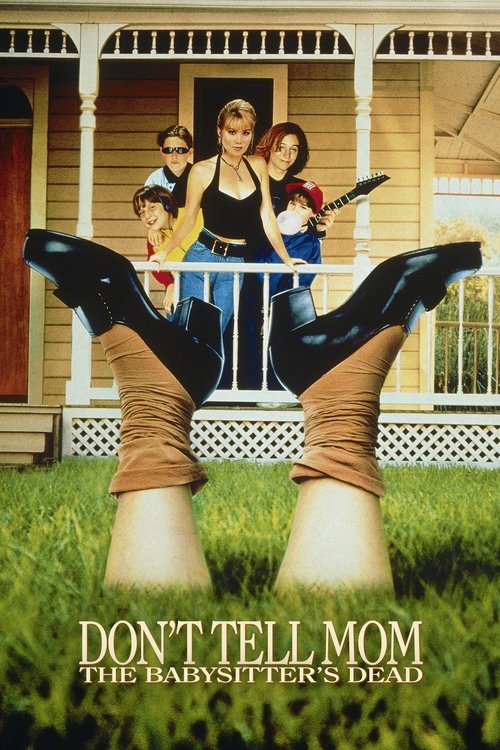
Don't Tell Mom the Babysitter's Dead
Sue Ellen Crandell is a teenager eagerly awaiting her mother's summer-long absence. While the babysitter looks after her rambunctious younger siblings, Sue Ellen can party and have fun. But then the babysitter abruptly dies, leaving the Crandells short on cash. Sue Ellen finds a sweet job in fashion by lying about her age and experience on her résumé. But, while her siblings run wild, she discovers the downside of adulthood
Despite its small-scale budget of $10.0M, Don't Tell Mom the Babysitter's Dead became a financial success, earning $25.2M worldwide—a 152% return.


Plot Structure
Story beats plotted across runtime


Narrative Arc
Emotional journey through the story's key moments
Story Circle
Blueprint 15-beat structure
Arcplot Score Breakdown
Weighted: Precision (70%) + Arc (15%) + Theme (15%)
Don't Tell Mom the Babysitter's Dead (1991) exemplifies deliberately positioned dramatic framework, characteristic of Stephen Herek's storytelling approach. This structural analysis examines how the film's 15-point plot structure maps to proven narrative frameworks across 1 hour and 45 minutes. With an Arcplot score of 7.1, the film balances conventional beats with creative variation.
Characters
Cast & narrative archetypes

Sue Ellen "Swell" Crandell
Kenny Crandell
Bryan
Rose Lindsey
Carolyn
Melissa Crandell
Zach Crandell
Walter Crandell
Main Cast & Characters
Sue Ellen "Swell" Crandell
Played by Christina Applegate
17-year-old girl forced to become breadwinner when the babysitter dies, transforms from irresponsible teen to competent professional
Kenny Crandell
Played by Keith Coogan
Sue Ellen's older brother, slacker who initially resists responsibility but becomes supportive
Bryan
Played by Josh Charles
Fashion designer and love interest who becomes Sue Ellen's romantic partner and ally
Rose Lindsey
Played by Joanna Cassidy
Sue Ellen's demanding boss at GAW, corporate executive who challenges her protégé
Carolyn
Played by Jayne Brook
Conniving coworker who tries to undermine Sue Ellen and expose her lies
Melissa Crandell
Played by Danielle Harris
Sue Ellen's younger sister, boy-crazy teen who provides comic relief
Zach Crandell
Played by Christopher Pettiet
Youngest Crandell brother, obsessed with television and junk food
Walter Crandell
Played by Robert Hy Gorman
Middle Crandell brother, troublemaking kid who causes chaos
Structural Analysis
The Status Quo at 1 minutes (1% through the runtime) establishes Sue Ellen Crandell is a carefree 17-year-old slacker anticipating a fun summer with friends while her single mother goes on vacation to Australia. The opening establishes her irresponsible, party-focused lifestyle and her strained relationship with her four younger siblings.. Notably, this early placement immediately immerses viewers in the story world.
The inciting incident occurs at 12 minutes when The babysitter dies suddenly in her sleep. This shocking event disrupts everything - the kids are now unsupervised with no money, and Sue Ellen faces a choice: call their mother (ruining her vacation) or handle it themselves.. At 11% through the film, this Disruption aligns precisely with traditional story structure. This beat shifts the emotional landscape, launching the protagonist into the central conflict.
The First Threshold at 26 minutes marks the transition into Act II, occurring at 24% of the runtime. This shows the protagonist's commitment to Sue Ellen makes the active choice to fabricate a resume using her mother's old credentials and interview for an executive position at General Apparel West (GAW). She commits to the lie and steps into an adult world she's completely unprepared for., moving from reaction to action.
At 53 minutes, the Midpoint arrives at 50% of the runtime—precisely centered, creating perfect narrative symmetry. The analysis reveals that this crucial beat Sue Ellen's presentation wins over the company executives and she's given full responsibility for the major fall fashion launch. This false victory makes her believe she's successfully conquered the adult world, but the stakes have just raised dramatically - she's in way over her head., fundamentally raising what's at risk. The emotional intensity shifts, dividing the narrative into clear before-and-after phases.
The Collapse moment at 78 minutes (74% through) represents the emotional nadir. Here, Sue Ellen's lies are exposed at the worst possible moment. Rose reveals to Carolyn and the executives that Sue Ellen fabricated her entire resume and has no credentials. Sue Ellen is fired and publicly humiliated. Her professional life dies, and she loses Bryan's trust when the full extent of her deception becomes clear., reveals the protagonist at their lowest point. This beat's placement in the final quarter sets up the climactic reversal.
The Second Threshold at 84 minutes initiates the final act resolution at 80% of the runtime. Sue Ellen's siblings rally around her, and she realizes what truly matters - family and genuine responsibility. She discovers that Rose has stolen her fashion designs. Armed with this information and newfound maturity, Sue Ellen decides to fight for what's right, not for glory, but to protect her work and make things right., demonstrating the transformation achieved throughout the journey.
Emotional Journey
Don't Tell Mom the Babysitter's Dead's emotional architecture traces a deliberate progression across 15 carefully calibrated beats.
Narrative Framework
This structural analysis employs systematic plot point analysis that identifies crucial turning points. By mapping Don't Tell Mom the Babysitter's Dead against these established plot points, we can identify how Stephen Herek utilizes or subverts traditional narrative conventions. The plot point approach reveals not only adherence to structural principles but also creative choices that distinguish Don't Tell Mom the Babysitter's Dead within the comedy genre.
Stephen Herek's Structural Approach
Among the 11 Stephen Herek films analyzed on Arcplot, the average structural score is 7.2, reflecting strong command of classical structure. Don't Tell Mom the Babysitter's Dead takes a more unconventional approach compared to the director's typical style. For comparative analysis, explore the complete Stephen Herek filmography.
Comparative Analysis
Additional comedy films include The Bad Guys, Ella Enchanted and The Evening Star. For more Stephen Herek analyses, see Rock Star, 101 Dalmatians and Critters.
Plot Points by Act
Act I
SetupStatus Quo
Sue Ellen Crandell is a carefree 17-year-old slacker anticipating a fun summer with friends while her single mother goes on vacation to Australia. The opening establishes her irresponsible, party-focused lifestyle and her strained relationship with her four younger siblings.
Theme
Sue Ellen's mother tells her before leaving: "I'm counting on you to be responsible." This thematic statement about responsibility and growing up will be tested throughout the film as Sue Ellen is forced to mature quickly.
Worldbuilding
Introduction of the Crandell household dynamics, the five siblings, their mother's departure, and the arrival of Mrs. Sturak, the tyrannical elderly babysitter. The setup shows Sue Ellen's plans being crushed, the family's financial constraints, and the oppressive new regime under the babysitter.
Disruption
The babysitter dies suddenly in her sleep. This shocking event disrupts everything - the kids are now unsupervised with no money, and Sue Ellen faces a choice: call their mother (ruining her vacation) or handle it themselves.
Resistance
The siblings debate what to do about the dead babysitter and their situation. They dispose of the body at a mortuary and discover they have no money left. Sue Ellen tries to find work but realizes she has no marketable skills or experience. Her brother Kenny suggests creative solutions.
Act II
ConfrontationFirst Threshold
Sue Ellen makes the active choice to fabricate a resume using her mother's old credentials and interview for an executive position at General Apparel West (GAW). She commits to the lie and steps into an adult world she's completely unprepared for.
Mirror World
Sue Ellen meets Bryan, a young fashion designer working in the GAW mailroom and studying at night. He represents the authentic, hardworking path to success (versus her fraudulent shortcut) and becomes her romantic interest and moral compass.
Premise
The fun and games of Sue Ellen playing executive: she gets the job, learns the ropes, manages her team, juggles home responsibilities with her siblings, throws money at problems, and experiences the glamorous life. She grows more confident but also more duplicitous, maintaining the facade at work while keeping her home life secret.
Midpoint
Sue Ellen's presentation wins over the company executives and she's given full responsibility for the major fall fashion launch. This false victory makes her believe she's successfully conquered the adult world, but the stakes have just raised dramatically - she's in way over her head.
Opposition
Pressure mounts from all sides: her coworker Rose suspects something is wrong, the fashion show demands consume her time, her siblings feel neglected and act out, her relationship with Bryan becomes strained by her lies, and her boss Carolyn scrutinizes her work more closely. Sue Ellen's web of deception begins unraveling.
Collapse
Sue Ellen's lies are exposed at the worst possible moment. Rose reveals to Carolyn and the executives that Sue Ellen fabricated her entire resume and has no credentials. Sue Ellen is fired and publicly humiliated. Her professional life dies, and she loses Bryan's trust when the full extent of her deception becomes clear.
Crisis
Sue Ellen returns home devastated, facing her disappointed siblings. She has a dark night of the soul, realizing she's lost everything - her job, Bryan's respect, and nearly lost her family. She reflects on how her irresponsibility and dishonesty have consequences beyond herself.
Act III
ResolutionSecond Threshold
Sue Ellen's siblings rally around her, and she realizes what truly matters - family and genuine responsibility. She discovers that Rose has stolen her fashion designs. Armed with this information and newfound maturity, Sue Ellen decides to fight for what's right, not for glory, but to protect her work and make things right.
Synthesis
Sue Ellen crashes the fashion show, exposes Rose's theft, and proves her creative worth through her designs' success. She takes responsibility for her lies, apologizes to Bryan and earns back his trust, reconciles with her coworkers, and manages to have the house ready before her mother returns home. She handles the finale with genuine maturity.
Transformation
The mother returns home to find everything seemingly normal, unaware of the summer's events. Sue Ellen, now genuinely responsible and mature, shares a knowing look with her siblings. Unlike the opening where she was a careless teenager, she's now a young woman who understands real responsibility - shown by her choosing to keep the secret to protect her mother, not herself.