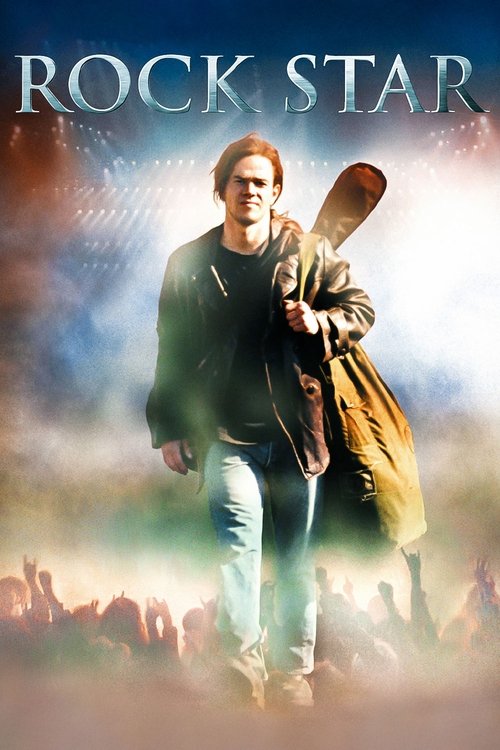
Rock Star
A wannabe rock star who fronts a Pennsylvania-based tribute band is devastated when his bandmates kick him out of the group he founded. Things begin to look up for Izzy when he is asked to join Steel Dragon, the heavy metal rockers he had been imitating for so long. This film is loosely based on the true story of the band Judas Priest.
The film commercial failure against its mid-range budget of $57.0M, earning $19.3M globally (-66% loss). While initial box office returns were modest, the film has gained appreciation for its fresh perspective within the music genre.


Plot Structure
Story beats plotted across runtime


Narrative Arc
Emotional journey through the story's key moments
Story Circle
Blueprint 15-beat structure
Arcplot Score Breakdown
Weighted: Precision (70%) + Arc (15%) + Theme (15%)
Rock Star (2001) demonstrates carefully calibrated story structure, characteristic of Stephen Herek's storytelling approach. This structural analysis examines how the film's 15-point plot structure maps to proven narrative frameworks across 1 hour and 45 minutes. With an Arcplot score of 7.0, the film balances conventional beats with creative variation.
Characters
Cast & narrative archetypes

Chris Cole
Emily Poule
Bobby Beers
Kirk Cuddy
Rob Malcolm
Mats
Main Cast & Characters
Chris Cole
Played by Mark Wahlberg
A Pittsburgh copy machine technician obsessed with heavy metal who becomes the lead singer of his favorite band Steel Dragon.
Emily Poule
Played by Jennifer Aniston
Chris's supportive girlfriend and manager who helps him navigate his rise to fame but struggles with the rock star lifestyle.
Bobby Beers
Played by Jason Flemyng
The original lead singer of Steel Dragon who quits the band to pursue a solo career, creating the opening for Chris.
Kirk Cuddy
Played by Dominic West
Steel Dragon's guitarist and de facto leader who recruits Chris but later becomes antagonistic over creative control.
Rob Malcolm
Played by Timothy Olyphant
Chris's best friend and lead guitarist of his Steel Dragon tribute band Blood Pollution.
Mats
Played by Timothy Spall
Steel Dragon's bassist who befriends Chris and reveals the rock star lifestyle's hidden realities.
Structural Analysis
The Status Quo at 1 minutes (1% through the runtime) establishes Chris Cole lives a dual life: copy machine repairman by day, lead singer of Blood Pollution (a Steel Dragon tribute band) by night. He obsessively recreates Bobby Beers' performance down to every detail, living in his childhood bedroom covered with Steel Dragon posters.. Structural examination shows that this early placement immediately immerses viewers in the story world.
The inciting incident occurs at 12 minutes when Chris is fired from Blood Pollution by his own tribute band for being "too perfect" and obsessive. His dream of performing as Bobby Beers, even in tribute form, is shattered. He watches his former band perform without him.. At 12% through the film, this Disruption aligns precisely with traditional story structure. This beat shifts the emotional landscape, launching the protagonist into the central conflict.
The First Threshold at 25 minutes marks the transition into Act II, occurring at 24% of the runtime. This shows the protagonist's commitment to Chris boards a plane to Los Angeles with Emily to audition for Steel Dragon. He makes the active choice to pursue becoming the actual lead singer of his idol band, crossing from tribute performer into the real rock world., moving from reaction to action.
At 51 minutes, the Midpoint arrives at 49% of the runtime—precisely centered, creating perfect narrative symmetry. Notably, this crucial beat False victory: Steel Dragon plays to their largest crowd ever at a massive stadium. Chris is at the peak of his fame and confidence, fully absorbed in the rock star persona. He seems to have everything he ever wanted, but cracks begin showing in his relationship with Emily., fundamentally raising what's at risk. The emotional intensity shifts, dividing the narrative into clear before-and-after phases.
The Collapse moment at 77 minutes (74% through) represents the emotional nadir. Here, Emily leaves Chris, telling him "I don't even know who you are anymore." The death of his authentic self and real relationship. Chris is left alone in his rock star mansion, surrounded by everything he thought he wanted but having lost what truly mattered., shows the protagonist at their lowest point. This beat's placement in the final quarter sets up the climactic reversal.
The Second Threshold at 83 minutes initiates the final act resolution at 79% of the runtime. During a concert, Chris stops mid-performance and tells the massive crowd "You know what? I quit." He realizes he needs to be himself, not Bobby Beers, not "Izzy," but Chris. He walks off stage, synthesizing Emily's lesson with his own need for authenticity., demonstrating the transformation achieved throughout the journey.
Emotional Journey
Rock Star's emotional architecture traces a deliberate progression across 15 carefully calibrated beats.
Narrative Framework
This structural analysis employs systematic plot point analysis that identifies crucial turning points. By mapping Rock Star against these established plot points, we can identify how Stephen Herek utilizes or subverts traditional narrative conventions. The plot point approach reveals not only adherence to structural principles but also creative choices that distinguish Rock Star within the music genre.
Stephen Herek's Structural Approach
Among the 11 Stephen Herek films analyzed on Arcplot, the average structural score is 7.2, reflecting strong command of classical structure. Rock Star takes a more unconventional approach compared to the director's typical style. For comparative analysis, explore the complete Stephen Herek filmography.
Comparative Analysis
Additional music films include South Pacific, Dirty Dancing: Havana Nights and Yesterday. For more Stephen Herek analyses, see 101 Dalmatians, Critters and Man of the House.
Plot Points by Act
Act I
SetupStatus Quo
Chris Cole lives a dual life: copy machine repairman by day, lead singer of Blood Pollution (a Steel Dragon tribute band) by night. He obsessively recreates Bobby Beers' performance down to every detail, living in his childhood bedroom covered with Steel Dragon posters.
Theme
Emily tells Chris at band practice: "It's about the music, not about being exactly like Bobby Beers." She challenges his obsession with perfect imitation versus authentic expression, establishing the core theme of identity versus imitation.
Worldbuilding
Setup of Chris's tribute band life, his relationship with girlfriend Emily, tension with bandmates over his perfectionism, his day job, and his mother's disapproval. Blood Pollution fires Chris for being too controlling about replicating Steel Dragon exactly.
Disruption
Chris is fired from Blood Pollution by his own tribute band for being "too perfect" and obsessive. His dream of performing as Bobby Beers, even in tribute form, is shattered. He watches his former band perform without him.
Resistance
Chris struggles with being fired, forms a new band. Meanwhile, Steel Dragon fires Bobby Beers. Kirk Cuddy (Steel Dragon guitarist) discovers Chris's performance videos online and calls him for an audition. Chris debates whether this is real or a prank.
Act II
ConfrontationFirst Threshold
Chris boards a plane to Los Angeles with Emily to audition for Steel Dragon. He makes the active choice to pursue becoming the actual lead singer of his idol band, crossing from tribute performer into the real rock world.
Mirror World
Chris gets the job and meets the Steel Dragon band members, particularly connecting with Kirk Cuddy. Emily becomes his anchor to his authentic self as they enter the mirror world of rock stardom together, though she represents everything he's about to lose touch with.
Premise
The promise of the premise: Chris becomes "Izzy" and lives the rock star fantasy. Massive concerts, adoring fans, luxury lifestyle, media attention, parties, excess. Emily struggles to fit into this world while Chris embraces every moment of stardom and decadence.
Midpoint
False victory: Steel Dragon plays to their largest crowd ever at a massive stadium. Chris is at the peak of his fame and confidence, fully absorbed in the rock star persona. He seems to have everything he ever wanted, but cracks begin showing in his relationship with Emily.
Opposition
The lifestyle intensifies: more groupies, more excess, more distance from Emily. Chris discovers Kirk is gay and hiding his identity. The band's artifice becomes clear - they don't write their own music, it's all manufactured. Emily feels increasingly invisible and disconnected from who Chris was.
Collapse
Emily leaves Chris, telling him "I don't even know who you are anymore." The death of his authentic self and real relationship. Chris is left alone in his rock star mansion, surrounded by everything he thought he wanted but having lost what truly mattered.
Crisis
Chris spirals in the empty mansion, processing the loss. He continues performing but the joy is gone. He sees through the facade of the rock star life and recognizes how he's lost himself trying to be someone else, just like he did with the tribute band.
Act III
ResolutionSecond Threshold
During a concert, Chris stops mid-performance and tells the massive crowd "You know what? I quit." He realizes he needs to be himself, not Bobby Beers, not "Izzy," but Chris. He walks off stage, synthesizing Emily's lesson with his own need for authenticity.
Synthesis
Chris returns home to Seattle, reconciles with Emily, and forms a new band where he writes his own music and performs as himself. He reconnects with his authentic passion for music rather than the manufactured rock star image.
Transformation
Chris performs with his new band in a small intimate venue with Emily watching proudly. Mirror image to opening: still performing, still passionate, but now authentic. He's himself, creating his own music, grounded in real relationships rather than living someone else's dream.