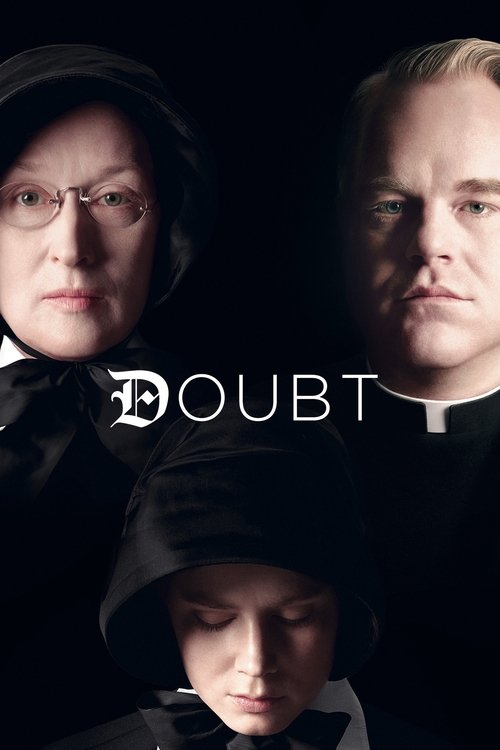
Doubt
In 1964 Bronx, two Catholic school nuns question the new priest's ambiguous relationship with a troubled African-American student.
Despite a respectable budget of $20.0M, Doubt became a commercial success, earning $50.9M worldwide—a 155% return.
Nominated for 5 Oscars. 25 wins & 97 nominations


Plot Structure
Story beats plotted across runtime


Narrative Arc
Emotional journey through the story's key moments
Story Circle
Blueprint 15-beat structure
Arcplot Score Breakdown
Weighted: Precision (70%) + Arc (15%) + Theme (15%)
Doubt (2008) demonstrates meticulously timed narrative design, characteristic of John Patrick Shanley's storytelling approach. This structural analysis examines how the film's 15-point plot structure maps to proven narrative frameworks across 1 hour and 44 minutes. With an Arcplot score of 6.8, the film balances conventional beats with creative variation.
Characters
Cast & narrative archetypes

Sister Aloysius Beauvier
Father Brendan Flynn
Sister James
Mrs. Miller
Main Cast & Characters
Sister Aloysius Beauvier
Played by Meryl Streep
The strict, uncompromising principal of St. Nicholas School who becomes convinced that Father Flynn has committed an inappropriate act with a student.
Father Brendan Flynn
Played by Philip Seymour Hoffman
The progressive, charismatic parish priest who becomes the target of Sister Aloysius's suspicions and investigation.
Sister James
Played by Amy Adams
A young, innocent teacher caught between Sister Aloysius's certainty and her own desire to see the good in people.
Mrs. Miller
Played by Viola Davis
Donald Miller's mother who reveals complex truths about her son's situation and challenges Sister Aloysius's assumptions.
Structural Analysis
The Status Quo at 1 minutes (1% through the runtime) establishes Father Flynn delivers a sermon on doubt to his congregation in the Bronx Catholic church, establishing the rigid, hierarchical world of St. Nicholas parish in 1964.. The analysis reveals that this early placement immediately immerses viewers in the story world.
The inciting incident occurs at 13 minutes when Sister James observes Donald Miller returning from the rectory to her classroom appearing shaken and upset, with alcohol on his breath. She reports this disturbing observation to Sister Aloysius.. At 12% through the film, this Disruption aligns precisely with traditional story structure. This beat shifts the emotional landscape, launching the protagonist into the central conflict.
The First Threshold at 26 minutes marks the transition into Act II, occurring at 25% of the runtime. This illustrates the protagonist's commitment to Sister Aloysius makes her irreversible decision to confront Father Flynn directly about his inappropriate relationship with Donald Miller, stepping outside proper church hierarchy and beginning her crusade., moving from reaction to action.
At 53 minutes, the Midpoint arrives at 51% of the runtime—precisely centered, creating perfect narrative symmetry. Of particular interest, this crucial beat Sister Aloysius meets with Donald's mother Mrs. Miller, expecting an ally, but is devastated when Mrs. Miller asks her to let the matter go, revealing she knows about the relationship but prioritizes her son's survival and education over justice., fundamentally raising what's at risk. The emotional intensity shifts, dividing the narrative into clear before-and-after phases.
The Collapse moment at 79 minutes (76% through) represents the emotional nadir. Here, In their final confrontation, Sister Aloysius tells Father Flynn she has contacted a nun at his previous parish and learned of past incidents. She threatens to destroy him, but we never learn if this is true or a bluff born of desperate certainty., shows the protagonist at their lowest point. This beat's placement in the final quarter sets up the climactic reversal.
The Second Threshold at 84 minutes initiates the final act resolution at 81% of the runtime. Father Flynn requests a transfer and leaves St. Nicholas, receiving a promotion to pastor at another parish. Sister Aloysius has achieved her goal of removing him, but the promotion suggests the church protected him rather than punished him., demonstrating the transformation achieved throughout the journey.
Emotional Journey
Doubt's emotional architecture traces a deliberate progression across 15 carefully calibrated beats.
Narrative Framework
This structural analysis employs proven narrative structure principles that track dramatic progression. By mapping Doubt against these established plot points, we can identify how John Patrick Shanley utilizes or subverts traditional narrative conventions. The plot point approach reveals not only adherence to structural principles but also creative choices that distinguish Doubt within the drama genre.
John Patrick Shanley's Structural Approach
Among the 2 John Patrick Shanley films analyzed on Arcplot, the average structural score is 7.0, reflecting strong command of classical structure. Doubt takes a more unconventional approach compared to the director's typical style. For comparative analysis, explore the complete John Patrick Shanley filmography.
Comparative Analysis
Additional drama films include After Thomas, South Pacific and Dirty Dancing: Havana Nights. For more John Patrick Shanley analyses, see Joe Versus the Volcano.
Plot Points by Act
Act I
SetupStatus Quo
Father Flynn delivers a sermon on doubt to his congregation in the Bronx Catholic church, establishing the rigid, hierarchical world of St. Nicholas parish in 1964.
Theme
Father Flynn's sermon declares "Doubt can be a bond as powerful and sustaining as certainty," foreshadowing the moral ambiguity that will consume the characters.
Worldbuilding
The rigid hierarchy of St. Nicholas is established: Sister Aloysius runs the school with iron discipline, Sister James teaches with compassion, and Father Flynn represents the progressive church. The arrival of Donald Miller, the school's first Black student, creates underlying tension.
Disruption
Sister James observes Donald Miller returning from the rectory to her classroom appearing shaken and upset, with alcohol on his breath. She reports this disturbing observation to Sister Aloysius.
Resistance
Sister Aloysius interrogates Sister James about what she witnessed, planting seeds of suspicion about Father Flynn's relationship with Donald. She coaches the naive young nun on vigilance while debating whether to act on suspicion alone.
Act II
ConfrontationFirst Threshold
Sister Aloysius makes her irreversible decision to confront Father Flynn directly about his inappropriate relationship with Donald Miller, stepping outside proper church hierarchy and beginning her crusade.
Mirror World
Sister James becomes the moral conscience torn between Sister Aloysius's certainty and Father Flynn's explanations. Her doubt represents the thematic counterpoint to Aloysius's conviction, embodying the humanity Aloysius has suppressed.
Premise
Sister Aloysius wages her campaign against Father Flynn through indirect confrontations and manipulation. Flynn defends himself with plausible explanations while Aloysius gathers circumstantial evidence. The cat-and-mouse dynamic between certainty and ambiguity plays out.
Midpoint
Sister Aloysius meets with Donald's mother Mrs. Miller, expecting an ally, but is devastated when Mrs. Miller asks her to let the matter go, revealing she knows about the relationship but prioritizes her son's survival and education over justice.
Opposition
Sister Aloysius escalates her battle against Father Flynn despite losing Mrs. Miller's support. Flynn fights back, challenging her authority and accusing her of persecution. The conflict between old and new church intensifies as both refuse to yield.
Collapse
In their final confrontation, Sister Aloysius tells Father Flynn she has contacted a nun at his previous parish and learned of past incidents. She threatens to destroy him, but we never learn if this is true or a bluff born of desperate certainty.
Crisis
The aftermath of the confrontation hangs in uncertainty. Father Flynn's reaction to Aloysius's claim suggests guilt, but his resignation could also reflect a desire to escape persecution rather than admission of wrongdoing.
Act III
ResolutionSecond Threshold
Father Flynn requests a transfer and leaves St. Nicholas, receiving a promotion to pastor at another parish. Sister Aloysius has achieved her goal of removing him, but the promotion suggests the church protected him rather than punished him.
Synthesis
The resolution provides no answers. Flynn is gone but promoted. Sister James remains troubled by uncertainty. Sister Aloysius has won her battle but at tremendous personal cost, having sacrificed her own moral certainty to achieve her ends.
Transformation
Sister Aloysius breaks down crying to Sister James, confessing "I have doubts. I have such doubts." Her certainty has crumbled, revealing that her crusade has cost her the very conviction that defined her identity.