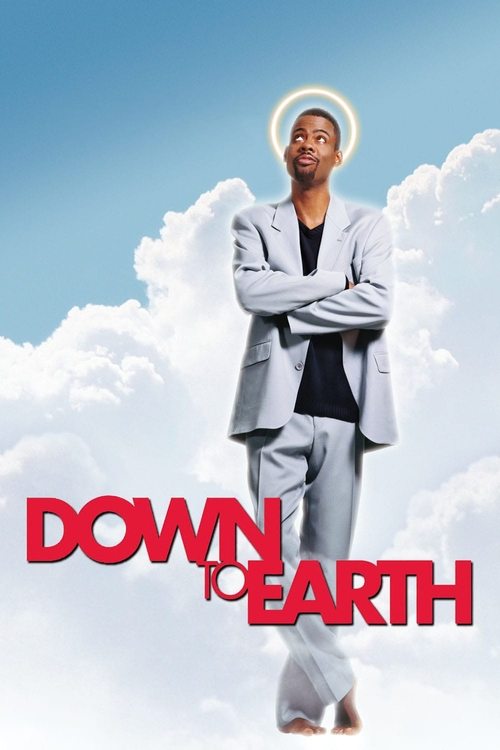
Down to Earth
Struggling comic Lance Barton knows what it's like to die on stage. But when his life takes an unexpected turn - straight to heaven - Lance is sure there's been a mistake. Miraculously, he's right! An angel tells Lance he was taken prematurely but assures him he can be returned to Earth - in the aged body of a ruthless white billionaire. In this improbable reincarnation, Lance begins a hilarious quest to realize his showbiz dream...and, along the way, discovers the person he never imagined he could be. Chris Rock delivers a first-rate performance in this romantic comedy remake of HEAVEN CAN WAIT.
Despite a respectable budget of $30.0M, Down to Earth became a box office success, earning $71.2M worldwide—a 137% return.


Plot Structure
Story beats plotted across runtime


Narrative Arc
Emotional journey through the story's key moments
Story Circle
Blueprint 15-beat structure
Arcplot Score Breakdown
Weighted: Precision (70%) + Arc (15%) + Theme (15%)
Down to Earth (2001) reveals precise story structure, characteristic of Chris Weitz's storytelling approach. This structural analysis examines how the film's 15-point plot structure maps to proven narrative frameworks across 1 hour and 27 minutes. With an Arcplot score of 7.1, the film balances conventional beats with creative variation.
Structural Analysis
The Status Quo at 1 minutes (1% through the runtime) establishes Lance Barton performs stand-up comedy at the Apollo Theater amateur night, struggling to make the audience laugh. He's authentic but not yet successful, representing his ordinary world as an aspiring comedian who won't compromise his voice.. Structural examination shows that this early placement immediately immerses viewers in the story world.
The inciting incident occurs at 9 minutes when Lance is hit by a truck and dies. An overeager angel (Mr. Keyes) prematurely takes his soul before the accident would have actually killed him, disrupting everything. Lance arrives in Heaven, confused and angry.. At 11% through the film, this Disruption aligns precisely with traditional story structure. This beat shifts the emotional landscape, launching the protagonist into the central conflict.
The First Threshold at 21 minutes marks the transition into Act II, occurring at 24% of the runtime. This demonstrates the protagonist's commitment to Lance agrees to inhabit the body of Charles Wellington, a wealthy white businessman who was murdered by his wife and assistant. Lance makes the active choice to return to Earth in this new form, entering the "mirror world" of wealth and privilege., moving from reaction to action.
At 44 minutes, the Midpoint arrives at 51% of the runtime—precisely centered, creating perfect narrative symmetry. Notably, this crucial beat Lance (as Wellington) successfully performs stand-up comedy at the Apollo Theater and wins over the crowd. This is a false victory - he's achieving his dream but in the wrong body, and Sontee is falling for "Wellington," not the real Lance. Stakes raise as he realizes the complexity of his situation., fundamentally raising what's at risk. The emotional intensity shifts, dividing the narrative into clear before-and-after phases.
The Collapse moment at 63 minutes (72% through) represents the emotional nadir. Here, Wellington's wife and assistant successfully murder him (again). Lance dies for the second time, losing everything he's built: his comedy success, his relationship with Sontee, his second chance at life. The death is literal this time, marking the darkest moment., reveals the protagonist at their lowest point. This beat's placement in the final quarter sets up the climactic reversal.
The Second Threshold at 68 minutes initiates the final act resolution at 78% of the runtime. Lance chooses to inhabit the body of Joe Guy, a struggling comedian who was just shot. This time Lance understands the synthesis: he can be himself authentically while helping others. He has learned that success means nothing without authenticity and genuine connection., demonstrating the transformation achieved throughout the journey.
Emotional Journey
Down to Earth's emotional architecture traces a deliberate progression across 15 carefully calibrated beats.
Narrative Framework
This structural analysis employs proven narrative structure principles that track dramatic progression. By mapping Down to Earth against these established plot points, we can identify how Chris Weitz utilizes or subverts traditional narrative conventions. The plot point approach reveals not only adherence to structural principles but also creative choices that distinguish Down to Earth within the fantasy genre.
Chris Weitz's Structural Approach
Among the 5 Chris Weitz films analyzed on Arcplot, the average structural score is 7.3, reflecting strong command of classical structure. Down to Earth takes a more unconventional approach compared to the director's typical style. For comparative analysis, explore the complete Chris Weitz filmography.
Comparative Analysis
Additional fantasy films include Thinner, Ella Enchanted and Conan the Barbarian. For more Chris Weitz analyses, see Operation Finale, The Twilight Saga: New Moon and The Golden Compass.
Plot Points by Act
Act I
SetupStatus Quo
Lance Barton performs stand-up comedy at the Apollo Theater amateur night, struggling to make the audience laugh. He's authentic but not yet successful, representing his ordinary world as an aspiring comedian who won't compromise his voice.
Theme
Lance's manager Whitney tells him he needs to change his act to be more commercial and less "himself" to succeed. Lance refuses, establishing the thematic question: Should you compromise who you are to achieve your dreams?
Worldbuilding
Establish Lance's world: his dedication to comedy, his refusal to sell out, his friendship with Whitney, his bicycle rides through New York, and his dream of performing at the Apollo. Shows his purity of purpose and financial struggles.
Disruption
Lance is hit by a truck and dies. An overeager angel (Mr. Keyes) prematurely takes his soul before the accident would have actually killed him, disrupting everything. Lance arrives in Heaven, confused and angry.
Resistance
In Heaven, Lance debates with Mr. Keyes and King (the head angel) about returning to Earth. King admits the mistake and promises to find Lance a new body. Lance resists accepting another person's body, wanting his own life back. Preparation for his return.
Act II
ConfrontationFirst Threshold
Lance agrees to inhabit the body of Charles Wellington, a wealthy white businessman who was murdered by his wife and assistant. Lance makes the active choice to return to Earth in this new form, entering the "mirror world" of wealth and privilege.
Mirror World
Lance meets Sontee Jenkins, a passionate activist protesting Wellington's hospital closure in Brooklyn. She represents everything Lance values: authenticity, helping the community, staying true to your principles. She becomes the thematic relationship that will teach Lance about love and integrity.
Premise
The promise of the premise: Lance as a wealthy white man trying to maintain his Black comedian identity. He reopens the hospital to impress Sontee, fires corrupt executives, pursues comedy while everyone sees Wellington, and navigates the absurdity of his situation. Fun and games of the body-swap premise.
Midpoint
Lance (as Wellington) successfully performs stand-up comedy at the Apollo Theater and wins over the crowd. This is a false victory - he's achieving his dream but in the wrong body, and Sontee is falling for "Wellington," not the real Lance. Stakes raise as he realizes the complexity of his situation.
Opposition
Wellington's wife and assistant plot to kill him again. Lance's relationship with Sontee deepens but is based on a lie - she doesn't see the real him. Whitney is confused by "Wellington" acting like Lance. The pressure builds as Lance can't maintain the charade and his enemies close in.
Collapse
Wellington's wife and assistant successfully murder him (again). Lance dies for the second time, losing everything he's built: his comedy success, his relationship with Sontee, his second chance at life. The death is literal this time, marking the darkest moment.
Crisis
Back in Heaven, Lance processes his loss and despair. He realizes what truly mattered wasn't the body or the fame, but the genuine connections and staying true to himself. King offers him one more chance in another body, but Lance knows it must be different this time.
Act III
ResolutionSecond Threshold
Lance chooses to inhabit the body of Joe Guy, a struggling comedian who was just shot. This time Lance understands the synthesis: he can be himself authentically while helping others. He has learned that success means nothing without authenticity and genuine connection.
Synthesis
Lance (as Joe Guy) returns to comedy with his authentic voice, no longer trying to be Wellington or compromise who he is. He reconnects with Sontee, who recognizes something familiar in him. He uses his experience to help others while staying true to his comedy and values.
Transformation
Lance performs confidently at the Apollo as himself (in Joe Guy's body), staying authentic. Sontee recognizes his soul and they connect genuinely. The final image shows Lance transformed: successful not because he compromised, but because he learned to be fully himself while opening his heart to love.