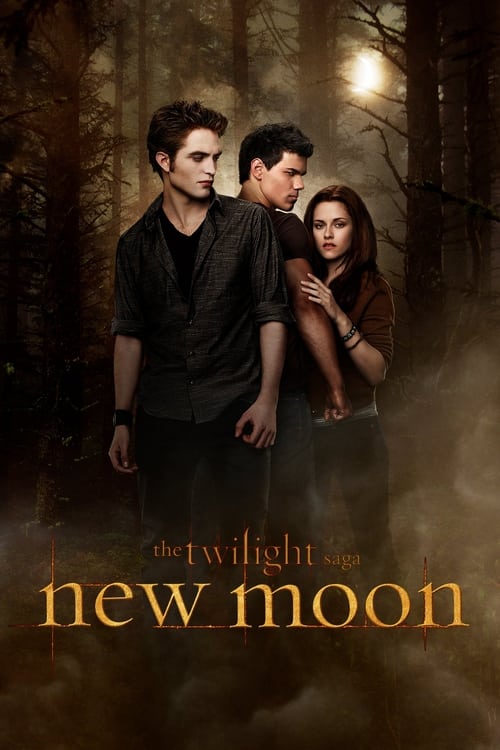
The Twilight Saga: New Moon
After Edward leaves because of an incident involving Bella, Jacob Black becomes her best friend, but what Bella doesn't realize is that Jacob also has a secret that will suddenly change their lives.
Despite a respectable budget of $50.0M, The Twilight Saga: New Moon became a runaway success, earning $709.8M worldwide—a remarkable 1320% return.
23 wins & 24 nominations


Plot Structure
Story beats plotted across runtime


Narrative Arc
Emotional journey through the story's key moments
Story Circle
Blueprint 15-beat structure
Characters
Cast & narrative archetypes

Bella Swan
Edward Cullen
Jacob Black
Alice Cullen
Victoria
Aro
Sam Uley
Main Cast & Characters
Bella Swan
Played by Kristen Stewart
A teenage girl struggling with heartbreak and depression after Edward leaves, finding solace in reckless behavior and friendship with Jacob.
Edward Cullen
Played by Robert Pattinson
A vampire who leaves Bella to protect her from his dangerous world, only to return when he believes she has died.
Jacob Black
Played by Taylor Lautner
A warm, protective friend who helps Bella heal while harboring romantic feelings and hiding his werewolf transformation.
Alice Cullen
Played by Ashley Greene
Edward's psychic vampire sister who maintains friendship with Bella and helps prevent tragedy in Italy.
Victoria
Played by Rachelle Lefevre
A vengeful vampire seeking to kill Bella in retaliation for the death of her mate James.
Aro
Played by Michael Sheen
The ancient leader of the Volturi who is fascinated by Bella's immunity to vampire powers.
Sam Uley
Played by Chaske Spencer
The alpha werewolf who leads the Quileute pack in protecting their territory from vampires.
Structural Analysis
The Status Quo at 1 minutes (1% through the runtime) establishes Bella's nightmare of aging while Edward remains young forever, establishing her fear of mortality and their fundamental incompatibility. The dream reveals her deepest anxiety about their relationship.. Structural examination shows that this early placement immediately immerses viewers in the story world.
The inciting incident occurs at 15 minutes when Edward breaks up with Bella in the forest, telling her he doesn't want her anymore and that his family is leaving Forks. He walks away, leaving her completely shattered and alone in the woods.. At 11% through the film, this Disruption aligns precisely with traditional story structure. This beat shifts the emotional landscape, launching the protagonist into the central conflict.
The First Threshold at 32 minutes marks the transition into Act II, occurring at 24% of the runtime. This illustrates the protagonist's commitment to Bella chooses to repair old motorcycles with Jacob Black, actively deciding to re-engage with life and pursue dangerous activities because she hears Edward's voice warning her when she's in danger. This is her choice to seek connection and purpose., moving from reaction to action.
At 65 minutes, the Midpoint arrives at 50% of the runtime—precisely centered, creating perfect narrative symmetry. Notably, this crucial beat Jacob reveals he's a werewolf and part of the Quileute tribe that protects against vampires. He tells Bella they can't be friends anymore because of the vampire-werewolf conflict. Bella loses her anchor to healing just as she was recovering—false victory turns to defeat., fundamentally raising what's at risk. The emotional intensity shifts, dividing the narrative into clear before-and-after phases.
The Collapse moment at 97 minutes (74% through) represents the emotional nadir. Here, Alice reveals that Edward, believing Bella is dead, is going to the Volturi in Italy to provoke them into killing him. Bella realizes her reckless behavior has led Edward to suicide—the ultimate "whiff of death" as she faces losing him permanently through her own actions., demonstrates the protagonist at their lowest point. This beat's placement in the final quarter sets up the climactic reversal.
The Second Threshold at 105 minutes initiates the final act resolution at 80% of the runtime. Bella runs through Volterra's crowded streets and stops Edward from exposing himself to sunlight just in time. She synthesizes her newfound strength (learned from Jacob and her survival) with her love for Edward, actively saving him rather than being saved., demonstrating the transformation achieved throughout the journey.
Emotional Journey
The Twilight Saga: New Moon's emotional architecture traces a deliberate progression across 15 carefully calibrated beats.
Narrative Framework
This structural analysis employs structural analysis methodology used to understand storytelling architecture. By mapping The Twilight Saga: New Moon against these established plot points, we can identify how Chris Weitz utilizes or subverts traditional narrative conventions. The plot point approach reveals not only adherence to structural principles but also creative choices that distinguish The Twilight Saga: New Moon within the adventure genre.
Chris Weitz's Structural Approach
Among the 5 Chris Weitz films analyzed on Arcplot, the average structural score is 7.3, reflecting strong command of classical structure. The Twilight Saga: New Moon exemplifies the director's characteristic narrative technique. For comparative analysis, explore the complete Chris Weitz filmography.
Comparative Analysis
Additional adventure films include The Black Stallion, The Bad Guys and Puss in Boots. For more Chris Weitz analyses, see Operation Finale, Down to Earth and The Golden Compass.
Plot Points by Act
Act I
SetupStatus Quo
Bella's nightmare of aging while Edward remains young forever, establishing her fear of mortality and their fundamental incompatibility. The dream reveals her deepest anxiety about their relationship.
Theme
Charlie tells Bella, "You're not gonna be a kid forever," at her 18th birthday party. This encapsulates the film's exploration of identity, mortality, and the need to grow into oneself rather than lose oneself in another.
Worldbuilding
Bella's 18th birthday party at the Cullens' house establishes her deep integration into Edward's vampire world, her relationship with his family, and foreshadows danger when Jasper attacks her over a paper cut. The incident reveals the constant threat vampires pose to her.
Disruption
Edward breaks up with Bella in the forest, telling her he doesn't want her anymore and that his family is leaving Forks. He walks away, leaving her completely shattered and alone in the woods.
Resistance
Bella descends into deep depression over months shown through季節 changes. She becomes catatonic, has nightmares, and isolates herself. Charlie worries and threatens to send her to her mother. Bella realizes she must engage with life to stay in Forks.
Act II
ConfrontationFirst Threshold
Bella chooses to repair old motorcycles with Jacob Black, actively deciding to re-engage with life and pursue dangerous activities because she hears Edward's voice warning her when she's in danger. This is her choice to seek connection and purpose.
Mirror World
Bella and Jacob's friendship deepens as they work on motorcycles together. Jacob represents warmth, humanity, and living in the present—the thematic opposite of Edward's cold immortality and her self-destructive obsession with the past.
Premise
Bella begins to heal through her friendship with Jacob. She engages in reckless behavior (motorcycles, cliff diving) to hear Edward's voice. Jacob reveals he's a werewolf and protector against vampires. Victoria, seeking revenge, hunts Bella. The premise: can she build a life without Edward?
Midpoint
Jacob reveals he's a werewolf and part of the Quileute tribe that protects against vampires. He tells Bella they can't be friends anymore because of the vampire-werewolf conflict. Bella loses her anchor to healing just as she was recovering—false victory turns to defeat.
Opposition
Bella becomes caught between the werewolf and vampire worlds. Victoria continues hunting her. Bella takes increasingly dangerous risks. She cliff dives alone and nearly drowns. Alice returns, having seen Bella jump, thinking she attempted suicide. Edward calls, hears Jacob, and believes Bella is dead.
Collapse
Alice reveals that Edward, believing Bella is dead, is going to the Volturi in Italy to provoke them into killing him. Bella realizes her reckless behavior has led Edward to suicide—the ultimate "whiff of death" as she faces losing him permanently through her own actions.
Crisis
Bella and Alice race to Italy to save Edward. The desperate journey and time pressure force Bella to confront what Edward truly means to her and what she's willing to sacrifice. She must act decisively rather than passively accept loss.
Act III
ResolutionSecond Threshold
Bella runs through Volterra's crowded streets and stops Edward from exposing himself to sunlight just in time. She synthesizes her newfound strength (learned from Jacob and her survival) with her love for Edward, actively saving him rather than being saved.
Synthesis
Bella and Edward confront the Volturi, who decree that Bella must be turned into a vampire or die. The Cullens vote on changing her. Bella stands firm in her choice to become a vampire, asserting her own will. Edward agrees to change her himself if she marries him first, establishing new terms for their relationship.
Transformation
Bella and Edward lie together in her bedroom, reunited but transformed. Unlike the opening where Bella was defined by fear and dependence, she now has agency and has chosen her path. She tells Edward, "It's not an ending. It's a beginning." She has found her voice and identity within the relationship.