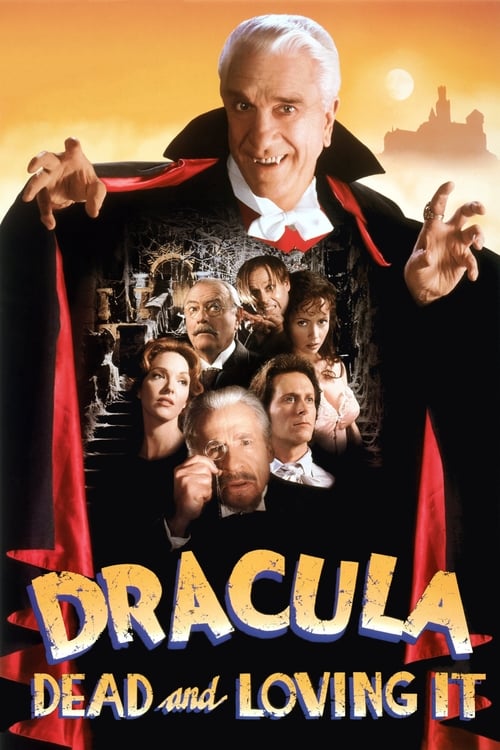
Dracula: Dead and Loving It
When a lawyer shows up at the vampire's doorstep, he falls prey to his charms and joins him in his search for fresh blood. Enter Professor Van Helsing, who may be the only one able to vanquish the Count.
The film commercial failure against its respectable budget of $30.0M, earning $10.8M globally (-64% loss). While initial box office returns were modest, the film has gained appreciation for its bold vision within the comedy genre.


Plot Structure
Story beats plotted across runtime


Narrative Arc
Emotional journey through the story's key moments
Story Circle
Blueprint 15-beat structure
Arcplot Score Breakdown
Weighted: Precision (70%) + Arc (15%) + Theme (15%)
Dracula: Dead and Loving It (1995) demonstrates meticulously timed dramatic framework, characteristic of Mel Brooks's storytelling approach. This structural analysis examines how the film's 15-point plot structure maps to proven narrative frameworks across 1 hour and 28 minutes. With an Arcplot score of 7.0, the film balances conventional beats with creative variation.
Characters
Cast & narrative archetypes

Count Dracula
Renfield
Van Helsing
Mina Seward
Jonathan Harker
Dr. Seward
Lucy Westenra
Main Cast & Characters
Count Dracula
Played by Leslie Nielsen
Ancient vampire who travels to London seeking new blood, hilariously unaware of social conventions and comically pompous.
Renfield
Played by Peter MacNicol
Dracula's insect-eating servant, increasingly unhinged and subservient to his master's dark whims.
Van Helsing
Played by Mel Brooks
Pompous vampire hunter and expert who arrives to combat Dracula with overconfident medical knowledge.
Mina Seward
Played by Amy Yasbeck
Jonathan Harker's fiancée and daughter of Dr. Seward, becomes the object of Dracula's romantic obsession.
Jonathan Harker
Played by Steven Weber
Young solicitor sent to Transylvania to handle Dracula's affairs, hopelessly naive and bumbling.
Dr. Seward
Played by Harvey Korman
Director of the insane asylum and Mina's father, earnest but ineffectual in facing supernatural threats.
Lucy Westenra
Played by Lysette Anthony
Mina's vivacious friend who becomes Dracula's first victim in London, transformed into a vampire.
Structural Analysis
The Status Quo at 1 minutes (1% through the runtime) establishes Renfield travels through the Carpathian Mountains by coach, a proper English solicitor on a routine business trip to meet Count Dracula, unaware of the supernatural horrors awaiting him.. Of particular interest, this early placement immediately immerses viewers in the story world.
The inciting incident occurs at 11 minutes when Dracula bites Renfield, turning him into a bug-eating slave, and prepares to travel to England aboard the Demeter. The normal world is shattered as supernatural evil gains a foothold.. At 12% through the film, this Disruption aligns precisely with traditional story structure. This beat shifts the emotional landscape, launching the protagonist into the central conflict.
The First Threshold at 23 minutes marks the transition into Act II, occurring at 26% of the runtime. This reveals the protagonist's commitment to Dracula makes his first nighttime visit to Lucy's bedroom, beginning his vampiric attacks on her. The story commits fully to the horror-comedy as Lucy falls under Dracula's spell., moving from reaction to action.
At 44 minutes, the Midpoint arrives at 50% of the runtime—precisely centered, creating perfect narrative symmetry. Structural examination shows that this crucial beat Lucy dies from Dracula's attacks despite Van Helsing's efforts, then rises as a vampire herself. This false defeat raises the stakes dramatically - Dracula has claimed his first victim in their circle., fundamentally raising what's at risk. The emotional intensity shifts, dividing the narrative into clear before-and-after phases.
The Collapse moment at 65 minutes (74% through) represents the emotional nadir. Here, Mina is discovered to be under Dracula's influence, having drunk his blood. She is transforming into a vampire, and Jonathan realizes his beloved is being taken from him. All seems lost., shows the protagonist at their lowest point. This beat's placement in the final quarter sets up the climactic reversal.
The Second Threshold at 71 minutes initiates the final act resolution at 80% of the runtime. Van Helsing devises a plan to pursue Dracula to Carfax Abbey before dawn. Armed with stakes, holy water, and determination, the team commits to a final confrontation to save Mina and destroy the Count., demonstrating the transformation achieved throughout the journey.
Emotional Journey
Dracula: Dead and Loving It's emotional architecture traces a deliberate progression across 15 carefully calibrated beats.
Narrative Framework
This structural analysis employs proven narrative structure principles that track dramatic progression. By mapping Dracula: Dead and Loving It against these established plot points, we can identify how Mel Brooks utilizes or subverts traditional narrative conventions. The plot point approach reveals not only adherence to structural principles but also creative choices that distinguish Dracula: Dead and Loving It within the comedy genre.
Mel Brooks's Structural Approach
Among the 8 Mel Brooks films analyzed on Arcplot, the average structural score is 7.1, reflecting strong command of classical structure. Dracula: Dead and Loving It takes a more unconventional approach compared to the director's typical style. For comparative analysis, explore the complete Mel Brooks filmography.
Comparative Analysis
Additional comedy films include The Bad Guys, Ella Enchanted and The Evening Star. For more Mel Brooks analyses, see High Anxiety, History of the World: Part I and Spaceballs.
Plot Points by Act
Act I
SetupStatus Quo
Renfield travels through the Carpathian Mountains by coach, a proper English solicitor on a routine business trip to meet Count Dracula, unaware of the supernatural horrors awaiting him.
Theme
The frightened villagers warn Renfield about Castle Dracula, establishing the theme that rational disbelief in evil makes one vulnerable to it - a warning he foolishly ignores.
Worldbuilding
Renfield's journey to Castle Dracula establishes the Gothic world of superstition and supernatural terror. Dracula's castle is introduced with its creepy atmosphere, and Renfield becomes enthralled after Dracula drinks his blood, setting up the vampire's plan to travel to England.
Disruption
Dracula bites Renfield, turning him into a bug-eating slave, and prepares to travel to England aboard the Demeter. The normal world is shattered as supernatural evil gains a foothold.
Resistance
Dracula arrives in England and establishes himself at Carfax Abbey. He meets Lucy Westenra and Mina at the opera, beginning his seduction. Jonathan Harker and Dr. Seward are introduced, unaware of the danger in their midst.
Act II
ConfrontationFirst Threshold
Dracula makes his first nighttime visit to Lucy's bedroom, beginning his vampiric attacks on her. The story commits fully to the horror-comedy as Lucy falls under Dracula's spell.
Mirror World
Professor Van Helsing arrives, summoned by Dr. Seward to diagnose Lucy's mysterious illness. He represents knowledge and experience that will eventually defeat Dracula, introducing the thematic counterpoint of wisdom versus ignorance.
Premise
The comedic promise of the premise unfolds as Van Helsing attempts to protect Lucy with garlic and crucifixes while Dracula continues his nightly visits. Classic vampire movie tropes are parodied, including the blood transfusion scene, sleepwalking Lucy, and Renfield's increasingly manic bug-eating behavior.
Midpoint
Lucy dies from Dracula's attacks despite Van Helsing's efforts, then rises as a vampire herself. This false defeat raises the stakes dramatically - Dracula has claimed his first victim in their circle.
Opposition
Van Helsing leads the men to stake the undead Lucy in her crypt in a memorably bloody scene. Meanwhile, Dracula turns his attention to Mina, and despite Van Helsing's precautions, begins to seduce and bite her. The team struggles as Dracula gains ground.
Collapse
Mina is discovered to be under Dracula's influence, having drunk his blood. She is transforming into a vampire, and Jonathan realizes his beloved is being taken from him. All seems lost.
Crisis
The group grapples with Mina's condition. Van Helsing hypnotizes her to learn Dracula's location. They must act quickly before Mina's transformation is complete, but Dracula has fled back toward Transylvania with her psychically bound to him.
Act III
ResolutionSecond Threshold
Van Helsing devises a plan to pursue Dracula to Carfax Abbey before dawn. Armed with stakes, holy water, and determination, the team commits to a final confrontation to save Mina and destroy the Count.
Synthesis
The climactic confrontation at Carfax Abbey unfolds. Van Helsing and the team corner Dracula as dawn approaches. Through comedic mishaps and near-misses, they manage to expose Dracula to sunlight, destroying him and breaking his hold over Mina.
Transformation
With Dracula destroyed, Mina is freed from his curse. Jonathan and Mina embrace, their love restored. Van Helsing stands victorious, having proven that knowledge and courage can defeat even supernatural evil - with plenty of laughs along the way.