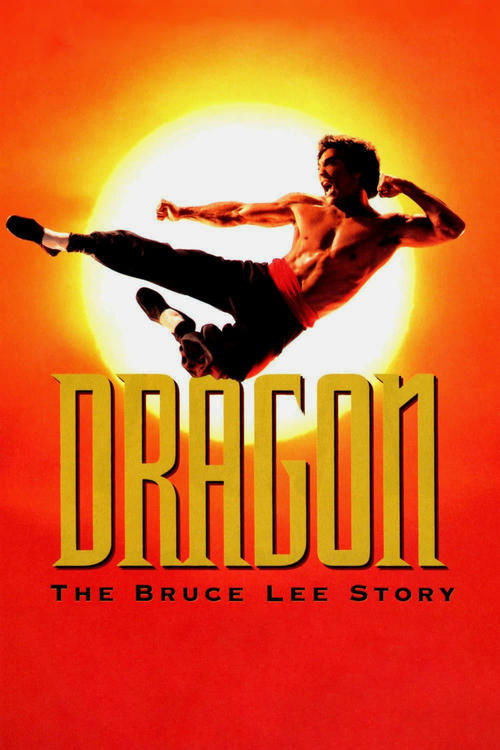
Dragon: The Bruce Lee Story
This film is a glimpse into the life, love and the unconquerable spirit of the legendary Bruce Lee. From a childhood of rigorous martial arts training, Lee realizes his dream of opening his own kung-fu school in America. Before long, he is discovered by a Hollywood producer and begins a meteoric rise to fame and an all too short reign as one the most charismatic action heroes in cinema history.
Despite its modest budget of $14.0M, Dragon: The Bruce Lee Story became a financial success, earning $63.5M worldwide—a 354% return. The film's unconventional structure found its audience, proving that strong storytelling can transcend budget limitations.
1 win & 3 nominations


Plot Structure
Story beats plotted across runtime


Narrative Arc
Emotional journey through the story's key moments
Story Circle
Blueprint 15-beat structure
Arcplot Score Breakdown
Weighted: Precision (70%) + Arc (15%) + Theme (15%)
Dragon: The Bruce Lee Story (1993) demonstrates strategically placed narrative design, characteristic of Rob Cohen's storytelling approach. This structural analysis examines how the film's 15-point plot structure maps to proven narrative frameworks across 1 hour and 59 minutes. With an Arcplot score of 6.4, the film takes an unconventional approach to traditional narrative frameworks.
Characters
Cast & narrative archetypes

Bruce Lee
Linda Lee Cadwell
Yip Man
Johnny Sun
Jerome Sprout
Philip Tan
The Demon
Main Cast & Characters
Bruce Lee
Played by Jason Scott Lee
Martial artist and actor who rises from humble beginnings to international stardom while battling inner demons and external prejudice.
Linda Lee Cadwell
Played by Lauren Holly
Bruce's supportive wife who stands by him through his struggles and triumphs, providing emotional stability and love.
Yip Man
Played by Ric Young
Bruce's wise and patient martial arts master in Hong Kong who teaches him Wing Chun and important life lessons.
Johnny Sun
Played by Sterling Macer Jr.
Bruce's loyal friend and training partner who supports him through various challenges in America.
Jerome Sprout
Played by Michael Learned
Bruce's friend and fellow martial artist who helps him establish his martial arts school in America.
Philip Tan
Played by Sven-Ole Thorsen
Traditional Chinese martial artist who challenges Bruce's methods and represents old guard resistance to his innovations.
The Demon
Played by Sven-Ole Thorsen
Supernatural antagonist representing Bruce's deepest fears and the family curse that haunts him throughout his life.
Structural Analysis
The Status Quo at 1 minutes (1% through the runtime) establishes Young Bruce Lee is terrorized by a demonic samurai figure in a nightmare that haunts his childhood in Hong Kong, establishing the recurring demon that will chase him throughout his life.. Structural examination shows that this early placement immediately immerses viewers in the story world.
The inciting incident occurs at 15 minutes when Bruce seriously injures a British sailor's son in a street fight, forcing his parents to send him away to America to avoid gang retaliation and give him a fresh start.. At 12% through the film, this Disruption aligns precisely with traditional story structure. This beat shifts the emotional landscape, launching the protagonist into the central conflict.
The First Threshold at 30 minutes marks the transition into Act II, occurring at 25% of the runtime. This reveals the protagonist's commitment to Bruce decides to open his own kung fu school, actively choosing to teach Chinese martial arts to Westerners and break tradition, launching him into a new world of opportunity and conflict., moving from reaction to action.
At 59 minutes, the Midpoint arrives at 50% of the runtime—precisely centered, creating perfect narrative symmetry. Notably, this crucial beat Bruce is forced into a challenge fight with Wong Jack Man representing the traditional Chinese martial arts community who demand he stop teaching whites, raising the stakes as his entire mission is threatened., fundamentally raising what's at risk. The emotional intensity shifts, dividing the narrative into clear before-and-after phases.
The Collapse moment at 89 minutes (75% through) represents the emotional nadir. Here, Bruce suffers a catastrophic back injury that doctors say will end his martial arts career forever, coupled with Hollywood's betrayal, leaving him physically broken and spiritually defeated in bed., indicates the protagonist at their lowest point. This beat's placement in the final quarter sets up the climactic reversal.
The Second Threshold at 95 minutes initiates the final act resolution at 80% of the runtime. Bruce realizes he must go to Hong Kong to make films on his own terms, synthesizing his understanding that he doesn't need Hollywood's approval and can create his own destiny., demonstrating the transformation achieved throughout the journey.
Emotional Journey
Dragon: The Bruce Lee Story's emotional architecture traces a deliberate progression across 15 carefully calibrated beats.
Narrative Framework
This structural analysis employs a 15-point narrative structure framework that maps key story moments. By mapping Dragon: The Bruce Lee Story against these established plot points, we can identify how Rob Cohen utilizes or subverts traditional narrative conventions. The plot point approach reveals not only adherence to structural principles but also creative choices that distinguish Dragon: The Bruce Lee Story within the drama genre.
Rob Cohen's Structural Approach
Among the 11 Rob Cohen films analyzed on Arcplot, the average structural score is 7.2, reflecting strong command of classical structure. Dragon: The Bruce Lee Story takes a more unconventional approach compared to the director's typical style. For comparative analysis, explore the complete Rob Cohen filmography.
Comparative Analysis
Additional drama films include After Thomas, South Pacific and Dirty Dancing: Havana Nights. For more Rob Cohen analyses, see The Hurricane Heist, Daylight and Stealth.
Plot Points by Act
Act I
SetupStatus Quo
Young Bruce Lee is terrorized by a demonic samurai figure in a nightmare that haunts his childhood in Hong Kong, establishing the recurring demon that will chase him throughout his life.
Theme
Bruce's father tells him "The demon is only in your mind. You must face what's in your mind," introducing the theme of confronting internal fears rather than running from them.
Worldbuilding
Young Bruce grows up in Hong Kong dealing with the demon nightmares, street fights with British sailors, and his early training in Wing Chun kung fu under Master Yip Man, showing his fiery spirit and fighting talent.
Disruption
Bruce seriously injures a British sailor's son in a street fight, forcing his parents to send him away to America to avoid gang retaliation and give him a fresh start.
Resistance
Bruce arrives in America with $100, works as a dishwasher in Seattle, faces racism and isolation, but begins teaching kung fu in a parking lot, debating whether to stay hidden or embrace his identity as a martial artist.
Act II
ConfrontationFirst Threshold
Bruce decides to open his own kung fu school, actively choosing to teach Chinese martial arts to Westerners and break tradition, launching him into a new world of opportunity and conflict.
Mirror World
Bruce meets Linda Emery at a demonstration, beginning a romantic relationship that will ground him emotionally and provide the love and acceptance he needs beyond fighting.
Premise
Bruce builds his school, falls in love with Linda, marries her despite her mother's racism, has a son, and demonstrates his martial arts prowess at tournaments, living the promise of the American dream and kung fu success.
Midpoint
Bruce is forced into a challenge fight with Wong Jack Man representing the traditional Chinese martial arts community who demand he stop teaching whites, raising the stakes as his entire mission is threatened.
Opposition
Bruce wins the fight but is dissatisfied with his performance, retreats to develop Jeet Kune Do, gets his break in Hollywood with The Green Hornet, but faces racism in the industry, typecasting, and studio executives stealing his Kung Fu concept for a white actor.
Collapse
Bruce suffers a catastrophic back injury that doctors say will end his martial arts career forever, coupled with Hollywood's betrayal, leaving him physically broken and spiritually defeated in bed.
Crisis
Bruce lies in bed struggling with despair and the demon's increasing presence, while Linda encourages him to write down his philosophy, leading him through his dark night of the soul.
Act III
ResolutionSecond Threshold
Bruce realizes he must go to Hong Kong to make films on his own terms, synthesizing his understanding that he doesn't need Hollywood's approval and can create his own destiny.
Synthesis
Bruce becomes a massive star in Hong Kong with films like The Big Boss and Fist of Fury, finally gets Hollywood's respect with Enter the Dragon, and confronts the demon one final time in a climactic fight where he accepts rather than fears it.
Transformation
Bruce embraces his son Brandon and walks confidently with his family, having transformed from a boy running from his demons into a man who faced his fears and became a legend on his own terms.