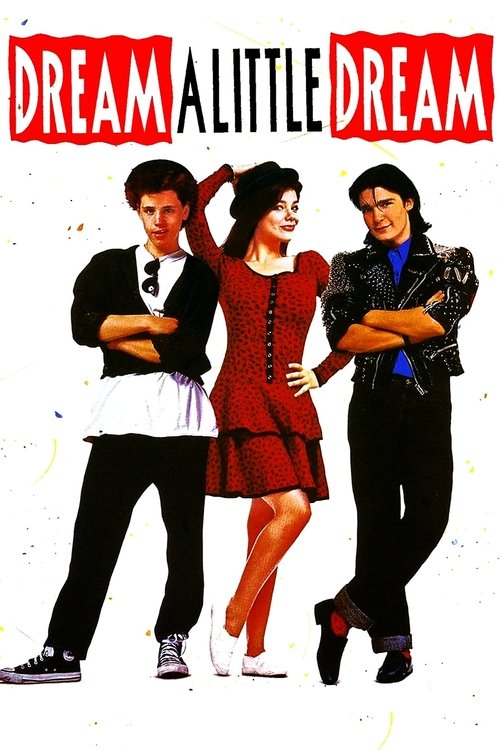
Dream a Little Dream
Bobby Kellar has a crush on Lainie Diamond, girlfriend of school jerk Joel. Coleman is working on an experiment which will help him move into a place where Dreams are reality. When an accident occurs Coleman finds himself in Bobby's body and can only contact Bobby in his dreams.
The film earned $5.6M at the global box office.


Plot Structure
Story beats plotted across runtime


Narrative Arc
Emotional journey through the story's key moments
Story Circle
Blueprint 15-beat structure
Arcplot Score Breakdown
Weighted: Precision (70%) + Arc (15%) + Theme (15%)
Dream a Little Dream (1989) showcases strategically placed narrative architecture, characteristic of Marc Rocco's storytelling approach. This structural analysis examines how the film's 15-point plot structure maps to proven narrative frameworks across 1 hour and 54 minutes. With an Arcplot score of 6.3, the film takes an unconventional approach to traditional narrative frameworks.
Characters
Cast & narrative archetypes

Bobby Keller

Coleman Ettinger

Lainie Diamond

Dinger Holfield

Gena Ettinger
Main Cast & Characters
Bobby Keller
Played by Corey Feldman
A teenage boy who mysteriously switches consciousness with an elderly man, forcing him to navigate life in an aging body while trying to reverse the supernatural swap.
Coleman Ettinger
Played by Jason Robards
An elderly professor and mystic who accidentally switches consciousness with Bobby during a metaphysical experiment, becoming trapped in a teenage body.
Lainie Diamond
Played by Meredith Salenger
Bobby's love interest and friend who becomes caught up in the bizarre body-switching mystery, helping to unravel what happened.
Dinger Holfield
Played by Corey Haim
Bobby's best friend and comic relief sidekick who supports him through the strange transformation.
Gena Ettinger
Played by Piper Laurie
Coleman's devoted wife who is bewildered and heartbroken when her husband's consciousness disappears, leaving only a confused teenager in his body.
Structural Analysis
The Status Quo at 1 minutes (1% through the runtime) establishes Bobby Keller is introduced as a rebellious teenager struggling in high school, disconnected from adults and authority, showing his world of teenage angst and social challenges.. Structural examination shows that this early placement immediately immerses viewers in the story world.
The inciting incident occurs at 14 minutes when During a mystical dream experiment, Coleman and Gena are caught in a supernatural event during a lunar alignment. Bobby happens to be nearby, and consciousness-switching occurs, leaving Bobby trapped in Coleman's elderly body.. At 13% through the film, this Disruption is delayed, allowing extended setup of the story world. This beat shifts the emotional landscape, launching the protagonist into the central conflict.
The First Threshold at 29 minutes marks the transition into Act II, occurring at 25% of the runtime. This illustrates the protagonist's commitment to Bobby accepts he must actively navigate life in Coleman's elderly body and commits to finding a way to reverse the switch, entering the strange world of being old while having a teenage mind., moving from reaction to action.
At 58 minutes, the Midpoint arrives at 51% of the runtime—precisely centered, creating perfect narrative symmetry. Of particular interest, this crucial beat Bobby discovers a potential solution to reverse the body swap through recreating the dream experiment conditions. False victory: it seems like he might get his life back, raising stakes as time becomes critical., fundamentally raising what's at risk. The emotional intensity shifts, dividing the narrative into clear before-and-after phases.
The Collapse moment at 86 minutes (76% through) represents the emotional nadir. Here, Bobby faces the devastating possibility that he may be trapped in Coleman's elderly body forever. His teenage dreams appear dead, and he must confront losing his youth, his identity, and any chance with Lainie., reveals the protagonist at their lowest point. This beat's placement in the final quarter sets up the climactic reversal.
The Second Threshold at 91 minutes initiates the final act resolution at 80% of the runtime. Bobby realizes the answer lies in combining what he's learned about genuine connection and dreams with the mystical elements. He understands that true change comes from internal transformation, not just external circumstances., demonstrating the transformation achieved throughout the journey.
Emotional Journey
Dream a Little Dream's emotional architecture traces a deliberate progression across 15 carefully calibrated beats.
Narrative Framework
This structural analysis employs a 15-point narrative structure framework that maps key story moments. By mapping Dream a Little Dream against these established plot points, we can identify how Marc Rocco utilizes or subverts traditional narrative conventions. The plot point approach reveals not only adherence to structural principles but also creative choices that distinguish Dream a Little Dream within the fantasy genre.
Marc Rocco's Structural Approach
Among the 2 Marc Rocco films analyzed on Arcplot, the average structural score is 6.8, demonstrating varied approaches to story architecture. Dream a Little Dream takes a more unconventional approach compared to the director's typical style. For comparative analysis, explore the complete Marc Rocco filmography.
Comparative Analysis
Additional fantasy films include Thinner, Ella Enchanted and Conan the Barbarian. For more Marc Rocco analyses, see Murder in the First.
Plot Points by Act
Act I
SetupStatus Quo
Bobby Keller is introduced as a rebellious teenager struggling in high school, disconnected from adults and authority, showing his world of teenage angst and social challenges.
Theme
Coleman, the elderly man, speaks about dreams, consciousness, and understanding others' perspectives - foreshadowing the body-swap theme of walking in another's shoes.
Worldbuilding
Establish Bobby's world: his troubled home life, his crush on Lainie, his friendship with Dinger, Coleman and Gena's mystical experiments, and the generational disconnect between young and old.
Disruption
During a mystical dream experiment, Coleman and Gena are caught in a supernatural event during a lunar alignment. Bobby happens to be nearby, and consciousness-switching occurs, leaving Bobby trapped in Coleman's elderly body.
Resistance
Bobby wakes in Coleman's body and struggles to comprehend what happened. He debates whether this is real, tries to convince others of his identity, and resists accepting his new reality while searching for answers.
Act II
ConfrontationFirst Threshold
Bobby accepts he must actively navigate life in Coleman's elderly body and commits to finding a way to reverse the switch, entering the strange world of being old while having a teenage mind.
Mirror World
Bobby (in Coleman's body) develops a deeper connection with Gena, Coleman's wife, who begins to help him. This relationship becomes the emotional core that will teach Bobby about love, commitment, and seeing beyond surface appearances.
Premise
The fun of the premise: Bobby experiences life as an old man, gaining perspective on adult life. He tries to get close to Lainie (who doesn't recognize him), navigates elderly challenges, and learns what Coleman's life was really like.
Midpoint
Bobby discovers a potential solution to reverse the body swap through recreating the dream experiment conditions. False victory: it seems like he might get his life back, raising stakes as time becomes critical.
Opposition
The solution proves more complicated than expected. Bobby's attempts to recreate the conditions fail. His teenage life (through Coleman's body with Bobby's consciousness) falls apart. Pressure intensifies as both worlds collapse and time runs out.
Collapse
Bobby faces the devastating possibility that he may be trapped in Coleman's elderly body forever. His teenage dreams appear dead, and he must confront losing his youth, his identity, and any chance with Lainie.
Crisis
Bobby processes the loss and contemplates what matters. In his darkest moment, he reflects on what he's learned about life, love, and identity through experiencing Coleman's perspective and relationship with Gena.
Act III
ResolutionSecond Threshold
Bobby realizes the answer lies in combining what he's learned about genuine connection and dreams with the mystical elements. He understands that true change comes from internal transformation, not just external circumstances.
Synthesis
Bobby executes the final attempt to reverse the swap, applying his new wisdom. The climactic dream sequence resolves the body-swap, restoring everyone to their proper bodies while retaining the lessons learned.
Transformation
Bobby, back in his own teenage body, is transformed. He approaches Lainie with new maturity and confidence, showing he's grown from his experience. The final image mirrors the opening but reveals a wiser, more empathetic young man.