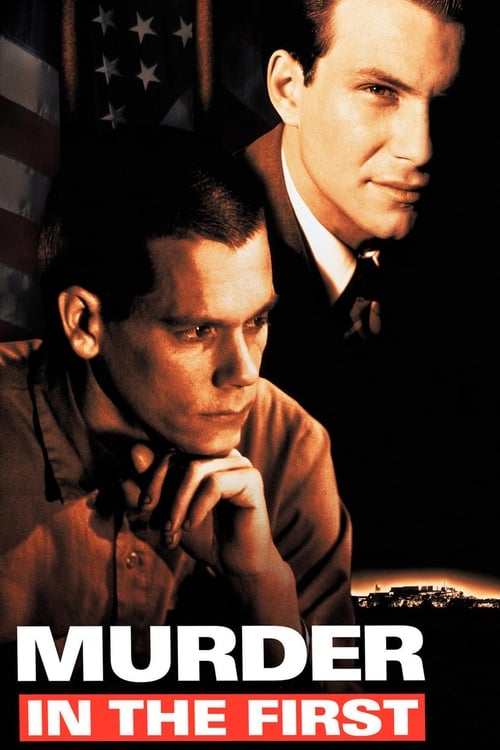
Murder in the First
A young, inexperienced public defender is assigned to defend an inmate accused of committing murder while behind bars.
Working with a mid-range budget of $20.0M, the film achieved a respectable showing with $29.5M in global revenue (+48% profit margin).


Plot Structure
Story beats plotted across runtime


Narrative Arc
Emotional journey through the story's key moments
Story Circle
Blueprint 15-beat structure
Arcplot Score Breakdown
Weighted: Precision (70%) + Arc (15%) + Theme (15%)
Murder in the First (1995) showcases carefully calibrated plot construction, characteristic of Marc Rocco's storytelling approach. This structural analysis examines how the film's 15-point plot structure maps to proven narrative frameworks across 2 hours and 2 minutes. With an Arcplot score of 7.3, the film balances conventional beats with creative variation.
Characters
Cast & narrative archetypes

Henri Young
James Stamphill
Associate Warden Glenn
Rufus McCain
Mary McCasslin
William McNeil
Judge Clawson
Main Cast & Characters
Henri Young
Played by Kevin Bacon
A prisoner subjected to years of brutal solitary confinement in Alcatraz who commits murder upon release and becomes the center of a legal battle exposing prison brutality.
James Stamphill
Played by Christian Slater
An idealistic young public defender who takes on Henri Young's case and fights to expose the inhumane treatment at Alcatraz despite personal and professional risks.
Associate Warden Glenn
Played by Gary Oldman
The cruel and sadistic associate warden of Alcatraz who orchestrated Henri Young's torture and solitary confinement, representing institutional brutality.
Rufus McCain
Played by William H. Macy
Henri Young's former friend and fellow prisoner who betrayed him during an escape attempt, leading to Henri's brutal punishment and eventual victim of Henri's rage.
Mary McCasslin
Played by Embeth Davidtz
A fellow public defender and James Stamphill's colleague who provides support and legal assistance during the trial.
William McNeil
Played by Brad Dourif
The prosecuting attorney who represents the state against Henri Young, defending the prison system and seeking conviction.
Judge Clawson
Played by R. Lee Ermey
The presiding judge in Henri Young's murder trial who must balance justice with the shocking revelations of prison brutality.
Structural Analysis
The Status Quo at 1 minutes (1% through the runtime) establishes Henri Young is dragged from solitary confinement at Alcatraz after three years of darkness and isolation, establishing the brutal world of the prison system.. Of particular interest, this early placement immediately immerses viewers in the story world.
The inciting incident occurs at 14 minutes when Stamphill meets Henri for the first time and realizes the profound damage done to him; Henri is barely functional, unable to communicate coherently after years of torture.. At 11% through the film, this Disruption aligns precisely with traditional story structure. This beat shifts the emotional landscape, launching the protagonist into the central conflict.
The First Threshold at 30 minutes marks the transition into Act II, occurring at 24% of the runtime. This shows the protagonist's commitment to Stamphill makes the active choice to put the prison system itself on trial, deciding to argue that Alcatraz created a murderer rather than simply defending the murder itself., moving from reaction to action.
At 62 minutes, the Midpoint arrives at 50% of the runtime—precisely centered, creating perfect narrative symmetry. Of particular interest, this crucial beat Henri takes the stand and powerfully testifies about his torture in the dungeon, winning public sympathy. It appears Stamphill might actually win, but the victory is false—the system will fight back harder., fundamentally raising what's at risk. The emotional intensity shifts, dividing the narrative into clear before-and-after phases.
The Collapse moment at 91 minutes (75% through) represents the emotional nadir. Here, The jury returns a guilty verdict. Henri will hang. All of Stamphill's efforts appear to have failed, and Henri's fate seems sealed—a metaphorical death of hope and justice., shows the protagonist at their lowest point. This beat's placement in the final quarter sets up the climactic reversal.
The Second Threshold at 98 minutes initiates the final act resolution at 80% of the runtime. Despite the guilty verdict, Stamphill realizes their testimony has exposed Alcatraz's brutality to the public. The true victory isn't the verdict—it's the change they've set in motion., demonstrating the transformation achieved throughout the journey.
Emotional Journey
Murder in the First's emotional architecture traces a deliberate progression across 15 carefully calibrated beats.
Narrative Framework
This structural analysis employs systematic plot point analysis that identifies crucial turning points. By mapping Murder in the First against these established plot points, we can identify how Marc Rocco utilizes or subverts traditional narrative conventions. The plot point approach reveals not only adherence to structural principles but also creative choices that distinguish Murder in the First within the crime genre.
Marc Rocco's Structural Approach
Among the 2 Marc Rocco films analyzed on Arcplot, the average structural score is 6.8, demonstrating varied approaches to story architecture. Murder in the First represents one of the director's most structurally precise works. For comparative analysis, explore the complete Marc Rocco filmography.
Comparative Analysis
Additional crime films include The Bad Guys, Rustom and The Whole Ten Yards. For more Marc Rocco analyses, see Dream a Little Dream.
Plot Points by Act
Act I
SetupStatus Quo
Henri Young is dragged from solitary confinement at Alcatraz after three years of darkness and isolation, establishing the brutal world of the prison system.
Theme
A character mentions that the system is designed to break men, not rehabilitate them, stating the film's central question about human dignity versus institutional cruelty.
Worldbuilding
We see Henri's broken mental state, his murder of fellow inmate Rufus McCain in the prison shop, and the introduction of public defender James Stamphill who is assigned the case despite his inexperience with capital crimes.
Disruption
Stamphill meets Henri for the first time and realizes the profound damage done to him; Henri is barely functional, unable to communicate coherently after years of torture.
Resistance
Stamphill debates whether to take the case seriously or just go through the motions. He investigates Henri's history, learning about the three years in the dungeon and begins to see this as more than just a murder case.
Act II
ConfrontationFirst Threshold
Stamphill makes the active choice to put the prison system itself on trial, deciding to argue that Alcatraz created a murderer rather than simply defending the murder itself.
Mirror World
Stamphill's relationship with his brother and wife deepens, showing the support system and humanity that contrasts with Henri's complete isolation and the theme of human connection.
Premise
The trial begins. Stamphill methodically builds his case that the prison system tortured Henri, using testimony and evidence to expose the brutal conditions. The audience sees the promise of justice versus institutional power.
Midpoint
Henri takes the stand and powerfully testifies about his torture in the dungeon, winning public sympathy. It appears Stamphill might actually win, but the victory is false—the system will fight back harder.
Opposition
The prosecution and prison officials close ranks. Associate Warden Glenn tries to discredit Henri. Political pressure mounts. The judge shows bias. Stamphill faces threats to his career and family.
Collapse
The jury returns a guilty verdict. Henri will hang. All of Stamphill's efforts appear to have failed, and Henri's fate seems sealed—a metaphorical death of hope and justice.
Crisis
Stamphill and Henri process the devastating loss. In their darkest moment, they confront whether the fight meant anything at all.
Act III
ResolutionSecond Threshold
Despite the guilty verdict, Stamphill realizes their testimony has exposed Alcatraz's brutality to the public. The true victory isn't the verdict—it's the change they've set in motion.
Synthesis
The judge, moved by the testimony, commutes Henri's sentence to life imprisonment. More importantly, Alcatraz's dungeon is shut down and the prison itself is recommended for closure. Stamphill and Henri say goodbye.
Transformation
Final image shows Henri in a regular prison, able to see sunlight and interact with others—broken but with dignity restored. Text reveals Alcatraz closed in 1963. Stamphill has become a fighter for justice.