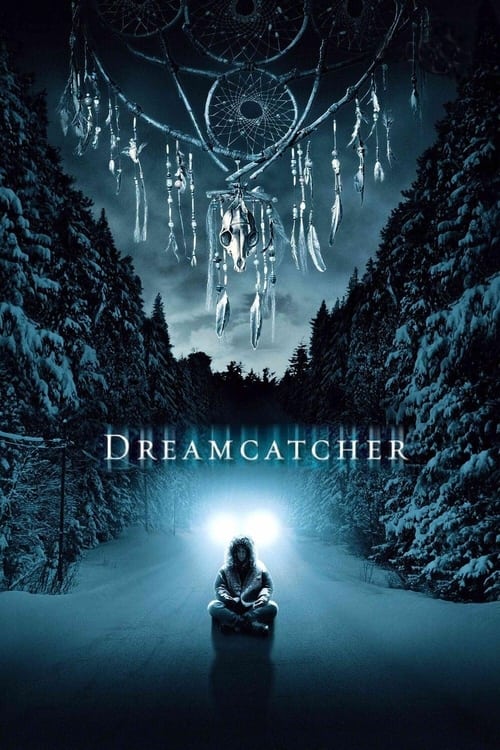
Dreamcatcher
Four boyhood pals perform a heroic act and are changed by the powers they gain in return. Years later, on a hunting trip in the Maine woods, they're overtaken by a vicious blizzard that harbors an ominous presence. Challenged to stop an alien force, the friends must first prevent the slaughter of innocent civilians by a military vigilante ... and then overcome a threat to the bond that unites the four of them.
Working with a respectable budget of $68.0M, the film achieved a steady performer with $81.2M in global revenue (+19% profit margin).


Plot Structure
Story beats plotted across runtime


Narrative Arc
Emotional journey through the story's key moments
Story Circle
Blueprint 15-beat structure
Arcplot Score Breakdown
Weighted: Precision (70%) + Arc (15%) + Theme (15%)
Dreamcatcher (2003) exhibits carefully calibrated narrative design, characteristic of Lawrence Kasdan's storytelling approach. This structural analysis examines how the film's 15-point plot structure maps to proven narrative frameworks across 2 hours and 16 minutes. With an Arcplot score of 6.8, the film balances conventional beats with creative variation.
Characters
Cast & narrative archetypes

Gary "Jonesy" Jones
Joe "Beaver" Clarendon
Henry Devlin
Pete Moore
Colonel Abraham Curtis
Douglas "Duddits" Cavell
Owen Underhill
Main Cast & Characters
Gary "Jonesy" Jones
Played by Damian Lewis
Psychology professor and emotional center of the group, possessed by alien entity Mr. Gray.
Joe "Beaver" Clarendon
Played by Jason Lee
Impulsive, loyal friend who works as a carpenter and serves as comic relief until his tragic death.
Henry Devlin
Played by Thomas Jane
Suicidal psychiatrist struggling with depression, becomes key to stopping the alien invasion.
Pete Moore
Played by Timothy Olyphant
The most volatile and troubled of the group, loses his way in the woods during the crisis.
Colonel Abraham Curtis
Played by Morgan Freeman
Ruthless military commander obsessed with containing the alien threat at any cost.
Douglas "Duddits" Cavell
Played by Donnie Wahlberg
Mentally disabled man with psychic abilities who connects the friends and is key to defeating the aliens.
Owen Underhill
Played by Tom Sizemore
Compassionate military officer who questions Curtis's brutal methods and aids the protagonists.
Structural Analysis
The Status Quo at 2 minutes (1% through the runtime) establishes Four childhood friends—Jonesy, Beaver, Pete, and Henry—are introduced as boys in 1978, bonded by their psychic connection and their rescue of a special-needs boy named Duddits.. Significantly, this early placement immediately immerses viewers in the story world.
The inciting incident occurs at 16 minutes when A disoriented, sick man named Rick stumbles into the cabin claiming to be lost. He's covered in strange red fungus and complains of severe stomach pain—the first sign of alien invasion.. At 12% through the film, this Disruption aligns precisely with traditional story structure. This beat shifts the emotional landscape, launching the protagonist into the central conflict.
The First Threshold at 33 minutes marks the transition into Act II, occurring at 25% of the runtime. This indicates the protagonist's commitment to Rick dies explosively in the bathroom, releasing a parasitic alien creature (a "shit-weasel"). Beaver is killed trying to contain it. The friends realize they're in the middle of an alien invasion and must fight to survive., moving from reaction to action.
At 69 minutes, the Midpoint arrives at 50% of the runtime—precisely centered, creating perfect narrative symmetry. The analysis reveals that this crucial beat Henry discovers Pete has been executed by the military. The friends' circle is breaking. Meanwhile, Mr. Gray (in Jonesy's body) reaches a water reservoir—revealing the aliens' plan to contaminate the water supply., fundamentally raising what's at risk. The emotional intensity shifts, dividing the narrative into clear before-and-after phases.
The Collapse moment at 101 minutes (75% through) represents the emotional nadir. Here, Henry finds Duddits dying of leukemia. Their childhood savior and source of their powers is terminal. Without him, stopping Mr. Gray and the alien invasion seems impossible. Hope appears lost., indicates the protagonist at their lowest point. This beat's placement in the final quarter sets up the climactic reversal.
The Second Threshold at 109 minutes initiates the final act resolution at 80% of the runtime. Duddits reveals his true alien nature—he's been a benevolent counterforce all along. He and Henry set out together to stop Mr. Gray, combining their psychic bond with Duddits' true power for the final battle., demonstrating the transformation achieved throughout the journey.
Emotional Journey
Dreamcatcher's emotional architecture traces a deliberate progression across 15 carefully calibrated beats.
Narrative Framework
This structural analysis employs structural analysis methodology used to understand storytelling architecture. By mapping Dreamcatcher against these established plot points, we can identify how Lawrence Kasdan utilizes or subverts traditional narrative conventions. The plot point approach reveals not only adherence to structural principles but also creative choices that distinguish Dreamcatcher within the drama genre.
Lawrence Kasdan's Structural Approach
Among the 8 Lawrence Kasdan films analyzed on Arcplot, the average structural score is 6.8, demonstrating varied approaches to story architecture. Dreamcatcher takes a more unconventional approach compared to the director's typical style. For comparative analysis, explore the complete Lawrence Kasdan filmography.
Comparative Analysis
Additional drama films include After Thomas, South Pacific and Dirty Dancing: Havana Nights. For more Lawrence Kasdan analyses, see The Accidental Tourist, French Kiss and Grand Canyon.
Plot Points by Act
Act I
SetupStatus Quo
Four childhood friends—Jonesy, Beaver, Pete, and Henry—are introduced as boys in 1978, bonded by their psychic connection and their rescue of a special-needs boy named Duddits.
Theme
Young Duddits tells the boys "I Duddits" (I do it), establishing the theme of friendship, loyalty, and the power they gain from their connection to him and each other.
Worldbuilding
Flashbacks establish the four friends' childhood bond with Duddits, their psychic abilities (telepathy, shared memories), and present-day reunion at their annual hunting cabin trip in the Maine woods.
Disruption
A disoriented, sick man named Rick stumbles into the cabin claiming to be lost. He's covered in strange red fungus and complains of severe stomach pain—the first sign of alien invasion.
Resistance
The friends try to help Rick while strange events unfold: animals fleeing, military helicopters overhead, and Rick's condition worsening. They debate what's happening and whether to stay or flee.
Act II
ConfrontationFirst Threshold
Rick dies explosively in the bathroom, releasing a parasitic alien creature (a "shit-weasel"). Beaver is killed trying to contain it. The friends realize they're in the middle of an alien invasion and must fight to survive.
Mirror World
Jonesy is possessed by an alien entity called Mr. Gray. Inside his mind, Jonesy retreats to his "memory warehouse" where he must resist the alien's control—a mental battleground representing the internal struggle.
Premise
The premise unfolds across multiple fronts: Jonesy fights Mr. Gray internally; Henry tracks them; Pete is captured by the military; Col. Curtis leads a brutal quarantine. The alien threat and the friends' psychic abilities clash with military intervention.
Midpoint
Henry discovers Pete has been executed by the military. The friends' circle is breaking. Meanwhile, Mr. Gray (in Jonesy's body) reaches a water reservoir—revealing the aliens' plan to contaminate the water supply.
Opposition
Multiple forces close in: Col. Curtis escalates the massacre of infected civilians; Mr. Gray gets closer to releasing the alien parasite into the water; Henry struggles to track Jonesy; the military conspiracy deepens.
Collapse
Henry finds Duddits dying of leukemia. Their childhood savior and source of their powers is terminal. Without him, stopping Mr. Gray and the alien invasion seems impossible. Hope appears lost.
Crisis
Henry grieves for his dying friend while wrestling with the enormity of the threat. Duddits, despite his illness, insists on helping. They must decide whether to use Duddits' fading powers for one final confrontation.
Act III
ResolutionSecond Threshold
Duddits reveals his true alien nature—he's been a benevolent counterforce all along. He and Henry set out together to stop Mr. Gray, combining their psychic bond with Duddits' true power for the final battle.
Synthesis
The finale weaves together multiple resolutions: Jonesy fights Mr. Gray from within his mind palace; Henry and Duddits confront Mr. Gray at the reservoir; Col. Curtis is stopped by his second-in-command; the alien threat is neutralized.
Transformation
Duddits dies after saving the world, transforming back to his true alien form. Henry and Jonesy survive, forever changed. The closing image shows them honoring their fallen friends—Beaver, Pete, and Duddits—their bond transcending death.