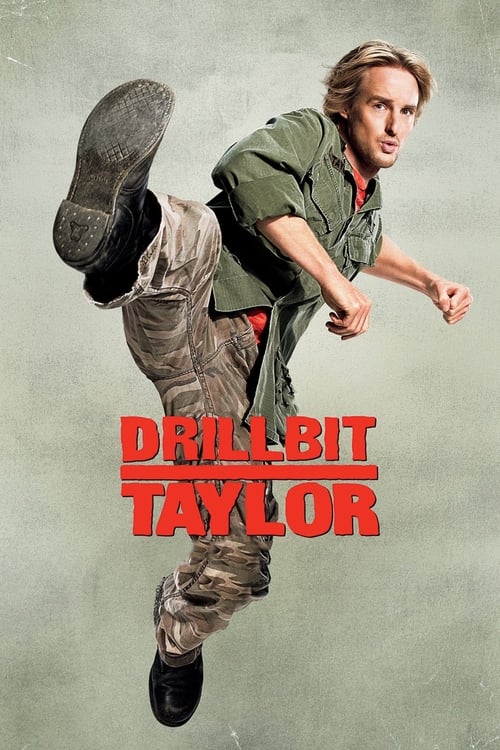
Drillbit Taylor
Dealing with a sociopathic school bully, three high school freshmen hire a low-budget bodyguard to protect them, not realizing he is just a homeless beggar and petty thief looking for some easy cash.
The film disappointed at the box office against its mid-range budget of $40.0M, earning $32.9M globally (-18% loss).
1 win & 2 nominations


Plot Structure
Story beats plotted across runtime


Narrative Arc
Emotional journey through the story's key moments
Story Circle
Blueprint 15-beat structure
Arcplot Score Breakdown
Weighted: Precision (70%) + Arc (15%) + Theme (15%)
Drillbit Taylor (2008) reveals deliberately positioned story structure, characteristic of Steven Brill's storytelling approach. This structural analysis examines how the film's 15-point plot structure maps to proven narrative frameworks across 1 hour and 50 minutes. With an Arcplot score of 7.0, the film balances conventional beats with creative variation.
Characters
Cast & narrative archetypes

Wade
Drillbit Taylor
Ryan
Filkins
Emmit
Lisa
Ronnie
Main Cast & Characters
Wade
Played by Nate Hartley
Awkward freshman who becomes the primary target of school bullies and seeks protection
Drillbit Taylor
Played by Owen Wilson
A homeless con artist posing as a bodyguard who initially plans to rob the boys but develops genuine care for them
Ryan
Played by Troy Gentile
Wade's best friend, an enthusiastic and loyal freshman who faces bullying alongside Wade
Filkins
Played by Alex Frost
Sadistic high school bully who terrorizes freshmen with extreme violence and intimidation
Emmit
Played by David Dorfman
Socially awkward freshman with health issues who joins Wade and Ryan as a target of bullying
Lisa
Played by Leslie Mann
Substitute teacher who becomes romantically involved with Drillbit while unaware of his deception
Ronnie
Played by Josh Peck
Filkins' enforcer and sidekick who assists in terrorizing other students
Structural Analysis
The Status Quo at 1 minutes (1% through the runtime) establishes Wade and Ryan nervously prepare for their first day of high school, anxious outsiders hoping to reinvent themselves and find acceptance in a new social environment.. Notably, this early placement immediately immerses viewers in the story world.
The inciting incident occurs at 13 minutes when Filkins brutally attacks Wade in the bathroom, establishing the life-threatening danger. The boys realize they cannot survive high school without protection from this relentless bully.. At 12% through the film, this Disruption aligns precisely with traditional story structure. This beat shifts the emotional landscape, launching the protagonist into the central conflict.
The First Threshold at 26 minutes marks the transition into Act II, occurring at 24% of the runtime. This indicates the protagonist's commitment to The boys actively choose to hire Drillbit as their bodyguard, committing their savings and placing their trust in him to protect them and teach them how to defend themselves., moving from reaction to action.
At 54 minutes, the Midpoint arrives at 49% of the runtime—precisely centered, creating perfect narrative symmetry. Significantly, this crucial beat The boys successfully fight back against Filkins' crew at a school event, appearing to gain the upper hand. False victory - they think they're winning, but Filkins is about to escalate dramatically., fundamentally raising what's at risk. The emotional intensity shifts, dividing the narrative into clear before-and-after phases.
The Collapse moment at 79 minutes (72% through) represents the emotional nadir. Here, The boys discover Drillbit is a homeless fraud who was planning to rob them. Their trust is shattered, their protector was fake, and they're more vulnerable than ever. The lie dies., indicates the protagonist at their lowest point. This beat's placement in the final quarter sets up the climactic reversal.
The Second Threshold at 87 minutes initiates the final act resolution at 79% of the runtime. Drillbit learns Filkins is going to seriously hurt the boys. He chooses to return and truly protect them - not for money or a con, but because it's right. Authentic heroism replaces fake bravado., demonstrating the transformation achieved throughout the journey.
Emotional Journey
Drillbit Taylor's emotional architecture traces a deliberate progression across 15 carefully calibrated beats.
Narrative Framework
This structural analysis employs proven narrative structure principles that track dramatic progression. By mapping Drillbit Taylor against these established plot points, we can identify how Steven Brill utilizes or subverts traditional narrative conventions. The plot point approach reveals not only adherence to structural principles but also creative choices that distinguish Drillbit Taylor within the comedy genre.
Steven Brill's Structural Approach
Among the 7 Steven Brill films analyzed on Arcplot, the average structural score is 7.1, reflecting strong command of classical structure. Drillbit Taylor takes a more unconventional approach compared to the director's typical style. For comparative analysis, explore the complete Steven Brill filmography.
Comparative Analysis
Additional comedy films include The Bad Guys, Ella Enchanted and The Evening Star. For more Steven Brill analyses, see Little Nicky, Heavyweights and Without a Paddle.
Plot Points by Act
Act I
SetupStatus Quo
Wade and Ryan nervously prepare for their first day of high school, anxious outsiders hoping to reinvent themselves and find acceptance in a new social environment.
Theme
Wade's mom tells him "Just be yourself" - the core theme about authentic identity versus pretending to be someone you're not for protection or acceptance.
Worldbuilding
The boys navigate their disastrous first day at high school, meeting each other and immediately becoming targets of vicious bully Filkins, who terrorizes them physically and psychologically.
Disruption
Filkins brutally attacks Wade in the bathroom, establishing the life-threatening danger. The boys realize they cannot survive high school without protection from this relentless bully.
Resistance
The boys debate solutions and hold bodyguard auditions. Drillbit Taylor, a homeless con artist, poses as a special ops veteran. The boys are hesitant about affording him and whether this will work.
Act II
ConfrontationFirst Threshold
The boys actively choose to hire Drillbit as their bodyguard, committing their savings and placing their trust in him to protect them and teach them how to defend themselves.
Mirror World
Drillbit meets Lisa, a teacher at the school, and begins developing genuine feelings for her. This relationship represents the authentic connection that contrasts with his con-artist lifestyle.
Premise
Drillbit "trains" the boys while secretly casing their homes to rob them. The boys gain false confidence, attempting to stand up to Filkins with mixed results, while Drillbit gets closer to Lisa.
Midpoint
The boys successfully fight back against Filkins' crew at a school event, appearing to gain the upper hand. False victory - they think they're winning, but Filkins is about to escalate dramatically.
Opposition
Filkins intensifies his attacks. Drillbit's con-artist friends pressure him to complete the robbery. Drillbit struggles between his growing conscience and his criminal plans as the boys depend on him more.
Collapse
The boys discover Drillbit is a homeless fraud who was planning to rob them. Their trust is shattered, their protector was fake, and they're more vulnerable than ever. The lie dies.
Crisis
Drillbit flees in shame. The boys are devastated and alone. Drillbit wrestles with his guilt, realizing he's genuinely harmed kids who trusted him and betrayed the first real connection he's had.
Act III
ResolutionSecond Threshold
Drillbit learns Filkins is going to seriously hurt the boys. He chooses to return and truly protect them - not for money or a con, but because it's right. Authentic heroism replaces fake bravado.
Synthesis
Drillbit confronts Filkins directly to save the boys. The boys fight alongside him authentically. Drillbit faces arrest for his past crimes but accepts responsibility, finally being his true self.
Transformation
Wade confidently walks through school, no longer afraid. The boys have found genuine friendship and self-acceptance. Drillbit, though in legal trouble, has found redemption through authentic action.