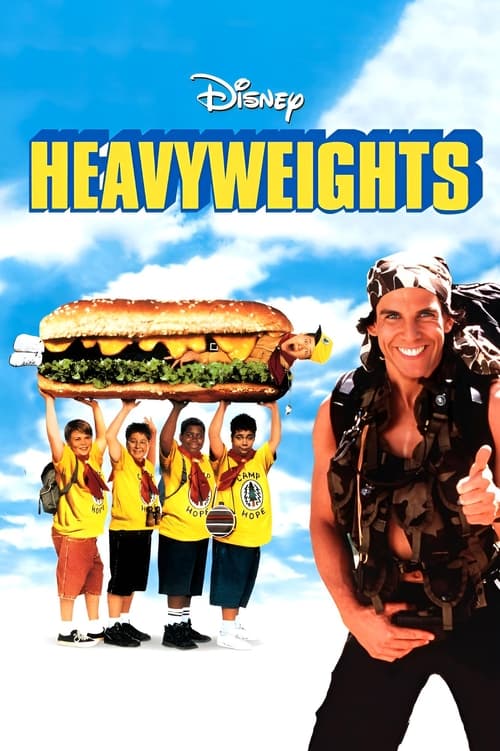
Heavyweights
Camp Hope is a summer retreat for overweight boys run by a kindly couple who make the campers feel comfortable with their extra pounds. But when tyrannical fitness guru Tony buys the camp, he puts the kids on a cruel regimen that goes too far. Sick of the endless weeks of "all work and no play," the kids stage a coup and reclaim their summer of fun.
Working with a limited budget of $10.0M, the film achieved a steady performer with $17.7M in global revenue (+77% profit margin).


Plot Structure
Story beats plotted across runtime


Narrative Arc
Emotional journey through the story's key moments
Story Circle
Blueprint 15-beat structure
Arcplot Score Breakdown
Weighted: Precision (70%) + Arc (15%) + Theme (15%)
Heavyweights (1995) reveals meticulously timed narrative architecture, characteristic of Steven Brill's storytelling approach. This structural analysis examines how the film's 15-point plot structure maps to proven narrative frameworks across 1 hour and 37 minutes. With an Arcplot score of 6.8, the film balances conventional beats with creative variation.
Characters
Cast & narrative archetypes

Gerry Garner
Tony Perkis
Pat Finley
Roy
Lars
Josh Birnbaum
Tim
Nicholas
Main Cast & Characters
Gerry Garner
Played by Aaron Schwartz
An overweight kid attending Camp Hope for the summer who becomes the heart of the campers' resistance against Tony Perkis.
Tony Perkis
Played by Ben Stiller
A maniacal fitness guru who buys Camp Hope and transforms it into a militant weight-loss boot camp.
Pat Finley
Played by Tom McGowan
The kind-hearted original owner of Camp Hope who loses the camp due to financial troubles.
Roy
Played by Kenan Thompson
A sarcastic, clever camper who helps lead the rebellion against Tony Perkis.
Lars
Played by Tom Hodges
A gentle, soft-spoken camp counselor from Scandinavia who cares deeply about the kids.
Josh Birnbaum
Played by Shaun Weiss
A nervous, anxious camper who struggles with the pressures of weight loss and Tony's regime.
Tim
Played by David Bowe
One of the campers who becomes part of the core group resisting Tony's methods.
Nicholas
Played by Allen Covert
A camper dealing with his parents' expectations and his own insecurities about weight.
Structural Analysis
The Status Quo at 1 minutes (1% through the runtime) establishes Gerry arrives at Camp Hope, a weight-loss camp where overweight kids can be themselves. We see his familiar world of being an overweight kid dealing with body image issues but finding acceptance among similar peers.. Structural examination shows that this early placement immediately immerses viewers in the story world.
The inciting incident occurs at 12 minutes when Tony Perkis arrives and announces he has bought Camp Hope. Pat is forced out, and Tony immediately transforms the camp into a militaristic fitness prison with extreme exercise regimens and starvation rations. The kids' safe haven is destroyed.. At 12% through the film, this Disruption aligns precisely with traditional story structure. This beat shifts the emotional landscape, launching the protagonist into the central conflict.
The First Threshold at 23 minutes marks the transition into Act II, occurring at 24% of the runtime. This reveals the protagonist's commitment to The boys actively choose to fight back. After discovering Tony's infomercial schemes and realizing he only cares about exploiting them for profit, Gerry and the kids make the decision to take control of the camp themselves and stand up to Tony., moving from reaction to action.
At 49 minutes, the Midpoint arrives at 51% of the runtime—precisely centered, creating perfect narrative symmetry. The analysis reveals that this crucial beat Tony escapes from captivity. What seemed like a victory (controlling the camp) becomes a false win. The stakes raise as Tony goes from prisoner to active threat. The fun and games are over; now they must defend what they've built while Tony plots revenge., fundamentally raising what's at risk. The emotional intensity shifts, dividing the narrative into clear before-and-after phases.
The Collapse moment at 72 minutes (75% through) represents the emotional nadir. Here, Tony exposes the kids' takeover to the parents on Parents' Day. Everything falls apart. The parents are horrified, the kids are humiliated, and it appears Tony has won completely. Their rebellion seems to have been for nothing, and they face the death of their dreams for Camp Hope., shows the protagonist at their lowest point. This beat's placement in the final quarter sets up the climactic reversal.
The Second Threshold at 77 minutes initiates the final act resolution at 79% of the runtime. The kids realize the truth: they don't need to be ashamed of who they are, and they have learned to stand up for themselves. Pat returns with evidence of Tony's fraud and infomercial scams. Armed with proof and newfound confidence, they choose to confront Tony one final time., demonstrating the transformation achieved throughout the journey.
Emotional Journey
Heavyweights's emotional architecture traces a deliberate progression across 15 carefully calibrated beats.
Narrative Framework
This structural analysis employs systematic plot point analysis that identifies crucial turning points. By mapping Heavyweights against these established plot points, we can identify how Steven Brill utilizes or subverts traditional narrative conventions. The plot point approach reveals not only adherence to structural principles but also creative choices that distinguish Heavyweights within the family genre.
Steven Brill's Structural Approach
Among the 7 Steven Brill films analyzed on Arcplot, the average structural score is 7.1, reflecting strong command of classical structure. Heavyweights takes a more unconventional approach compared to the director's typical style. For comparative analysis, explore the complete Steven Brill filmography.
Comparative Analysis
Additional family films include The Black Stallion, The Bad Guys and Ella Enchanted. For more Steven Brill analyses, see Little Nicky, Without a Paddle and Movie 43.
Plot Points by Act
Act I
SetupStatus Quo
Gerry arrives at Camp Hope, a weight-loss camp where overweight kids can be themselves. We see his familiar world of being an overweight kid dealing with body image issues but finding acceptance among similar peers.
Theme
Pat, the original camp owner, tells the kids "This is a place where you can feel good about yourself." The theme is stated: true self-worth comes from self-acceptance, not conforming to others' expectations of perfection.
Worldbuilding
We meet the kids at Camp Hope and see the supportive, fun environment Pat has created. The campers are happy, accepted, and engaged in reasonable activities. We establish the relationships between Gerry, Roy, Josh, and the other boys, plus counselors like Tim.
Disruption
Tony Perkis arrives and announces he has bought Camp Hope. Pat is forced out, and Tony immediately transforms the camp into a militaristic fitness prison with extreme exercise regimens and starvation rations. The kids' safe haven is destroyed.
Resistance
The kids debate how to handle Tony's tyranny. They try to endure his brutal methods, hoping things will improve. They consider rebellion but aren't ready to act. Tim and the counselors are ineffective, unable to stand up to Tony's authority.
Act II
ConfrontationFirst Threshold
The boys actively choose to fight back. After discovering Tony's infomercial schemes and realizing he only cares about exploiting them for profit, Gerry and the kids make the decision to take control of the camp themselves and stand up to Tony.
Mirror World
The relationship with camp nurse Julie deepens as a supportive figure who believes in the kids. She represents the thematic truth: caring about health should come from self-love, not self-hatred. Her presence reminds them what healthy support looks like.
Premise
The kids take over the camp and lock Tony in a cage. This is the "fun and games" section where they enjoy freedom, eat what they want, and run activities their way. They prove they can manage themselves and have the adventures the movie promised: go-karts, food raids, campfires, and bonding.
Midpoint
Tony escapes from captivity. What seemed like a victory (controlling the camp) becomes a false win. The stakes raise as Tony goes from prisoner to active threat. The fun and games are over; now they must defend what they've built while Tony plots revenge.
Opposition
Tony works to undermine the kids and regain control. Parents' Day approaches, raising external pressure. The kids must maintain the facade that camp is running normally while dealing with Tony's sabotage. Internal conflicts emerge as the pressure mounts and their unity is tested.
Collapse
Tony exposes the kids' takeover to the parents on Parents' Day. Everything falls apart. The parents are horrified, the kids are humiliated, and it appears Tony has won completely. Their rebellion seems to have been for nothing, and they face the death of their dreams for Camp Hope.
Crisis
In the dark aftermath, the kids process their failure and humiliation. They believe they've lost everything and let themselves down. This is their dark night where they must face whether they have the strength to stand up for themselves one more time.
Act III
ResolutionSecond Threshold
The kids realize the truth: they don't need to be ashamed of who they are, and they have learned to stand up for themselves. Pat returns with evidence of Tony's fraud and infomercial scams. Armed with proof and newfound confidence, they choose to confront Tony one final time.
Synthesis
The finale brings Tony's schemes to light in front of the parents. The kids compete in the Apache Relay against Tony's rival camp, proving their worth not through perfection but through teamwork and heart. Tony is defeated and discredited. Camp Hope is restored to its true purpose under Pat.
Transformation
The closing image shows the kids at camp, confident and happy, having learned to accept themselves. Unlike the opening where they needed a safe haven to hide, they now have the strength to be themselves anywhere. They've transformed from victims into empowered individuals.