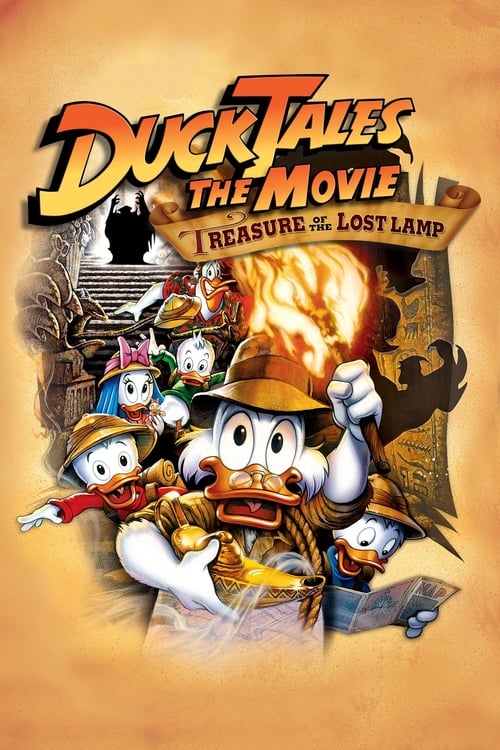
DuckTales: The Movie - Treasure of the Lost Lamp
With his nephews and niece, everyone's favorite rich uncle, Scrooge McDuck, treks from his mansion home in Duckburg in search of the long-lost loot of the thief Collie Baba. But finding the goods isn't quite what it's "quacked" up to be! Their thrilling adventure leads to comical chaos, magical mayhem, and a lesson about what is far more valuable than money, gold and jewels.
The film underperformed commercially against its respectable budget of $20.0M, earning $18.1M globally (-9% loss).


Plot Structure
Story beats plotted across runtime


Narrative Arc
Emotional journey through the story's key moments
Story Circle
Blueprint 15-beat structure
Arcplot Score Breakdown
Weighted: Precision (70%) + Arc (15%) + Theme (15%)
DuckTales: The Movie - Treasure of the Lost Lamp (1990) exhibits strategically placed narrative design, characteristic of Bob Hathcock's storytelling approach. This structural analysis examines how the film's 15-point plot structure maps to proven narrative frameworks across 1 hour and 14 minutes. With an Arcplot score of 7.5, the film showcases strong structural fundamentals.
Characters
Cast & narrative archetypes

Scrooge McDuck
Huey Duck
Dewey Duck
Louie Duck
Webby Vanderquack
Genie
Merlock
Launchpad McQuack
Dijon
Main Cast & Characters
Scrooge McDuck
Played by Alan Young
Wealthy adventurer and treasure hunter seeking the lost pyramid of Collie Baba. Protective uncle who learns to value family over fortune.
Huey Duck
Played by Russi Taylor
One of the adventurous triplet nephews who discovers the magic lamp. Brave and curious young duck.
Dewey Duck
Played by Russi Taylor
One of the triplet nephews who joins the treasure hunting adventure. Eager and spirited.
Louie Duck
Played by Russi Taylor
One of the triplet nephews completing the adventurous trio. Enthusiastic and loyal.
Webby Vanderquack
Played by Russi Taylor
Young adventurous female duck who befriends the nephews and joins the treasure hunt. Brave and resourceful despite her youth.
Genie
Played by Rip Taylor
Magical being trapped in the lamp who befriends the children. Playful and powerful, seeks freedom from servitude.
Merlock
Played by Christopher Lloyd
Evil sorcerer seeking the magic lamp to gain unlimited wishes and ultimate power. Primary antagonist.
Launchpad McQuack
Played by Terence McGovern
Scrooge's loyal but accident-prone pilot. Well-meaning aviator who provides comic relief and transportation.
Dijon
Played by Richard Libertini
Bumbling thief with a good heart who becomes an unlikely ally. Initially serves Merlock but switches sides.
Structural Analysis
The Status Quo at 1 minutes (1% through the runtime) establishes Scrooge McDuck leads his nephews and Launchpad on a treasure hunt expedition in the Middle Eastern desert. Establishes Scrooge's wealth obsession and the boys' adventurous dynamic.. The analysis reveals that this early placement immediately immerses viewers in the story world.
The inciting incident occurs at 9 minutes when Webby discovers and claims the old lamp from the treasure pile. Unbeknownst to everyone, this lamp contains a genie that will transform their lives and attract dangerous attention.. At 11% through the film, this Disruption aligns precisely with traditional story structure. This beat shifts the emotional landscape, launching the protagonist into the central conflict.
The First Threshold at 18 minutes marks the transition into Act II, occurring at 24% of the runtime. This indicates the protagonist's commitment to The boys actively choose to keep Gene secret and use wishes for fun rather than tell Scrooge. They commit to a new world of magical possibilities and friendship with Gene, crossing into Act 2., moving from reaction to action.
At 36 minutes, the Midpoint arrives at 48% of the runtime—precisely centered, creating perfect narrative symmetry. Notably, this crucial beat Merlock discovers the lamp's location and attacks. The fun is over—the stakes become life and death. False defeat: Merlock is revealed as an immortal sorcerer with unlimited wish power through his talisman., fundamentally raising what's at risk. The emotional intensity shifts, dividing the narrative into clear before-and-after phases.
The Collapse moment at 54 minutes (72% through) represents the emotional nadir. Here, Merlock obtains the lamp and banishes Gene. The genie—now a true friend—is ripped away, seemingly lost forever. The "death" of the friendship and loss of hope. The boys are powerless., illustrates the protagonist at their lowest point. This beat's placement in the final quarter sets up the climactic reversal.
The Second Threshold at 58 minutes initiates the final act resolution at 78% of the runtime. The revelation that Merlock's talisman can be destroyed, and the group's commitment to save Gene no matter the cost. Synthesis of courage, family unity, and selflessness to enter the final battle., demonstrating the transformation achieved throughout the journey.
Emotional Journey
DuckTales: The Movie - Treasure of the Lost Lamp's emotional architecture traces a deliberate progression across 15 carefully calibrated beats.
Narrative Framework
This structural analysis employs systematic plot point analysis that identifies crucial turning points. By mapping DuckTales: The Movie - Treasure of the Lost Lamp against these established plot points, we can identify how Bob Hathcock utilizes or subverts traditional narrative conventions. The plot point approach reveals not only adherence to structural principles but also creative choices that distinguish DuckTales: The Movie - Treasure of the Lost Lamp within the adventure genre.
Comparative Analysis
Additional adventure films include The Black Stallion, The Bad Guys and Puss in Boots.
Plot Points by Act
Act I
SetupStatus Quo
Scrooge McDuck leads his nephews and Launchpad on a treasure hunt expedition in the Middle Eastern desert. Establishes Scrooge's wealth obsession and the boys' adventurous dynamic.
Theme
Webby asks about friendship and sharing adventures. The theme of greed versus generosity, material wealth versus true treasure (friendship and family) is introduced through innocent dialogue.
Worldbuilding
Introduction to Scrooge's expedition, the nephews' enthusiasm for treasure hunting, and the discovery of Collie Baba's treasure including the mysterious old lamp. Webby tags along despite Scrooge's initial resistance.
Disruption
Webby discovers and claims the old lamp from the treasure pile. Unbeknownst to everyone, this lamp contains a genie that will transform their lives and attract dangerous attention.
Resistance
Return to Duckburg and celebration dinner. Webby gives the lamp to Huey, Dewey, and Louie. The boys accidentally summon Gene the Genie, who becomes their secret friend. They debate how to use the wishes and learn about Gene's powers and limitations.
Act II
ConfrontationFirst Threshold
The boys actively choose to keep Gene secret and use wishes for fun rather than tell Scrooge. They commit to a new world of magical possibilities and friendship with Gene, crossing into Act 2.
Mirror World
Gene expresses his desire for friendship and freedom, mirroring the theme. He represents generosity, fun, and emotional connection versus Scrooge's material obsession. This relationship will teach the boys what truly matters.
Premise
The fun and games of having a genie: wish-granting adventures, Gene helping at a charity circus, growing friendship between the boys and Gene. Meanwhile, villain Merlock searches for the lamp, raising tension.
Midpoint
Merlock discovers the lamp's location and attacks. The fun is over—the stakes become life and death. False defeat: Merlock is revealed as an immortal sorcerer with unlimited wish power through his talisman.
Opposition
Merlock pursues the group relentlessly. The boys' inexperience and poor wish choices create complications. Scrooge's money bin is transformed into a fortress. Tensions rise as Merlock closes in and Gene's safety becomes paramount.
Collapse
Merlock obtains the lamp and banishes Gene. The genie—now a true friend—is ripped away, seemingly lost forever. The "death" of the friendship and loss of hope. The boys are powerless.
Crisis
The boys and Scrooge process their loss and guilt. They realize they valued Gene as a friend, not for wishes. Scrooge recognizes that family and doing what's right matter more than treasure.
Act III
ResolutionSecond Threshold
The revelation that Merlock's talisman can be destroyed, and the group's commitment to save Gene no matter the cost. Synthesis of courage, family unity, and selflessness to enter the final battle.
Synthesis
Final confrontation with Merlock. Aerial battle, teamwork between Scrooge, the boys, and Launchpad. Merlock's talisman is destroyed, breaking his power. Gene is freed and uses his final power to save everyone.
Transformation
Gene becomes a real boy, free from the lamp. The boys have learned that friendship is the real treasure. Scrooge smiles genuinely at family togetherness, transformed from pure greed to valuing relationships. Mirrors opening but shows emotional growth.