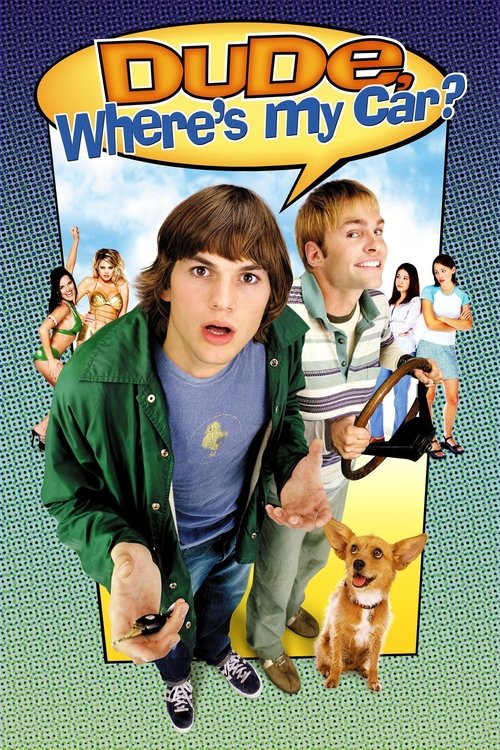
Dude, Where's My Car?
Two stoners wake up after a night of partying and cannot remember where they parked their car.
Despite its modest budget of $13.0M, Dude, Where's My Car? became a box office success, earning $73.2M worldwide—a 463% return. The film's unconventional structure found its audience, proving that strong storytelling can transcend budget limitations.
1 win & 6 nominations


Plot Structure
Story beats plotted across runtime


Narrative Arc
Emotional journey through the story's key moments
Story Circle
Blueprint 15-beat structure
Arcplot Score Breakdown
Weighted: Precision (70%) + Arc (15%) + Theme (15%)
Dude, Where's My Car? (2000) exemplifies carefully calibrated narrative design, characteristic of Danny Leiner's storytelling approach. This structural analysis examines how the film's 15-point plot structure maps to proven narrative frameworks across 1 hour and 23 minutes. With an Arcplot score of 6.7, the film balances conventional beats with creative variation.
Characters
Cast & narrative archetypes

Jesse Montgomery III
Chester Greenburg
Wanda
Wilma
Christie Boner
Main Cast & Characters
Jesse Montgomery III
Played by Ashton Kutcher
A dim-witted stoner who wakes up with no memory of the previous night and must find his missing car.
Chester Greenburg
Played by Seann William Scott
Jesse's equally clueless best friend and partner in their absurd quest to retrace their steps.
Wanda
Played by Jennifer Garner
Jesse's girlfriend who is frustrated by his irresponsible behavior and missing anniversary gifts.
Wilma
Played by Marla Sokoloff
Chester's girlfriend and Wanda's twin sister, equally upset about the boys' antics.
Christie Boner
Played by Kristy Swanson
A beautiful woman who becomes entangled in Jesse and Chester's bizarre adventure involving the Continuum Transfunctioner.
Structural Analysis
The Status Quo at 1 minutes (1% through the runtime) establishes Jesse and Chester wake up hungover in their trashed apartment with no memory of the previous night, establishing their irresponsible stoner lifestyle.. Notably, this early placement immediately immerses viewers in the story world.
The inciting incident occurs at 10 minutes when Jesse realizes his car is missing, forcing them to retrace their steps from the blackout night to find it and recover the anniversary gifts.. At 12% through the film, this Disruption aligns precisely with traditional story structure. This beat shifts the emotional landscape, launching the protagonist into the central conflict.
The First Threshold at 21 minutes marks the transition into Act II, occurring at 25% of the runtime. This indicates the protagonist's commitment to Jesse and Chester actively commit to the quest by accepting they must find the Continuum Transfunctioner to unlock the mystery of their missing night and car., moving from reaction to action.
At 42 minutes, the Midpoint arrives at 50% of the runtime—precisely centered, creating perfect narrative symmetry. Structural examination shows that this crucial beat Jesse and Chester finally find Jesse's car and retrieve the anniversary gifts, appearing to solve their problem, but discover the Continuum Transfunctioner is still missing with higher stakes now revealed., fundamentally raising what's at risk. The emotional intensity shifts, dividing the narrative into clear before-and-after phases.
The Collapse moment at 62 minutes (75% through) represents the emotional nadir. Here, Wanda and Wilma break up with Jesse and Chester after discovering their betrayal with the alien women, representing the death of their relationships and forcing them to face the consequences of their irresponsibility., demonstrates the protagonist at their lowest point. This beat's placement in the final quarter sets up the climactic reversal.
The Second Threshold at 66 minutes initiates the final act resolution at 80% of the runtime. Jesse and Chester remember where they hid the Transfunctioner and choose to use it responsibly to save the universe, demonstrating their transformation from selfish stoners to responsible heroes., demonstrating the transformation achieved throughout the journey.
Emotional Journey
Dude, Where's My Car?'s emotional architecture traces a deliberate progression across 15 carefully calibrated beats.
Narrative Framework
This structural analysis employs systematic plot point analysis that identifies crucial turning points. By mapping Dude, Where's My Car? against these established plot points, we can identify how Danny Leiner utilizes or subverts traditional narrative conventions. The plot point approach reveals not only adherence to structural principles but also creative choices that distinguish Dude, Where's My Car? within the comedy genre.
Danny Leiner's Structural Approach
Among the 2 Danny Leiner films analyzed on Arcplot, the average structural score is 6.8, demonstrating varied approaches to story architecture. Dude, Where's My Car? takes a more unconventional approach compared to the director's typical style. For comparative analysis, explore the complete Danny Leiner filmography.
Comparative Analysis
Additional comedy films include The Bad Guys, Ella Enchanted and The Evening Star. For more Danny Leiner analyses, see Harold & Kumar Go to White Castle.
Plot Points by Act
Act I
SetupStatus Quo
Jesse and Chester wake up hungover in their trashed apartment with no memory of the previous night, establishing their irresponsible stoner lifestyle.
Theme
The twins mention their anniversary dinner, hinting at the theme of responsibility and the consequences of reckless behavior.
Worldbuilding
Jesse and Chester discover clues about their wild night: destroyed apartment, strange items, angry phone messages from their girlfriends Wanda and Wilma about missing anniversary gifts.
Disruption
Jesse realizes his car is missing, forcing them to retrace their steps from the blackout night to find it and recover the anniversary gifts.
Resistance
Jesse and Chester debate how to find the car while encountering increasingly bizarre clues: a mystery girl, angry ostriches, a Chinese restaurant owner seeking a mysterious item, and cultists looking for "the Continuum Transfunctioner."
Act II
ConfrontationFirst Threshold
Jesse and Chester actively commit to the quest by accepting they must find the Continuum Transfunctioner to unlock the mystery of their missing night and car.
Mirror World
The hot alien women appear seeking the Transfunctioner, representing both temptation and the consequences of their irresponsibility, mirroring their relationship issues with Wanda and Wilma.
Premise
The absurd adventure unfolds as Jesse and Chester navigate encounters with strippers, cultists, aliens, and various eccentric characters while piecing together their lost night and searching for the device.
Midpoint
Jesse and Chester finally find Jesse's car and retrieve the anniversary gifts, appearing to solve their problem, but discover the Continuum Transfunctioner is still missing with higher stakes now revealed.
Opposition
Multiple factions converge seeking the Transfunctioner; the guys learn it could destroy the universe; their relationships with Wanda and Wilma deteriorate as the truth about their night emerges; the alien threat intensifies.
Collapse
Wanda and Wilma break up with Jesse and Chester after discovering their betrayal with the alien women, representing the death of their relationships and forcing them to face the consequences of their irresponsibility.
Crisis
Jesse and Chester reflect on losing their girlfriends and realize they must grow up and take responsibility; they recognize that saving the universe requires them to change.
Act III
ResolutionSecond Threshold
Jesse and Chester remember where they hid the Transfunctioner and choose to use it responsibly to save the universe, demonstrating their transformation from selfish stoners to responsible heroes.
Synthesis
Jesse and Chester activate the Transfunctioner, defeat the evil aliens, save the universe, and win back Wanda and Wilma by demonstrating their newfound maturity and commitment.
Transformation
Jesse and Chester enjoy a celebratory meal with their girlfriends, now responsible partners who saved the world, contrasting with their hungover irresponsible opening state.