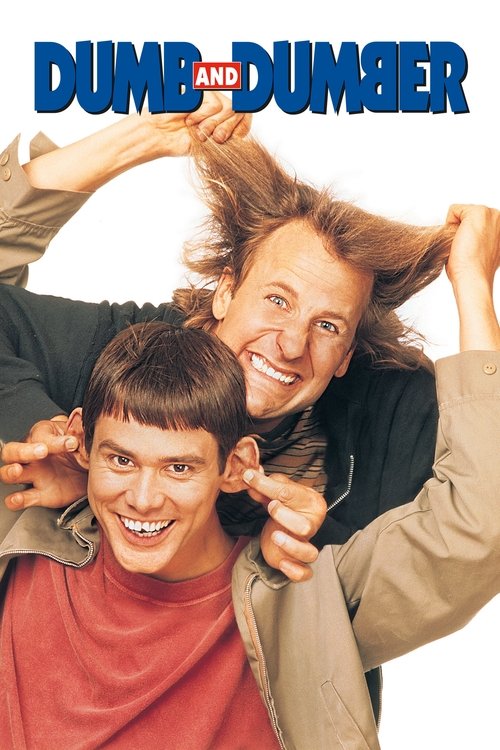
Dumb and Dumber
Lloyd and Harry are two men whose stupidity is really indescribable. When Mary, a beautiful woman, loses an important suitcase with money before she leaves for Aspen, the two friends (who have found the suitcase) decide to return it to her. After some "adventures" they finally get to Aspen where, using the lost money they live it up and fight for Mary's heart.
Despite a mid-range budget of $16.0M, Dumb and Dumber became a massive hit, earning $247.3M worldwide—a remarkable 1445% return.
5 wins & 3 nominations


Plot Structure
Story beats plotted across runtime


Narrative Arc
Emotional journey through the story's key moments
Story Circle
Blueprint 15-beat structure
Arcplot Score Breakdown
Weighted: Precision (70%) + Arc (15%) + Theme (15%)
Dumb and Dumber (1994) exhibits strategically placed story structure, characteristic of Peter Farrelly's storytelling approach. This structural analysis examines how the film's 15-point plot structure maps to proven narrative frameworks across 1 hour and 47 minutes. With an Arcplot score of 7.0, the film balances conventional beats with creative variation.
Characters
Cast & narrative archetypes

Lloyd Christmas
Harry Dunne
Mary Swanson
Nicholas Andre
Joe Mentalino
Main Cast & Characters
Lloyd Christmas
Played by Jim Carrey
An optimistic but dim-witted limousine driver who falls in love with a client and embarks on a cross-country journey to return her briefcase.
Harry Dunne
Played by Jeff Daniels
Lloyd's equally dimwitted best friend and roommate, a dog groomer who reluctantly joins the road trip adventure.
Mary Swanson
Played by Lauren Holly
A beautiful woman who becomes the object of Lloyd's affection and unknowingly involves the duo in a ransom scheme.
Nicholas Andre
Played by Charles Rocket
Mary's sinister friend and the mastermind behind the kidnapping plot who will stop at nothing to get the ransom money.
Joe Mentalino
Played by Mike Starr
A professional hitman hired to retrieve the ransom money and eliminate anyone who gets in the way.
Structural Analysis
The Status Quo at 1 minutes (1% through the runtime) establishes Lloyd drives his ridiculous dog-shaped van as a limo driver in Providence, Rhode Island, establishing his eccentric, simple-minded character and dead-end life.. Structural examination shows that this early placement immediately immerses viewers in the story world.
The inciting incident occurs at 12 minutes when Lloyd picks up Mary Swanson at the airport and instantly falls in love. She "accidentally" leaves a briefcase at the airport - Lloyd witnesses this and believes she forgot it.. At 12% through the film, this Disruption aligns precisely with traditional story structure. This beat shifts the emotional landscape, launching the protagonist into the central conflict.
The First Threshold at 26 minutes marks the transition into Act II, occurring at 24% of the runtime. This illustrates the protagonist's commitment to Lloyd and Harry make the active decision to trade Harry's van for the Mutt Cutts dog van and drive cross-country to Aspen to return the briefcase and find Mary., moving from reaction to action.
At 52 minutes, the Midpoint arrives at 49% of the runtime—precisely centered, creating perfect narrative symmetry. The analysis reveals that this crucial beat They arrive in Aspen and actually find Mary at a charity event. False victory: Lloyd returns the briefcase and Mary seems charmed by their innocence. Harry also becomes attracted to Mary., fundamentally raising what's at risk. The emotional intensity shifts, dividing the narrative into clear before-and-after phases.
The Collapse moment at 77 minutes (72% through) represents the emotional nadir. Here, Lloyd discovers Harry's betrayal about Mary. Their friendship collapses. Lloyd learns Mary is already engaged. His dream dies. The friends split up in anger and heartbreak., shows the protagonist at their lowest point. This beat's placement in the final quarter sets up the climactic reversal.
The Second Threshold at 84 minutes initiates the final act resolution at 79% of the runtime. The criminals kidnap Mary and her husband, forcing Lloyd and Harry to reunite. They realize their friendship matters more than the girl. New information: they discover the briefcase was ransom money., demonstrating the transformation achieved throughout the journey.
Emotional Journey
Dumb and Dumber's emotional architecture traces a deliberate progression across 15 carefully calibrated beats.
Narrative Framework
This structural analysis employs systematic plot point analysis that identifies crucial turning points. By mapping Dumb and Dumber against these established plot points, we can identify how Peter Farrelly utilizes or subverts traditional narrative conventions. The plot point approach reveals not only adherence to structural principles but also creative choices that distinguish Dumb and Dumber within the comedy genre.
Peter Farrelly's Structural Approach
Among the 6 Peter Farrelly films analyzed on Arcplot, the average structural score is 6.5, demonstrating varied approaches to story architecture. Dumb and Dumber represents one of the director's most structurally precise works. For comparative analysis, explore the complete Peter Farrelly filmography.
Comparative Analysis
Additional comedy films include The Bad Guys, Ella Enchanted and The Evening Star. For more Peter Farrelly analyses, see Green Book, The Three Stooges and There's Something About Mary.
Plot Points by Act
Act I
SetupStatus Quo
Lloyd drives his ridiculous dog-shaped van as a limo driver in Providence, Rhode Island, establishing his eccentric, simple-minded character and dead-end life.
Theme
Harry tells Lloyd "Just when I think you couldn't possibly be any dumber, you go and do something like this... and totally redeem yourself!" - establishing the theme of foolish optimism and loyalty despite stupidity.
Worldbuilding
Introduction to Lloyd and Harry's pathetic lives: Lloyd's failed limo job, Harry's dog grooming business, their shared apartment, mounting debts, and complete lack of romantic success.
Disruption
Lloyd picks up Mary Swanson at the airport and instantly falls in love. She "accidentally" leaves a briefcase at the airport - Lloyd witnesses this and believes she forgot it.
Resistance
Lloyd becomes obsessed with returning the briefcase to Mary in Aspen. Harry is skeptical. Lloyd gets fired, Harry's van is repossessed. They debate whether to take the ridiculous road trip.
Act II
ConfrontationFirst Threshold
Lloyd and Harry make the active decision to trade Harry's van for the Mutt Cutts dog van and drive cross-country to Aspen to return the briefcase and find Mary.
Mirror World
The duo bonds on the road trip, their friendship deepening. They pick up hitcher Mental, unaware he's been hired to kill them - their obliviousness actually saves them.
Premise
Road trip hijinks: the toilet scene, pranking each other, evading the criminals, spending ransom money thinking it's Mary's, replacing it with IOUs. The promise of the premise - two idiots on a road trip.
Midpoint
They arrive in Aspen and actually find Mary at a charity event. False victory: Lloyd returns the briefcase and Mary seems charmed by their innocence. Harry also becomes attracted to Mary.
Opposition
Lloyd and Harry compete for Mary's affection. The criminals close in. Harry sabotages Lloyd by lying about Mary's interest. Lloyd goes on a date with Mary. Tension builds between the friends.
Collapse
Lloyd discovers Harry's betrayal about Mary. Their friendship collapses. Lloyd learns Mary is already engaged. His dream dies. The friends split up in anger and heartbreak.
Crisis
Lloyd wallows in despair at the bar. Harry feels guilty. Both are at their lowest point, separated and having lost everything they came for.
Act III
ResolutionSecond Threshold
The criminals kidnap Mary and her husband, forcing Lloyd and Harry to reunite. They realize their friendship matters more than the girl. New information: they discover the briefcase was ransom money.
Synthesis
Lloyd and Harry accidentally rescue Mary and her husband through sheer stupidity. Shootout at the hotel. The police arrive. The friends reconcile, realizing their loyalty to each other is what truly matters.
Transformation
Lloyd and Harry walk home on the highway, broke but together. They turn down a bus full of bikini models looking for oil boys, proving they've learned nothing but their friendship endures. Mirrors opening - still idiots, but loyal idiots.