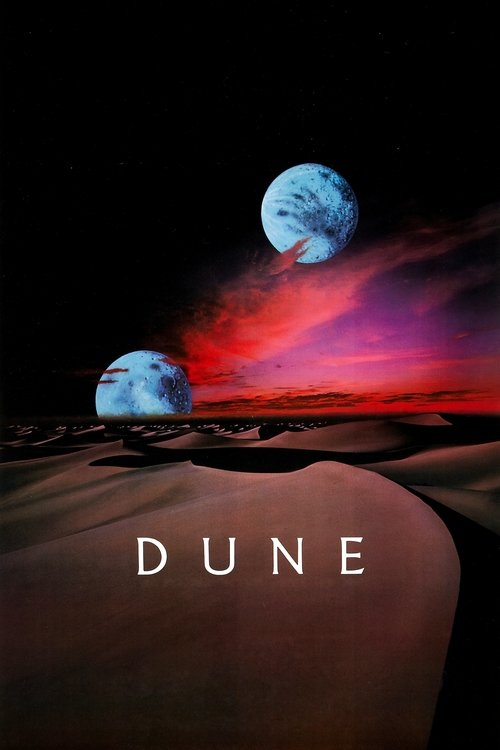
Dune
In the year 10,191, the most precious substance in the universe is the spice Melange. The spice extends life. The spice expands consciousness. The spice is vital to space travel. The spice exists on only one planet in the entire universe, the vast desert planet Arrakis, also known as Dune. Its native inhabitants, the Fremen, have long held a prophecy that a man would come, a messiah who would lead them to true freedom.
The film disappointed at the box office against its moderate budget of $40.0M, earning $31.5M globally (-21% loss).
Nominated for 1 Oscar. 2 wins & 7 nominations


Plot Structure
Story beats plotted across runtime


Narrative Arc
Emotional journey through the story's key moments
Story Circle
Blueprint 15-beat structure
Arcplot Score Breakdown
Weighted: Precision (70%) + Arc (15%) + Theme (15%)
Dune (1984) demonstrates strategically placed story structure, characteristic of David Lynch's storytelling approach. This structural analysis examines how the film's 15-point plot structure maps to proven narrative frameworks across 2 hours and 17 minutes. With an Arcplot score of 6.8, the film balances conventional beats with creative variation.
Structural Analysis
The Status Quo at 2 minutes (1% through the runtime) establishes Paul Atreides lives as the Duke's son on Caladan, training in combat and mental disciplines, unaware of his greater destiny as potential Kwisatz Haderach.. Significantly, this early placement immediately immerses viewers in the story world.
The inciting incident occurs at 20 minutes when The Atreides arrive on Arrakis, unknowingly walking into the Emperor and Baron Harkonnen's trap. Duke Leto accepts stewardship of the desert planet, disrupting Paul's comfortable life and placing the family in mortal danger.. At 15% through the film, this Disruption is delayed, allowing extended setup of the story world. This beat shifts the emotional landscape, launching the protagonist into the central conflict.
The First Threshold at 39 minutes marks the transition into Act II, occurring at 28% of the runtime. This shows the protagonist's commitment to The Harkonnen attack. Dr. Yueh's betrayal leads to Duke Leto's death and Paul and Jessica's escape into the desert. Paul actively chooses to flee into the unknown desert rather than surrender, crossing into the Fremen world., moving from reaction to action.
At 72 minutes, the Midpoint arrives at 52% of the runtime—precisely centered, creating perfect narrative symmetry. Of particular interest, this crucial beat Paul rides his first sandworm, proving himself a true Fremen and gaining their full acceptance. This false victory masks the danger: his prescient visions show the jihad his ascension will unleash across the universe., fundamentally raising what's at risk. The emotional intensity shifts, dividing the narrative into clear before-and-after phases.
The Collapse moment at 102 minutes (75% through) represents the emotional nadir. Here, Paul drinks the Water of Life, the poison that kills all men who attempt it. He falls into a deathlike coma, with his survival uncertain. Alia is captured by the Harkonnens. The "whiff of death" is literal—Paul may die, and with him, hope dies., demonstrates the protagonist at their lowest point. This beat's placement in the final quarter sets up the climactic reversal.
The Second Threshold at 108 minutes initiates the final act resolution at 79% of the runtime. Paul awakens transformed, his consciousness expanded across time and space. He sees the Golden Path and accepts his terrible purpose. He synthesizes his Atreides training, Bene Gesserit powers, and Fremen identity into the Kwisatz Haderach., demonstrating the transformation achieved throughout the journey.
Emotional Journey
Dune's emotional architecture traces a deliberate progression across 15 carefully calibrated beats.
Narrative Framework
This structural analysis employs structural analysis methodology used to understand storytelling architecture. By mapping Dune against these established plot points, we can identify how David Lynch utilizes or subverts traditional narrative conventions. The plot point approach reveals not only adherence to structural principles but also creative choices that distinguish Dune within the action genre.
David Lynch's Structural Approach
Among the 7 David Lynch films analyzed on Arcplot, the average structural score is 6.7, demonstrating varied approaches to story architecture. Dune represents one of the director's most structurally precise works. For comparative analysis, explore the complete David Lynch filmography.
Comparative Analysis
Additional action films include The Bad Guys, Puss in Boots and Venom: The Last Dance. For more David Lynch analyses, see Blue Velvet, The Elephant Man and Eraserhead.
Plot Points by Act
Act I
SetupStatus Quo
Paul Atreides lives as the Duke's son on Caladan, training in combat and mental disciplines, unaware of his greater destiny as potential Kwisatz Haderach.
Theme
Reverend Mother Gaius Helen Mohiam tests Paul with the gom jabbar, stating: "You've heard of animals chewing off a leg to escape a trap? There's an animal kind of trick. A human would remain in the trap, endure the pain, feigning death that he might kill the trapper and remove a threat to his kind." The theme: transcending animal instinct through discipline and sacrifice for a higher purpose.
Worldbuilding
Introduction to the political universe: the Emperor's machinations, the Spacing Guild's spice dependence, House Atreides' relocation to Arrakis, the Fremen, the Harkonnen threat, and Paul's training with Gurney Halleck, Thufir Hawat, and Duncan Idaho.
Disruption
The Atreides arrive on Arrakis, unknowingly walking into the Emperor and Baron Harkonnen's trap. Duke Leto accepts stewardship of the desert planet, disrupting Paul's comfortable life and placing the family in mortal danger.
Resistance
Paul explores Arrakis, learns about the spice, meets the planetologist Liet-Kynes, experiences visions of his future, and begins to understand the Fremen culture. Duke Leto attempts to establish control while suspecting betrayal.
Act II
ConfrontationFirst Threshold
The Harkonnen attack. Dr. Yueh's betrayal leads to Duke Leto's death and Paul and Jessica's escape into the desert. Paul actively chooses to flee into the unknown desert rather than surrender, crossing into the Fremen world.
Mirror World
Paul and Jessica encounter the Fremen, specifically Stilgar and Chani. Chani represents Paul's connection to Arrakis and the Fremen way, embodying the film's theme of adaptation and transformation through embracing the desert rather than conquering it.
Premise
Paul and Jessica integrate with the Fremen, learn their ways, ride sandworms, and Paul begins to fulfill prophecies. Paul becomes "Muad'Dib" and "Usul," demonstrates his worth, and his powers grow through spice exposure.
Midpoint
Paul rides his first sandworm, proving himself a true Fremen and gaining their full acceptance. This false victory masks the danger: his prescient visions show the jihad his ascension will unleash across the universe.
Opposition
The Baron and Feyd-Rautha consolidate power on Arrakis. Paul's visions of terrible futures intensify. The Fremen prepare for war, but Paul struggles with his destiny and the horrific price of his path to power.
Collapse
Paul drinks the Water of Life, the poison that kills all men who attempt it. He falls into a deathlike coma, with his survival uncertain. Alia is captured by the Harkonnens. The "whiff of death" is literal—Paul may die, and with him, hope dies.
Crisis
Paul remains in his coma while Chani watches over him. Jessica and the Fremen fear he is lost. The darkness before the awakening—will Paul emerge, and if so, what will he become?
Act III
ResolutionSecond Threshold
Paul awakens transformed, his consciousness expanded across time and space. He sees the Golden Path and accepts his terrible purpose. He synthesizes his Atreides training, Bene Gesserit powers, and Fremen identity into the Kwisatz Haderach.
Synthesis
Paul leads the Fremen in an all-out assault on the Emperor and Harkonnens. Using his prescient powers and the Fremen's ferocity, he defeats his enemies. He calls down rain using his voice, kills Feyd-Rautha in single combat, and overthrows the Emperor.
Transformation
Rain falls on Arrakis for the first time in millennia. Paul stands victorious as Emperor, but transformed from the innocent duke's son into an all-powerful figure who will unleash jihad across the universe. His eyes are blue within blue—he is now truly of the desert.