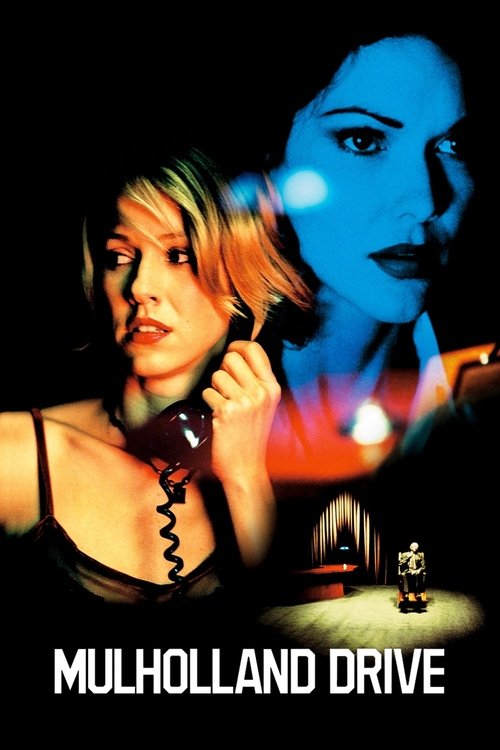
Mulholland Drive
Blonde Betty Elms has only just arrived in Hollywood to become a movie star when she meets an enigmatic brunette with amnesia. Meanwhile, as the two set off to solve the second woman's identity, filmmaker Adam Kesher runs into ominous trouble while casting his latest project.
Working with a moderate budget of $15.0M, the film achieved a modest success with $20.3M in global revenue (+35% profit margin).
Nominated for 1 Oscar. 50 wins & 61 nominations


Plot Structure
Story beats plotted across runtime


Narrative Arc
Emotional journey through the story's key moments
Story Circle
Blueprint 15-beat structure
Arcplot Score Breakdown
Weighted: Precision (70%) + Arc (15%) + Theme (15%)
Mulholland Drive (2001) showcases meticulously timed plot construction, characteristic of David Lynch's storytelling approach. This structural analysis examines how the film's 15-point plot structure maps to proven narrative frameworks across 2 hours and 27 minutes. With an Arcplot score of 6.9, the film balances conventional beats with creative variation.
Characters
Cast & narrative archetypes

Betty Elms / Diane Selwyn
Rita / Camilla Rhodes
Adam Kesher
The Cowboy
Coco Lenoix
Mr. Roque
Joe
Main Cast & Characters
Betty Elms / Diane Selwyn
Played by Naomi Watts
An optimistic aspiring actress from Ontario who arrives in Hollywood with dreams of stardom, only to have her identity fracture as reality and fantasy blur.
Rita / Camilla Rhodes
Played by Laura Harring
A mysterious amnesiac woman who survives a car accident on Mulholland Drive and takes refuge with Betty, becoming entangled in a dangerous web of identity and desire.
Adam Kesher
Played by Justin Theroux
A hotshot film director whose life unravels when mysterious forces pressure him to cast a specific actress, forcing him to confront the corrupt machinery of Hollywood.
The Cowboy
Played by Monty Montgomery
An enigmatic figure who appears at a remote corral to deliver cryptic warnings and ultimatums to Adam, representing unseen powers controlling Hollywood.
Coco Lenoix
Played by Ann Miller
Adam's landlady and a former actress who looks after the apartment complex with worldly wisdom and maternal warmth toward Betty.
Mr. Roque
Played by Michael J. Anderson
A wheelchair-bound, disfigured figure who controls decisions in the film industry from behind the scenes, communicating through intermediaries.
Joe
Played by Mark Pellegrino
A hitman who bungles an assassination attempt in darkly comic fashion, leaving a trail of bodies while searching for a mysterious black book.
Structural Analysis
The Status Quo at 1 minutes (1% through the runtime) establishes Jitterbug dance sequence transitions to POV shot from inside car on Mulholland Drive at night. Establishes dreamlike, disoriented state before the crash that will fragment identity and reality.. Notably, this early placement immediately immerses viewers in the story world.
The inciting incident occurs at 17 minutes when Betty discovers Rita (the dark-haired amnesiac woman) hiding in her aunt's apartment. This mystery will become Betty's obsessive focus, disrupting her planned audition-focused trajectory.. At 12% through the film, this Disruption aligns precisely with traditional story structure. This beat shifts the emotional landscape, launching the protagonist into the central conflict.
The First Threshold at 35 minutes marks the transition into Act II, occurring at 24% of the runtime. This demonstrates the protagonist's commitment to Betty actively commits to solving Rita's mystery, choosing to investigate the name "Diane Selwyn" from Rita's purse. This choice launches them into the detective narrative of Act 2., moving from reaction to action.
At 75 minutes, the Midpoint arrives at 51% of the runtime—precisely centered, creating perfect narrative symmetry. Structural examination shows that this crucial beat Betty and Rita discover Diane Selwyn's rotting corpse in the apartment. False victory of "solving" the mystery becomes devastating defeat. The investigation that brought them together now reveals death at its center. Stakes escalate into existential territory., fundamentally raising what's at risk. The emotional intensity shifts, dividing the narrative into clear before-and-after phases.
The Collapse moment at 112 minutes (76% through) represents the emotional nadir. Here, Betty opens the blue box and vanishes. The entire dream reality collapses. Whiff of death: the dream-self (Betty) dies, and we awaken into the "real" world where Diane Selwyn is the failed actress and Rita is Camilla Rhodes, the successful star., demonstrates the protagonist at their lowest point. This beat's placement in the final quarter sets up the climactic reversal.
The Second Threshold at 120 minutes initiates the final act resolution at 81% of the runtime. At Camilla's engagement party at Adam's house, Diane suffers ultimate humiliation and betrayal. The realization that Camilla/Adam are together crystalizes her resolve. She has already hired the hitman (blue key = confirmation of death). Synthesis of jealousy and murder., demonstrating the transformation achieved throughout the journey.
Emotional Journey
Mulholland Drive's emotional architecture traces a deliberate progression across 15 carefully calibrated beats.
Narrative Framework
This structural analysis employs proven narrative structure principles that track dramatic progression. By mapping Mulholland Drive against these established plot points, we can identify how David Lynch utilizes or subverts traditional narrative conventions. The plot point approach reveals not only adherence to structural principles but also creative choices that distinguish Mulholland Drive within the thriller genre.
David Lynch's Structural Approach
Among the 7 David Lynch films analyzed on Arcplot, the average structural score is 6.7, demonstrating varied approaches to story architecture. Mulholland Drive represents one of the director's most structurally precise works. For comparative analysis, explore the complete David Lynch filmography.
Comparative Analysis
Additional thriller films include The Warriors, Thunderball and Rustom. For more David Lynch analyses, see Blue Velvet, The Elephant Man and Eraserhead.
Plot Points by Act
Act I
SetupStatus Quo
Jitterbug dance sequence transitions to POV shot from inside car on Mulholland Drive at night. Establishes dreamlike, disoriented state before the crash that will fragment identity and reality.
Theme
Coco (the landlady) tells Betty: "It'll be just like in the movies. We'll take turns playing the roles." Theme of performance, identity construction, and the illusory nature of Hollywood dreams stated early.
Worldbuilding
Betty arrives in Hollywood filled with optimism and dreams of stardom. Rita (amnesiac crash survivor) hides in Aunt Ruth's apartment. Parallel world of Adam Kesher (director) being forced to cast Camilla Rhodes. Establishes the dream-Hollywood layer of reality.
Disruption
Betty discovers Rita (the dark-haired amnesiac woman) hiding in her aunt's apartment. This mystery will become Betty's obsessive focus, disrupting her planned audition-focused trajectory.
Resistance
Betty and Rita form a bond as Betty helps Rita investigate her identity. Betty's audition scene reveals startling talent. Adam Kesher faces industry pressure. Betty debates whether to help Rita or focus on her career, but compassion and attraction win.
Act II
ConfrontationFirst Threshold
Betty actively commits to solving Rita's mystery, choosing to investigate the name "Diane Selwyn" from Rita's purse. This choice launches them into the detective narrative of Act 2.
Mirror World
Betty and Rita's relationship deepens with evident romantic/erotic tension. Rita represents the unconscious shadow to Betty's conscious optimism—the thematic mirror reflecting buried truth and desire.
Premise
The "detective story" Betty signed up for. They investigate clues, visit locations, follow leads about Diane Selwyn. Betty experiences callback audition success. Adam sees Camilla Rhodes (the woman he's forced to cast). The promise of the mystery premise unfolds.
Midpoint
Betty and Rita discover Diane Selwyn's rotting corpse in the apartment. False victory of "solving" the mystery becomes devastating defeat. The investigation that brought them together now reveals death at its center. Stakes escalate into existential territory.
Opposition
Reality begins fragmenting. Rita dons blonde wig (becoming Betty's double). They make love. Club Silencio sequence exposes all performance as illusion ("No hay banda"). Betty finds blue key and box. Reality collapses as dream logic intensifies and pressure of truth closes in.
Collapse
Betty opens the blue box and vanishes. The entire dream reality collapses. Whiff of death: the dream-self (Betty) dies, and we awaken into the "real" world where Diane Selwyn is the failed actress and Rita is Camilla Rhodes, the successful star.
Crisis
Diane's wretched reality: jealousy, rejection, sexual humiliation. She awakens to the rotting corpse of her own failed dreams. Camilla (the real Rita) is with Adam. The dark night reveals Diane's masturbatory fantasy has ended, leaving only despair and rage.
Act III
ResolutionSecond Threshold
At Camilla's engagement party at Adam's house, Diane suffers ultimate humiliation and betrayal. The realization that Camilla/Adam are together crystalizes her resolve. She has already hired the hitman (blue key = confirmation of death). Synthesis of jealousy and murder.
Synthesis
The finale unfolds in fragments: Diane finds the blue key (hit completed), hallucinates persecutory visions of the elderly couple from the opening, and flees into her bedroom. The fantasy and reality layers merge into surreal horror. Guilt and madness consume her.
Transformation
Diane shoots herself on the bed, smoke rising. The idealistic Betty is dead; the murderous Diane is dead. The transformation is complete annihilation—from Hollywood dream to self-destruction. The final image mirrors the opening but reveals the death beneath the dream.