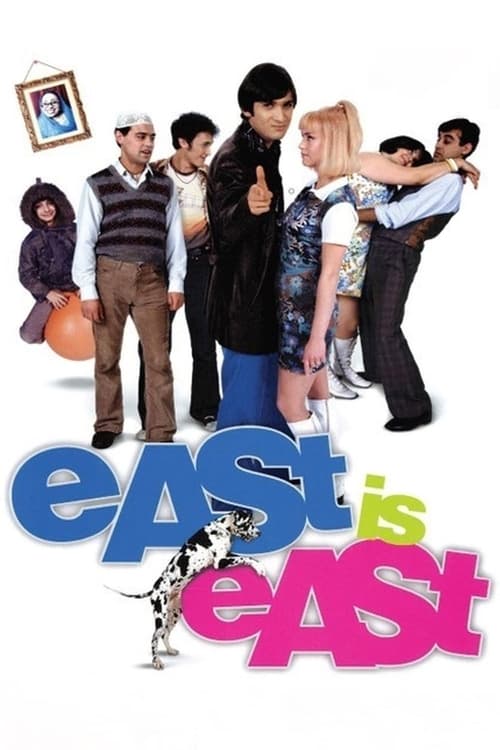
East Is East
In 1971 Salford fish-and-chip shop owner George Khan expects his family to follow his strict Pakistani Muslim ways. But his children, with an English mother and having been born and brought up in Britain, increasingly see themselves as British and start to reject their father's rules on dress, food, religion, and living in general.
Despite its tight budget of $3.8M, East Is East became a runaway success, earning $28.2M worldwide—a remarkable 642% return. The film's distinctive approach connected with viewers, proving that strong storytelling can transcend budget limitations.
1 BAFTA Award16 wins & 14 nominations


Plot Structure
Story beats plotted across runtime


Narrative Arc
Emotional journey through the story's key moments
Story Circle
Blueprint 15-beat structure
Arcplot Score Breakdown
Weighted: Precision (70%) + Arc (15%) + Theme (15%)
East Is East (1999) reveals carefully calibrated dramatic framework, characteristic of Damien O'Donnell's storytelling approach. This structural analysis examines how the film's 15-point plot structure maps to proven narrative frameworks across 1 hour and 37 minutes. With an Arcplot score of 6.8, the film balances conventional beats with creative variation.
Characters
Cast & narrative archetypes

George Khan
Ella Khan
Nazir Khan
Abdul Khan
Tariq Khan
Saleem Khan
Meenah Khan
Sajit Khan
Main Cast & Characters
George Khan
Played by Om Puri
Domineering Pakistani patriarch trying to maintain traditional Muslim values while running a fish and chip shop in 1970s Manchester
Ella Khan
Played by Linda Bassett
Long-suffering English wife and mother who shields her children from George's authoritarianism while maintaining peace in the household
Nazir Khan
Played by Ian Aspinall
The eldest son who rebels against his father's arranged marriage plans and becomes estranged from the family
Abdul Khan
Played by Raji James
The second eldest son torn between loyalty to his family and his own identity, struggles with his father's expectations for arranged marriage
Tariq Khan
Played by Jimi Mistry
Rebellious teenage son who challenges his father's authority through Western behavior and pursues girls against his father's wishes
Saleem Khan
Played by Jordan Routledge
Artistic and sensitive son who dreams of becoming a fashion designer, struggles with his identity and his father's rigid expectations
Meenah Khan
Played by Archie Panjabi
Strong-willed teenage daughter who resists her father's traditional expectations and increasingly identifies with Western culture
Sajit Khan
Played by Jordan Routledge
The youngest son who lives in a parka hood and imitates Indianness to please his father while secretly being more English
Structural Analysis
The Status Quo at 1 minutes (1% through the runtime) establishes The Khan children hide in their chip shop during a Catholic procession while their father George believes they're at mosque, establishing the family's secret double life between Pakistani Muslim tradition and British working-class culture.. Notably, this early placement immediately immerses viewers in the story world.
The inciting incident occurs at 12 minutes when George announces he has arranged marriages for Tariq and Abdul with the daughters of Mr. Shah, a successful Pakistani businessman. This forces the family to confront their dual identity crisis directly.. At 12% through the film, this Disruption aligns precisely with traditional story structure. This beat shifts the emotional landscape, launching the protagonist into the central conflict.
The First Threshold at 24 minutes marks the transition into Act II, occurring at 25% of the runtime. This demonstrates the protagonist's commitment to Despite their resistance, the family commits to hosting the Shah family for the formal marriage meeting. The children's various escape plans have failed, and they must now confront the arranged marriage tradition head-on., moving from reaction to action.
At 49 minutes, the Midpoint arrives at 50% of the runtime—precisely centered, creating perfect narrative symmetry. Significantly, this crucial beat The disastrous meeting with the Shah family reaches its climax when it's revealed that Sajid was never circumcised—a fundamental failure of George's Muslim parenting. The Shahs are horrified and leave, humiliating George and exposing the family's cultural compromise., fundamentally raising what's at risk. The emotional intensity shifts, dividing the narrative into clear before-and-after phases.
The Collapse moment at 73 minutes (75% through) represents the emotional nadir. Here, George erupts in brutal violence, attacking Ella and the children after the complete collapse of the Shah marriage arrangement. The family's fragile unity shatters as George's patriarchal rage reaches its terrible peak, leaving the household in traumatized silence., demonstrates the protagonist at their lowest point. This beat's placement in the final quarter sets up the climactic reversal.
The Second Threshold at 78 minutes initiates the final act resolution at 80% of the runtime. Ella and the children unite in solidarity against George's tyranny. Ella finally stands up to her husband, declaring that she will no longer allow him to destroy their children's futures. The family chooses their own identity over George's imposed traditions., demonstrating the transformation achieved throughout the journey.
Emotional Journey
East Is East's emotional architecture traces a deliberate progression across 15 carefully calibrated beats.
Narrative Framework
This structural analysis employs a 15-point narrative structure framework that maps key story moments. By mapping East Is East against these established plot points, we can identify how Damien O'Donnell utilizes or subverts traditional narrative conventions. The plot point approach reveals not only adherence to structural principles but also creative choices that distinguish East Is East within the drama genre.
Comparative Analysis
Additional drama films include After Thomas, South Pacific and Dirty Dancing: Havana Nights.
Plot Points by Act
Act I
SetupStatus Quo
The Khan children hide in their chip shop during a Catholic procession while their father George believes they're at mosque, establishing the family's secret double life between Pakistani Muslim tradition and British working-class culture.
Theme
Ella tells George that the children are "half of me as well," articulating the film's central theme about bicultural identity and the children's right to define themselves beyond their father's rigid Pakistani traditionalism.
Worldbuilding
We meet the full Khan family in 1971 Salford: domineering patriarch George, long-suffering English wife Ella, and their seven children navigating between mosque and fish-and-chip shop, cricket and arranged marriage, revealing a household defined by cultural collision and hidden rebellions.
Disruption
George announces he has arranged marriages for Tariq and Abdul with the daughters of Mr. Shah, a successful Pakistani businessman. This forces the family to confront their dual identity crisis directly.
Resistance
The family debates and resists George's marriage plans in various ways. Tariq secretly dates a white English girl. Abdul is reluctant but more passive. The brothers scheme to sabotage the arrangement while Ella tries to mediate between her husband's demands and her children's desires.
Act II
ConfrontationFirst Threshold
Despite their resistance, the family commits to hosting the Shah family for the formal marriage meeting. The children's various escape plans have failed, and they must now confront the arranged marriage tradition head-on.
Mirror World
Meenah's secret relationship with Ernest Moorhouse blossoms, representing the forbidden cross-cultural romance that embodies what the children truly want: the freedom to choose their own partners and forge their own hybrid British-Pakistani identities.
Premise
The promise of the premise unfolds as the Khan children navigate their double lives with increasing desperation and comedy. Sajid hides under his parka hood, the boys pursue English girlfriends in secret, and the family scrambles to appear as proper Muslims while living thoroughly British lives.
Midpoint
The disastrous meeting with the Shah family reaches its climax when it's revealed that Sajid was never circumcised—a fundamental failure of George's Muslim parenting. The Shahs are horrified and leave, humiliating George and exposing the family's cultural compromise.
Opposition
George becomes increasingly tyrannical and violent as his authority crumbles. He forces Sajid's circumcision, discovers Tariq's English girlfriend, and grows more desperate to control his family. The children's resistance hardens, and Ella is caught between protecting her children and her marriage.
Collapse
George erupts in brutal violence, attacking Ella and the children after the complete collapse of the Shah marriage arrangement. The family's fragile unity shatters as George's patriarchal rage reaches its terrible peak, leaving the household in traumatized silence.
Crisis
In the aftermath of George's violence, the family sits in stunned grief. Ella must finally reckon with years of enabling her husband's abuse. The children see their mother bruised and broken. The dream of a harmonious bicultural family seems destroyed.
Act III
ResolutionSecond Threshold
Ella and the children unite in solidarity against George's tyranny. Ella finally stands up to her husband, declaring that she will no longer allow him to destroy their children's futures. The family chooses their own identity over George's imposed traditions.
Synthesis
The family confronts George together, asserting their right to be both British and Pakistani on their own terms. George, finally seeing the damage his rigidity has caused, begins to soften. The family starts to rebuild with new understanding and boundaries.
Transformation
The Khan family stands together, transformed. George has accepted that his children will forge their own path. The image of family unity now includes space for individual identity—they are no longer hiding who they are but embracing their complex, hybrid British-Pakistani selves.