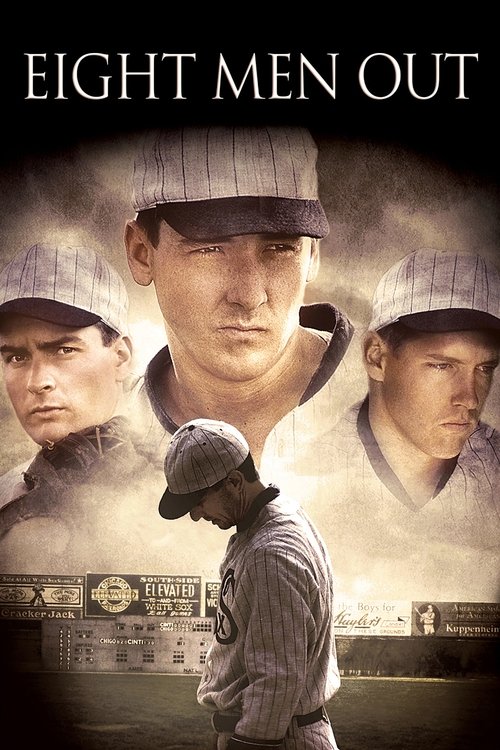
Eight Men Out
Buck Weaver and Hap Felsch are young idealistic players on the Chicago White Sox, a pennant-winning team owned by Charles Comiskey - a penny-pinching, hands-on manager who underpays his players and treats them with disdain. And when gamblers and hustlers discover that Comiskey's demoralized players are ripe for a money-making scheme, one by one the team members agree to throw the World Series. But when the White Sox are defeated, a couple of sports writers smell a fix and a national scandal explodes, ripping the cover off America's favorite pastime.
The film struggled financially against its tight budget of $6.1M, earning $5.7M globally (-7% loss).


Plot Structure
Story beats plotted across runtime


Narrative Arc
Emotional journey through the story's key moments
Story Circle
Blueprint 15-beat structure
Arcplot Score Breakdown
Weighted: Precision (70%) + Arc (15%) + Theme (15%)
Eight Men Out (1988) reveals carefully calibrated narrative architecture, characteristic of John Sayles's storytelling approach. This structural analysis examines how the film's 15-point plot structure maps to proven narrative frameworks across 2 hours. With an Arcplot score of 7.3, the film balances conventional beats with creative variation.
Characters
Cast & narrative archetypes

Buck Weaver
Eddie Cicotte
Shoeless Joe Jackson
Arnold Rothstein
Chick Gandil
Sport Sullivan
Ring Lardner
Charles Comiskey
Lefty Williams
Swede Risberg
Happy Felsch
Main Cast & Characters
Buck Weaver
Played by John Cusack
Third baseman for the White Sox who didn't take money but knew about the fix. Torn between loyalty to teammates and love of the game.
Eddie Cicotte
Played by David Strathairn
Veteran pitcher who initiates the fix after being cheated out of a bonus by owner Comiskey. Motivated by need to support his family.
Shoeless Joe Jackson
Played by D.B. Sweeney
Star outfielder, illiterate and simple, who takes money but plays his best. The tragic innocent caught in the scandal.
Arnold Rothstein
Played by Michael Lerner
Powerful New York gangster and gambler who masterminds and finances the World Series fix.
Chick Gandil
Played by Michael Rooker
First baseman and ringleader who organizes the fix with gamblers. Cold and calculating.
Sport Sullivan
Played by Kevin Tighe
Small-time Boston gambler who serves as middleman between the players and Rothstein.
Ring Lardner
Played by John Sayles
Sportswriter who suspects the fix and becomes disillusioned with baseball. Serves as moral conscience.
Charles Comiskey
Played by Clifton James
Miserly White Sox owner whose greed and mistreatment of players creates conditions for the scandal.
Lefty Williams
Played by James Read
Pitcher who participates in the fix and struggles with the moral weight of throwing games.
Swede Risberg
Played by Don Harvey
Shortstop and conspirator who fully commits to the fix without apparent remorse.
Happy Felsch
Played by Charlie Sheen
Outfielder who joins the fix, later regrets his decision and shows remorse.
Structural Analysis
The Status Quo at 2 minutes (1% through the runtime) establishes The Chicago White Sox celebrate their dominance on the field, demonstrating their talent and camaraderie. They are the best team in baseball but underpaid by owner Charles Comiskey.. Structural examination shows that this early placement immediately immerses viewers in the story world.
The inciting incident occurs at 15 minutes when Gambler Sport Sullivan approaches Chick Gandil with the proposition to throw the World Series for $100,000. The offer disrupts the moral order and presents a dark temptation to the financially struggling players.. At 13% through the film, this Disruption is delayed, allowing extended setup of the story world. This beat shifts the emotional landscape, launching the protagonist into the central conflict.
The First Threshold at 31 minutes marks the transition into Act II, occurring at 26% of the runtime. This indicates the protagonist's commitment to Eddie Cicotte finds $10,000 in cash under his hotel room pillow and breaks down emotionally. He commits to throwing the Series, actively choosing to betray his principles. This irreversible decision launches the conspiracy into action., moving from reaction to action.
At 61 minutes, the Midpoint arrives at 50% of the runtime—precisely centered, creating perfect narrative symmetry. Significantly, this crucial beat False defeat: The White Sox lose the World Series as planned, but the conspirators discover they've been double-crossed and won't receive their full payment. What seemed like a successful crime becomes a disaster. The stakes raise as they realize they sold their integrity for nothing., fundamentally raising what's at risk. The emotional intensity shifts, dividing the narrative into clear before-and-after phases.
The Collapse moment at 89 minutes (74% through) represents the emotional nadir. Here, Eddie Cicotte breaks down and confesses everything to the grand jury, weeping as he destroys himself and his teammates. The death of innocence and integrity is complete. "I did it for the wife and kids," he sobs, the whiff of death hanging over his ruined career and soul., illustrates the protagonist at their lowest point. This beat's placement in the final quarter sets up the climactic reversal.
The Second Threshold at 95 minutes initiates the final act resolution at 79% of the runtime. The trial concludes with a not-guilty verdict on legal grounds, offering a moment of false hope. However, the players understand that legal acquittal doesn't mean redemption. They realize the true judgment comes next from baseball itself., demonstrating the transformation achieved throughout the journey.
Emotional Journey
Eight Men Out's emotional architecture traces a deliberate progression across 15 carefully calibrated beats.
Narrative Framework
This structural analysis employs a 15-point narrative structure framework that maps key story moments. By mapping Eight Men Out against these established plot points, we can identify how John Sayles utilizes or subverts traditional narrative conventions. The plot point approach reveals not only adherence to structural principles but also creative choices that distinguish Eight Men Out within the drama genre.
John Sayles's Structural Approach
Among the 3 John Sayles films analyzed on Arcplot, the average structural score is 7.0, reflecting strong command of classical structure. Eight Men Out represents one of the director's most structurally precise works. For comparative analysis, explore the complete John Sayles filmography.
Comparative Analysis
Additional drama films include After Thomas, South Pacific and Dirty Dancing: Havana Nights. For more John Sayles analyses, see Lone Star, The Secret of Roan Inish.
Plot Points by Act
Act I
SetupStatus Quo
The Chicago White Sox celebrate their dominance on the field, demonstrating their talent and camaraderie. They are the best team in baseball but underpaid by owner Charles Comiskey.
Theme
Eddie Cicotte discusses with teammates how Comiskey promised him a $10,000 bonus for 30 wins but benched him to avoid paying. A character remarks about being "owned" and how money controls everything in baseball.
Worldbuilding
Establishment of the White Sox roster, their exceptional talent, and crushing poverty despite their skills. Introduction of owner Comiskey's miserliness, the players' resentment, and the gambling underworld surrounding baseball. Eddie Cicotte's farm dreams and financial pressures are established.
Disruption
Gambler Sport Sullivan approaches Chick Gandil with the proposition to throw the World Series for $100,000. The offer disrupts the moral order and presents a dark temptation to the financially struggling players.
Resistance
Gandil recruits players one by one. Internal debate among the conspirators about whether to accept the fix. Eddie Cicotte resists initially, torn between integrity and his desperate need for his farm. Buck Weaver listens but refuses to participate. The moral debate intensifies as the World Series approaches.
Act II
ConfrontationFirst Threshold
Eddie Cicotte finds $10,000 in cash under his hotel room pillow and breaks down emotionally. He commits to throwing the Series, actively choosing to betray his principles. This irreversible decision launches the conspiracy into action.
Mirror World
Ring Lardner, the sportswriter who loves and believes in the players, represents the thematic counterpoint of faith and integrity. His growing suspicion and eventual heartbreak will mirror the corruption of the game itself.
Premise
The promise of the premise: watching the fix unfold during the World Series games. Tension between players trying to throw and those playing honestly. Mounting suspicions from press and honest players. The conspirators' growing realization that they may not get paid. Internal team conflict and the painful execution of intentional failure.
Midpoint
False defeat: The White Sox lose the World Series as planned, but the conspirators discover they've been double-crossed and won't receive their full payment. What seemed like a successful crime becomes a disaster. The stakes raise as they realize they sold their integrity for nothing.
Opposition
The coverup unravels. Journalists investigate, rumors spread, and pressure builds. Comiskey publicly offers a reward while privately trying to suppress the scandal. The conspirators splinter as some confess. Buck Weaver desperately tries to clear his name despite knowing about the fix. The legal system closes in, and the players' lives deteriorate.
Collapse
Eddie Cicotte breaks down and confesses everything to the grand jury, weeping as he destroys himself and his teammates. The death of innocence and integrity is complete. "I did it for the wife and kids," he sobs, the whiff of death hanging over his ruined career and soul.
Crisis
The dark aftermath of confession. Players are indicted, suspended, and face trial. Buck Weaver's desperate attempts to separate himself from the conspiracy fail. The emotional weight of what they've lost settles in as they face the end of their careers and reputations.
Act III
ResolutionSecond Threshold
The trial concludes with a not-guilty verdict on legal grounds, offering a moment of false hope. However, the players understand that legal acquittal doesn't mean redemption. They realize the true judgment comes next from baseball itself.
Synthesis
Commissioner Kenesaw Mountain Landis bans all eight players from baseball for life, regardless of the legal verdict. The final confrontation between integrity and corruption concludes with permanent exile. The players face their permanent separation from the game they loved, the ultimate consequence of their choices.
Transformation
A young boy approaches Shoeless Joe Jackson outside the courthouse and says, "Say it ain't so, Joe." Joe walks away in silence, unable to answer. The transformation is complete: heroes have become pariahs, innocence is lost forever, and the game itself is corrupted. The closing image mirrors the opening celebration with devastating irony.