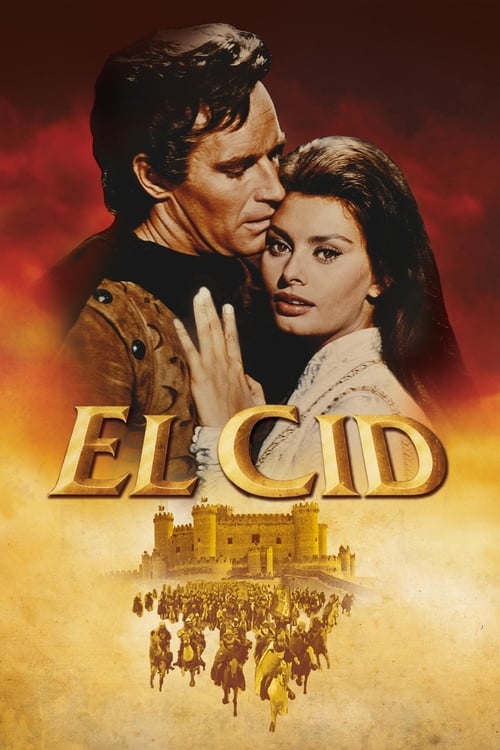
El Cid
Epic film of the legendary Spanish hero, Rodrigo Diaz ("El Cid" to his followers), who, without compromising his strict sense of honour, still succeeds in taking the initiative and driving the Moors from Spain.
Despite its limited budget of $6.3M, El Cid became a commercial success, earning $26.6M worldwide—a 326% return. The film's distinctive approach engaged audiences, illustrating how strong storytelling can transcend budget limitations.
Nominated for 3 Oscars. 7 wins & 13 nominations
Plot Structure
Story beats plotted across runtime


Narrative Arc
Emotional journey through the story's key moments
Story Circle
Blueprint 15-beat structure
Arcplot Score Breakdown
Weighted: Precision (70%) + Arc (15%) + Theme (15%)
El Cid (1961) exemplifies meticulously timed dramatic framework, characteristic of Anthony Mann's storytelling approach. This structural analysis examines how the film's 15-point plot structure maps to proven narrative frameworks across 3 hours and 7 minutes. With an Arcplot score of 7.4, the film balances conventional beats with creative variation.
Characters
Cast & narrative archetypes

Rodrigo Díaz de Vivar (El Cid)
Doña Chimene
King Alfonso VI
Count Gormaz
Count Ordóñez
Al-Mu'tamin
Ben Yusuf
Infanta Doña Urraca
Main Cast & Characters
Rodrigo Díaz de Vivar (El Cid)
Played by Charlton Heston
A noble Castilian knight who becomes Spain's greatest hero, balancing honor and duty while uniting Christians and Moors against a common enemy.
Doña Chimene
Played by Sophia Loren
Rodrigo's wife, torn between love for her husband and duty to avenge her father's death at his hands.
King Alfonso VI
Played by John Fraser
The pragmatic King of Castile who respects El Cid but is suspicious of his power and popularity.
Count Gormaz
Played by Andrew Cruickshank
Chimene's father, a proud nobleman who duels Rodrigo over honor and is killed, creating the central conflict.
Count Ordóñez
Played by Raf Vallone
A treacherous nobleman who schemes against El Cid and manipulates court politics for personal gain.
Al-Mu'tamin
Played by Douglas Wilmer
The Moorish King of Zaragoza who becomes El Cid's ally and friend despite religious differences.
Ben Yusuf
Played by Herbert Lom
The fanatical Almoravid leader from Africa who seeks to conquer Spain and destroy Christian-Moorish cooperation.
Infanta Doña Urraca
Played by Genevieve Page
King Alfonso's sister, ambitious and politically savvy, who supports El Cid and influences court decisions.
Structural Analysis
The Status Quo at 1 minutes (1% through the runtime) establishes Opening image of 11th century Spain divided between Christian kingdoms and Moorish territories. Rodrigo Díaz rides as a noble knight in service to Prince Sancho, embodying the code of honor that defines him.. Structural examination shows that this early placement immediately immerses viewers in the story world.
The inciting incident occurs at 22 minutes when Rodrigo captures Moorish emirs but releases them with honor rather than executing them as ordered. This act of mercy contradicts his prince's command and sets him at odds with the political establishment, particularly Count Gormaz, Chimene's father.. At 12% through the film, this Disruption aligns precisely with traditional story structure. This beat shifts the emotional landscape, launching the protagonist into the central conflict.
The First Threshold at 45 minutes marks the transition into Act II, occurring at 24% of the runtime. This reveals the protagonist's commitment to Rodrigo kills Count Gormaz in a duel to defend his honor. This irreversible act destroys his relationship with Chimene and transforms him from a simple knight into a man who must forge his own path. He loses everything he held dear., moving from reaction to action.
At 94 minutes, the Midpoint arrives at 50% of the runtime—precisely centered, creating perfect narrative symmetry. The analysis reveals that this crucial beat False victory: King Ferdinand forces Chimene to marry Rodrigo, seemingly resolving the central conflict. They are united, El Cid is elevated to champion of Spain. But this external resolution masks the unresolved emotional truth—Chimene has not forgiven him, and the marriage is hollow., fundamentally raising what's at risk. The emotional intensity shifts, dividing the narrative into clear before-and-after phases.
The Collapse moment at 137 minutes (73% through) represents the emotional nadir. Here, Rodrigo is banished from Spain, losing his title, lands, and purpose. In exile, he receives word that the Moors are preparing a massive invasion to destroy Valencia and all of Christian Spain. His life's work of unity appears to have died. Whiff of death: his dream of a united Spain seems impossible., indicates the protagonist at their lowest point. This beat's placement in the final quarter sets up the climactic reversal.
The Second Threshold at 148 minutes initiates the final act resolution at 79% of the runtime. Rodrigo returns to defend Valencia, synthesizing all he has learned: honor is not about personal glory or political favor, but about serving the people. He unites Christians and Moors under one banner to defend Spain. Chimene fully commits to him, understanding his purpose., demonstrating the transformation achieved throughout the journey.
Emotional Journey
El Cid's emotional architecture traces a deliberate progression across 15 carefully calibrated beats.
Narrative Framework
This structural analysis employs structural analysis methodology used to understand storytelling architecture. By mapping El Cid against these established plot points, we can identify how Anthony Mann utilizes or subverts traditional narrative conventions. The plot point approach reveals not only adherence to structural principles but also creative choices that distinguish El Cid within the action genre.
Anthony Mann's Structural Approach
Among the 4 Anthony Mann films analyzed on Arcplot, the average structural score is 7.0, reflecting strong command of classical structure. El Cid represents one of the director's most structurally precise works. For comparative analysis, explore the complete Anthony Mann filmography.
Comparative Analysis
Additional action films include The Bad Guys, Puss in Boots and Venom: The Last Dance. For more Anthony Mann analyses, see The Fall of the Roman Empire, The Man from Laramie and Raw Deal.
Plot Points by Act
Act I
SetupStatus Quo
Opening image of 11th century Spain divided between Christian kingdoms and Moorish territories. Rodrigo Díaz rides as a noble knight in service to Prince Sancho, embodying the code of honor that defines him.
Theme
A Moorish emir tells Rodrigo: "In Spain, all men speak of honor, but few understand it." This establishes the central theme of true honor versus political expedience, and whether a man can serve both God and country while maintaining personal integrity.
Worldbuilding
Establishment of the fractured Spanish kingdoms, ongoing conflict with the Moors, Rodrigo's relationship with Chimene, and his loyalty to Prince Sancho. Shows the political machinations at court and Rodrigo's reputation as an honorable warrior.
Disruption
Rodrigo captures Moorish emirs but releases them with honor rather than executing them as ordered. This act of mercy contradicts his prince's command and sets him at odds with the political establishment, particularly Count Gormaz, Chimene's father.
Resistance
Count Gormaz challenges Rodrigo's honor and loyalty. Rodrigo faces the impossible choice between his love for Chimene and his duty to defend his honor. He seeks guidance but realizes no one can make this decision for him.
Act II
ConfrontationFirst Threshold
Rodrigo kills Count Gormaz in a duel to defend his honor. This irreversible act destroys his relationship with Chimene and transforms him from a simple knight into a man who must forge his own path. He loses everything he held dear.
Mirror World
Chimene confronts Rodrigo, torn between her love for him and her duty to avenge her father. Their relationship becomes the mirror that reflects the theme: can love and honor coexist? She demands justice while still loving him.
Premise
Rodrigo proves himself as "El Cid" (The Lord), defending Spain against Moorish invasions while navigating the treacherous politics of King Ferdinand's court. He wins battles, earns the respect of both Christians and Moors, but remains an outcast from the woman he loves.
Midpoint
False victory: King Ferdinand forces Chimene to marry Rodrigo, seemingly resolving the central conflict. They are united, El Cid is elevated to champion of Spain. But this external resolution masks the unresolved emotional truth—Chimene has not forgiven him, and the marriage is hollow.
Opposition
King Ferdinand dies, his heirs fracture the kingdom through civil war. Rodrigo is exiled by the jealous King Alfonso. The Moorish armies, sensing weakness, prepare to invade. Chimene remains emotionally distant. Everything Rodrigo fought to build crumbles.
Collapse
Rodrigo is banished from Spain, losing his title, lands, and purpose. In exile, he receives word that the Moors are preparing a massive invasion to destroy Valencia and all of Christian Spain. His life's work of unity appears to have died. Whiff of death: his dream of a united Spain seems impossible.
Crisis
In his darkest moment, Rodrigo contemplates his failures. Chimene finally comes to him, and they reconcile emotionally. She tells him that Spain needs him regardless of the king's decree. He realizes that true honor means serving a cause greater than himself.
Act III
ResolutionSecond Threshold
Rodrigo returns to defend Valencia, synthesizing all he has learned: honor is not about personal glory or political favor, but about serving the people. He unites Christians and Moors under one banner to defend Spain. Chimene fully commits to him, understanding his purpose.
Synthesis
The climactic battle for Valencia. Rodrigo is mortally wounded but conceals it to lead his troops. In an iconic finale, he rides out one last time—dead but strapped to his horse—inspiring his army to victory. The legend transcends the man.
Transformation
Closing image: El Cid's body rides toward the sea, Chimene and the people watching. Where the opening showed a man seeking honor through service to princes, the closing shows a legend who achieved immortality through selfless sacrifice. True honor transcends death.