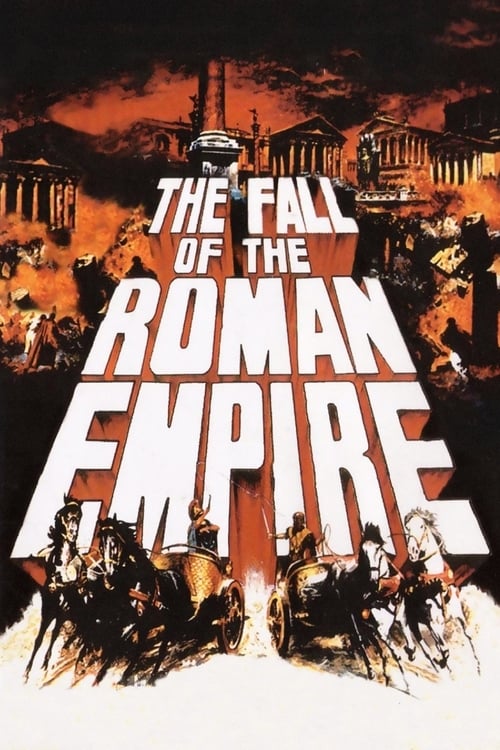
The Fall of the Roman Empire
In the year 180 A.D. Germanic tribes are about to invade the Roman empire from the north. In the midst of this crisis ailing emperor Marcus Aurelius has to make a decision about his successor between his son Commodus, who is obsessed by power, and the loyal general Gaius Livius.
The film commercial failure against its mid-range budget of $19.0M, earning $4.8M globally (-75% loss). While initial box office returns were modest, the film has gained appreciation for its unconventional structure within the drama genre.
Nominated for 1 Oscar. 1 win & 2 nominations


Plot Structure
Story beats plotted across runtime


Narrative Arc
Emotional journey through the story's key moments
Story Circle
Blueprint 15-beat structure
Arcplot Score Breakdown
Weighted: Precision (70%) + Arc (15%) + Theme (15%)
The Fall of the Roman Empire (1964) exemplifies deliberately positioned plot construction, characteristic of Anthony Mann's storytelling approach. This structural analysis examines how the film's 15-point plot structure maps to proven narrative frameworks across 3 hours and 8 minutes. With an Arcplot score of 7.1, the film balances conventional beats with creative variation.
Characters
Cast & narrative archetypes

Livius
Lucilla
Commodus
Marcus Aurelius
Timonides
Ballomar
Cleander
Main Cast & Characters
Livius
Played by Stephen Boyd
Roman general and philosopher who advocates for peace and unity, beloved by Marcus Aurelius as his chosen successor.
Lucilla
Played by Sophia Loren
Daughter of Marcus Aurelius, caught between duty to Rome and love for Livius, representing the empire's conscience.
Commodus
Played by Christopher Plummer
Marcus Aurelius' ambitious and unstable son who becomes emperor and drives Rome toward tyranny and collapse.
Marcus Aurelius
Played by Alec Guinness
The wise and aging philosopher-emperor seeking to ensure Rome's peaceful future through unity and wisdom.
Timonides
Played by James Mason
Greek slave and trusted advisor to Marcus Aurelius, embodying wisdom and serving as moral compass.
Ballomar
Played by John Ireland
Barbarian king who seeks peace with Rome but is drawn into conflict by Commodus' treachery.
Cleander
Played by Mel Ferrer
Ambitious praetorian officer who manipulates events for personal gain and supports Commodus' tyranny.
Structural Analysis
The Status Quo at 2 minutes (1% through the runtime) establishes The Roman frontier at winter - Marcus Aurelius's military camp in Germania. The aging Emperor oversees his legions while contemplating the future of Rome, establishing a world of military order and philosophical rule.. The analysis reveals that this early placement immediately immerses viewers in the story world.
The inciting incident occurs at 23 minutes when Marcus Aurelius is poisoned and dies before he can officially announce Livius as his successor. The death of the philosopher-emperor disrupts all plans for peaceful transition and reform, leaving Rome's future uncertain.. At 12% through the film, this Disruption aligns precisely with traditional story structure. This beat shifts the emotional landscape, launching the protagonist into the central conflict.
The First Threshold at 47 minutes marks the transition into Act II, occurring at 25% of the runtime. This reveals the protagonist's commitment to Livius chooses loyalty over ambition - he swears allegiance to Commodus as Emperor despite knowing Marcus Aurelius wanted him to rule. He crosses into Act 2 by committing to serve Rome under a ruler he distrusts, hoping to guide Commodus toward wisdom., moving from reaction to action.
At 94 minutes, the Midpoint arrives at 50% of the runtime—precisely centered, creating perfect narrative symmetry. Notably, this crucial beat Commodus's corruption becomes undeniable as he abandons Marcus Aurelius's peace policies and embraces tyranny. The false victory of the Germanic peace collapses as Commodus betrays the agreements Livius made, forcing Livius to confront that he cannot save Rome from within the system., fundamentally raising what's at risk. The emotional intensity shifts, dividing the narrative into clear before-and-after phases.
The Collapse moment at 141 minutes (75% through) represents the emotional nadir. Here, Lucilla is captured and threatened with death by Commodus. The Germanic allies are massacred, betraying everything Marcus Aurelius stood for. Livius realizes his loyalty and patience have achieved nothing - Rome's virtue has died, and those he loves are in mortal danger., reveals the protagonist at their lowest point. This beat's placement in the final quarter sets up the climactic reversal.
The Second Threshold at 150 minutes initiates the final act resolution at 80% of the runtime. Livius chooses to challenge Commodus directly - not for the throne, but to end the tyranny. He synthesizes Marcus Aurelius's teachings with the hard truth that some corruption cannot be reformed, only removed. He will fight, but refuses to become what he fights against., demonstrating the transformation achieved throughout the journey.
Emotional Journey
The Fall of the Roman Empire's emotional architecture traces a deliberate progression across 15 carefully calibrated beats.
Narrative Framework
This structural analysis employs a 15-point narrative structure framework that maps key story moments. By mapping The Fall of the Roman Empire against these established plot points, we can identify how Anthony Mann utilizes or subverts traditional narrative conventions. The plot point approach reveals not only adherence to structural principles but also creative choices that distinguish The Fall of the Roman Empire within the drama genre.
Anthony Mann's Structural Approach
Among the 4 Anthony Mann films analyzed on Arcplot, the average structural score is 7.0, reflecting strong command of classical structure. The Fall of the Roman Empire represents one of the director's most structurally precise works. For comparative analysis, explore the complete Anthony Mann filmography.
Comparative Analysis
Additional drama films include After Thomas, South Pacific and Dirty Dancing: Havana Nights. For more Anthony Mann analyses, see El Cid, The Man from Laramie and Raw Deal.
Plot Points by Act
Act I
SetupStatus Quo
The Roman frontier at winter - Marcus Aurelius's military camp in Germania. The aging Emperor oversees his legions while contemplating the future of Rome, establishing a world of military order and philosophical rule.
Theme
Marcus Aurelius speaks of his vision for Rome: "I have dreamed of a Rome that could live at peace with the world." He articulates the theme that Rome's greatness lies not in conquest but in unity and shared governance - ideals that will be tested.
Worldbuilding
The setup establishes Marcus Aurelius's declining health, his desire for peace with the Germanic tribes, the rivalry between Livius (his chosen heir) and Commodus (his biological son), and Livius's love for Lucilla. The political tensions within the Roman court are revealed.
Disruption
Marcus Aurelius is poisoned and dies before he can officially announce Livius as his successor. The death of the philosopher-emperor disrupts all plans for peaceful transition and reform, leaving Rome's future uncertain.
Resistance
Livius debates what to do following Marcus Aurelius's death. Though he knows the Emperor wanted him to succeed, he lacks proof. Commodus claims the throne, and Livius must decide whether to challenge him or remain loyal to Rome despite his doubts about Commodus's fitness to rule.
Act II
ConfrontationFirst Threshold
Livius chooses loyalty over ambition - he swears allegiance to Commodus as Emperor despite knowing Marcus Aurelius wanted him to rule. He crosses into Act 2 by committing to serve Rome under a ruler he distrusts, hoping to guide Commodus toward wisdom.
Mirror World
Livius and Lucilla's relationship deepens as they discuss their hopes for Rome and each other. Lucilla embodies the theme - she represents what Rome could be: noble, virtuous, and devoted to higher ideals rather than power for its own sake.
Premise
Livius attempts to implement Marcus Aurelius's vision of peace. He negotiates with Germanic tribes, works to integrate barbarians into the empire, and tries to moderate Commodus's worst impulses. The spectacle of Roman politics, military campaigns, and court intrigue unfolds.
Midpoint
Commodus's corruption becomes undeniable as he abandons Marcus Aurelius's peace policies and embraces tyranny. The false victory of the Germanic peace collapses as Commodus betrays the agreements Livius made, forcing Livius to confront that he cannot save Rome from within the system.
Opposition
Commodus's reign descends into madness and corruption. He declares himself a god, persecutes those loyal to his father's ideals, and drives Rome toward civil war. Livius finds himself increasingly isolated as senators and generals either flee or submit to tyranny.
Collapse
Lucilla is captured and threatened with death by Commodus. The Germanic allies are massacred, betraying everything Marcus Aurelius stood for. Livius realizes his loyalty and patience have achieved nothing - Rome's virtue has died, and those he loves are in mortal danger.
Crisis
Livius confronts the death of his idealism. Everything he believed in - honor, duty, loyalty to Rome - has led only to suffering. He must decide whether any of it was worth preserving or if Rome is already lost.
Act III
ResolutionSecond Threshold
Livius chooses to challenge Commodus directly - not for the throne, but to end the tyranny. He synthesizes Marcus Aurelius's teachings with the hard truth that some corruption cannot be reformed, only removed. He will fight, but refuses to become what he fights against.
Synthesis
Livius confronts and defeats Commodus in single combat. But in a tragic twist, he refuses to take the throne, honoring his principles to the end. The corrupt Senate auctions off the empire to the highest bidder, fulfilling the prophecy of Rome's spiritual fall.
Transformation
Livius and Lucilla walk away from Rome as the empire is sold. The final image inverts the opening - instead of an emperor dreaming of a peaceful Rome, we see its ideals dead and its throne bought by corruption. Livius preserved his virtue but could not save Rome.