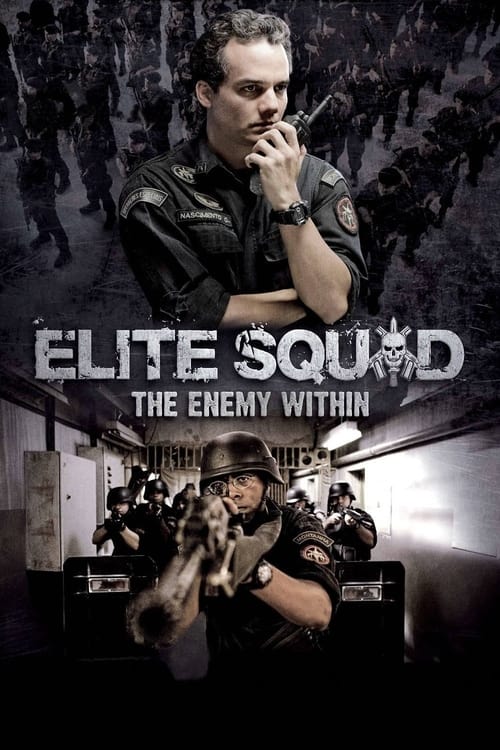
Elite Squad: The Enemy Within
After a bloody invasion of the BOPE in the High-Security Penitentiary Bangu 1 in Rio de Janeiro to control a rebellion of interns, the Lieutenant-Colonel Roberto Nascimento and the second in command Captain André Matias are accused by the Human Right Aids member Diogo Fraga of execution of prisoners. Matias is transferred to the corrupted Military Police and Nascimento is exonerated from the BOPE by the Governor.
The film earned $63.0M at the global box office.
45 wins & 19 nominations
Plot Structure
Story beats plotted across runtime


Narrative Arc
Emotional journey through the story's key moments
Story Circle
Blueprint 15-beat structure
Arcplot Score Breakdown
Weighted: Precision (70%) + Arc (15%) + Theme (15%)
Elite Squad: The Enemy Within (2010) exhibits strategically placed plot construction, characteristic of José Padilha's storytelling approach. This structural analysis examines how the film's 15-point plot structure maps to proven narrative frameworks across 1 hour and 55 minutes. With an Arcplot score of 7.0, the film balances conventional beats with creative variation.
Characters
Cast & narrative archetypes

Lt. Colonel Nascimento
Captain André Matias
Diogo Fraga
Major Rocha
Guaracy
Rosane
Main Cast & Characters
Lt. Colonel Nascimento
Played by Wagner Moura
BOPE commander turned sub-secretary of security who discovers systemic corruption in Rio's police force and political system.
Captain André Matias
Played by André Ramiro
Nascimento's protégé who takes over BOPE command and struggles with escalating violence and moral compromises.
Diogo Fraga
Played by Irandhir Santos
Human rights activist and professor who becomes Nascimento's friend and ally, challenging his worldview.
Major Rocha
Played by Sandro Rocha
Corrupt police officer who profits from extortion rackets and represents the systemic rot in the police force.
Guaracy
Played by Milhem Cortaz
Nascimento's friend and government official who becomes entangled in the corrupt political system.
Rosane
Played by Maria Ribeiro
Nascimento's ex-wife and mother of his son, representing his personal life and moral anchor.
Structural Analysis
The Status Quo at 1 minutes (1% through the runtime) establishes Nascimento narrates over chaotic prison riot footage. He has risen to become a BOPE commander and subsecretário de segurança, but is caught between corrupt politicians and violent criminals.. Significantly, this early placement immediately immerses viewers in the story world.
The inciting incident occurs at 13 minutes when Prison riot at Bangu 1 erupts into massacre. BOPE operation goes wrong, resulting in mass casualties and turning Nascimento into a scapegoat for the political establishment.. At 12% through the film, this Disruption aligns precisely with traditional story structure. This beat shifts the emotional landscape, launching the protagonist into the central conflict.
The First Threshold at 29 minutes marks the transition into Act II, occurring at 25% of the runtime. This demonstrates the protagonist's commitment to Nascimento decides to expose the entire corrupt system. He chooses to partner with Fraga and testify before the legislative assembly about the connections between police, militias, and politicians., moving from reaction to action.
At 57 minutes, the Midpoint arrives at 49% of the runtime—precisely centered, creating perfect narrative symmetry. Of particular interest, this crucial beat False victory: Nascimento's testimony creates a sensation. He becomes a media hero and reformer. The corrupt system appears to be crumbling, but powerful enemies are now mobilizing against him., fundamentally raising what's at risk. The emotional intensity shifts, dividing the narrative into clear before-and-after phases.
The Collapse moment at 85 minutes (74% through) represents the emotional nadir. Here, Rafael, Nascimento's son, is killed by militia forces in retaliation. The whiff of death is literal - his son dies because of his crusade against corruption. Nascimento's worst fear is realized., demonstrates the protagonist at their lowest point. This beat's placement in the final quarter sets up the climactic reversal.
The Second Threshold at 91 minutes initiates the final act resolution at 80% of the runtime. Nascimento synthesizes his grief with renewed purpose. He realizes that stopping now would make Rafael's death meaningless. He chooses to finish what he started - not for revenge, but for systemic change., demonstrating the transformation achieved throughout the journey.
Emotional Journey
Elite Squad: The Enemy Within's emotional architecture traces a deliberate progression across 15 carefully calibrated beats.
Narrative Framework
This structural analysis employs structural analysis methodology used to understand storytelling architecture. By mapping Elite Squad: The Enemy Within against these established plot points, we can identify how José Padilha utilizes or subverts traditional narrative conventions. The plot point approach reveals not only adherence to structural principles but also creative choices that distinguish Elite Squad: The Enemy Within within the drama genre.
José Padilha's Structural Approach
Among the 3 José Padilha films analyzed on Arcplot, the average structural score is 7.0, reflecting strong command of classical structure. Elite Squad: The Enemy Within takes a more unconventional approach compared to the director's typical style. For comparative analysis, explore the complete José Padilha filmography.
Comparative Analysis
Additional drama films include After Thomas, South Pacific and Dirty Dancing: Havana Nights. For more José Padilha analyses, see 7 Days in Entebbe, Elite Squad.
Plot Points by Act
Act I
SetupStatus Quo
Nascimento narrates over chaotic prison riot footage. He has risen to become a BOPE commander and subsecretário de segurança, but is caught between corrupt politicians and violent criminals.
Theme
Fraga, the human rights professor, lectures: "The real enemy isn't in the favela - it's in the system." The theme of institutional corruption versus individual violence is established.
Worldbuilding
Nascimento's world is revealed: BOPE operations clearing favelas, his estranged relationship with his son Rafael, political pressure from the governor, and the growing power of prison militias led by figures like Beirada.
Disruption
Prison riot at Bangu 1 erupts into massacre. BOPE operation goes wrong, resulting in mass casualties and turning Nascimento into a scapegoat for the political establishment.
Resistance
Nascimento faces investigation and media scrutiny. He debates whether to fight back or accept his role as the fall guy. He connects with Fraga, who offers a different perspective on the violence.
Act II
ConfrontationFirst Threshold
Nascimento decides to expose the entire corrupt system. He chooses to partner with Fraga and testify before the legislative assembly about the connections between police, militias, and politicians.
Mirror World
Nascimento's relationship with his son Rafael deepens as a subplot. Rafael represents innocence and the future that might be corrupted by the system - embodying what Nascimento is fighting to protect.
Premise
Nascimento investigates and exposes the militia networks. He discovers how BOPE veterans have formed protection rackets, how politicians profit from the system, and how the "war on drugs" serves corrupt interests.
Midpoint
False victory: Nascimento's testimony creates a sensation. He becomes a media hero and reformer. The corrupt system appears to be crumbling, but powerful enemies are now mobilizing against him.
Opposition
The militia and political establishment strike back. Nascimento's allies are targeted. His family is threatened. Former BOPE brothers become enemies. Fraga faces pressure. The system closes ranks to protect itself.
Collapse
Rafael, Nascimento's son, is killed by militia forces in retaliation. The whiff of death is literal - his son dies because of his crusade against corruption. Nascimento's worst fear is realized.
Crisis
Nascimento mourns his son and confronts the terrible cost of his choices. He questions whether his mission was worth it. He sits in darkness, processing the loss and facing his darkest moment.
Act III
ResolutionSecond Threshold
Nascimento synthesizes his grief with renewed purpose. He realizes that stopping now would make Rafael's death meaningless. He chooses to finish what he started - not for revenge, but for systemic change.
Synthesis
Final confrontation with the militia leaders and corrupt politicians. Nascimento provides evidence that brings down key figures. The system is exposed publicly. Justice is served, though imperfectly.
Transformation
Nascimento narrates over images of continuing violence. He has exposed the enemy within, but the system persists. He has transformed from warrior to witness, but at unbearable personal cost. The cycle continues.