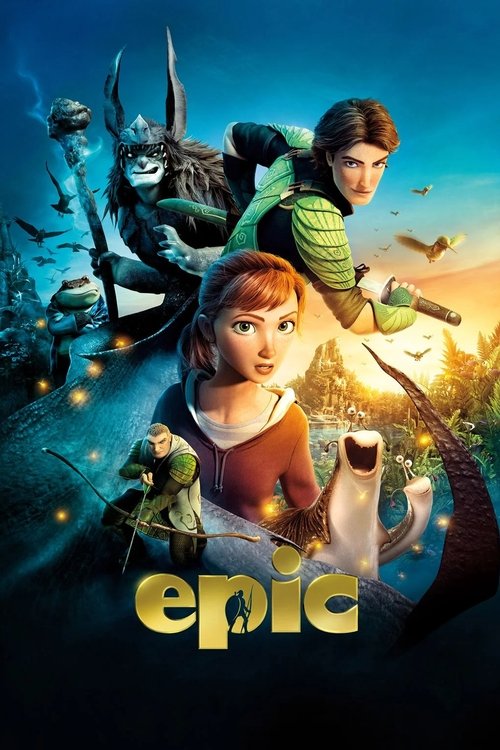
Epic
A teenager finds herself transported to a deep forest setting where a battle between the forces of good and the forces of evil is taking place. She bands together with a rag-tag group characters in order to save their world—and ours.
Despite a considerable budget of $100.0M, Epic became a solid performer, earning $268.4M worldwide—a 168% return.
2 wins & 21 nominations


Plot Structure
Story beats plotted across runtime


Narrative Arc
Emotional journey through the story's key moments
Story Circle
Blueprint 15-beat structure
Arcplot Score Breakdown
Weighted: Precision (70%) + Arc (15%) + Theme (15%)
Epic (2013) reveals deliberately positioned narrative design, characteristic of Chris Wedge's storytelling approach. This structural analysis examines how the film's 15-point plot structure maps to proven narrative frameworks across 1 hour and 42 minutes. With an Arcplot score of 7.3, the film balances conventional beats with creative variation.
Characters
Cast & narrative archetypes

Mary Katherine (M.K.)
Nod
Ronin
Queen Tara
Mandrake
Professor Bomba
Mub
Grub
Main Cast & Characters
Mary Katherine (M.K.)
Played by Amanda Seyfried
A teenage girl who is shrunk down to the size of the forest people and must help save their world.
Nod
Played by Josh Hutcherson
A rebellious young Leafman warrior who initially shirks responsibility but grows into a hero.
Ronin
Played by Colin Farrell
The loyal and skilled leader of the Leafmen, Queen Tara's protector and mentor to young warriors.
Queen Tara
Played by Beyoncé Knowles
The wise and compassionate queen of the forest who chooses the next heir to continue life's cycle.
Mandrake
Played by Christoph Waltz
The evil leader of the Boggans who seeks to destroy the forest and spread decay.
Professor Bomba
Played by Jason Sudeikis
M.K.'s eccentric scientist father who has dedicated his life to proving the existence of tiny forest people.
Mub
Played by Aziz Ansari
An enthusiastic slug who dreams of becoming a Leafman and provides comic relief.
Grub
Played by Chris O'Dowd
A snail and Mub's best friend who is cautious but loyal.
Structural Analysis
The Status Quo at 1 minutes (1% through the runtime) establishes MK arrives at her estranged father's isolated house, disconnected and skeptical. She doesn't believe in his work studying the forest or in their relationship. The world feels small and hopeless to her.. Of particular interest, this early placement immediately immerses viewers in the story world.
The inciting incident occurs at 11 minutes when MK's dog Ozzy runs into the forest. MK chases after him, unwittingly entering the forest at the exact moment of the pod ceremony, setting up the collision of her world with the Leafmen's world.. At 11% through the film, this Disruption aligns precisely with traditional story structure. This beat shifts the emotional landscape, launching the protagonist into the central conflict.
The First Threshold at 25 minutes marks the transition into Act II, occurring at 24% of the runtime. This illustrates the protagonist's commitment to MK chooses to accept the mission to protect the pod and take it to Nim Galuu, committing to the quest despite her disbelief. She actively decides to trust Ronin and Nod rather than trying to get back to normal size., moving from reaction to action.
At 51 minutes, the Midpoint arrives at 50% of the runtime—precisely centered, creating perfect narrative symmetry. Significantly, this crucial beat False defeat: Mandrake's son Dagda steals the pod during the slug race. The mission fails at its halfway point. Stakes are raised as the Boggans now possess the pod, which will bloom for evil at moonset., fundamentally raising what's at risk. The emotional intensity shifts, dividing the narrative into clear before-and-after phases.
The Collapse moment at 75 minutes (73% through) represents the emotional nadir. Here, Mandrake captures the pod and begins the ceremony to bloom it in darkness. Ronin is overwhelmed by Boggans. The mission appears completely lost, and MK feels responsible - her disbelief and doubt contributed to the failure., demonstrates the protagonist at their lowest point. This beat's placement in the final quarter sets up the climactic reversal.
The Second Threshold at 81 minutes initiates the final act resolution at 80% of the runtime. MK realizes her father's equipment can help them reach the pod ceremony in time. She synthesizes both worlds - using science (her father's world) to save magic (the Leafmen's world). "Many leaves, one tree" clicks into place., demonstrating the transformation achieved throughout the journey.
Emotional Journey
Epic's emotional architecture traces a deliberate progression across 15 carefully calibrated beats.
Narrative Framework
This structural analysis employs a 15-point narrative structure framework that maps key story moments. By mapping Epic against these established plot points, we can identify how Chris Wedge utilizes or subverts traditional narrative conventions. The plot point approach reveals not only adherence to structural principles but also creative choices that distinguish Epic within the animation genre.
Chris Wedge's Structural Approach
Among the 4 Chris Wedge films analyzed on Arcplot, the average structural score is 7.2, reflecting strong command of classical structure. Epic represents one of the director's most structurally precise works. For comparative analysis, explore the complete Chris Wedge filmography.
Comparative Analysis
Additional animation films include The Bad Guys, Puss in Boots and Violet Evergarden: Eternity and the Auto Memory Doll. For more Chris Wedge analyses, see Ice Age, Monster Trucks and Robots.
Plot Points by Act
Act I
SetupStatus Quo
MK arrives at her estranged father's isolated house, disconnected and skeptical. She doesn't believe in his work studying the forest or in their relationship. The world feels small and hopeless to her.
Theme
Professor Bomba tells MK about "many leaves, one tree" - the idea that everything in the forest is connected. MK dismisses this as crazy, but it's the thematic core she'll eventually embrace.
Worldbuilding
Establishment of two worlds: MK's mundane disconnected life with her obsessed father, and the hidden world of Leafmen vs Boggans. Queen Tara prepares to choose an heir pod. MK plans to leave.
Disruption
MK's dog Ozzy runs into the forest. MK chases after him, unwittingly entering the forest at the exact moment of the pod ceremony, setting up the collision of her world with the Leafmen's world.
Resistance
Boggans attack the pod ceremony. Queen Tara is fatally wounded and uses her magic to shrink MK to Leafmen size. Dying, Tara gives MK the pod and tells her to take it to Nim Galuu. MK resists believing this is real.
Act II
ConfrontationFirst Threshold
MK chooses to accept the mission to protect the pod and take it to Nim Galuu, committing to the quest despite her disbelief. She actively decides to trust Ronin and Nod rather than trying to get back to normal size.
Mirror World
MK bonds with Nod, the reluctant Leafman who wants to race instead of serve. Their relationship begins - he represents what she lacks: belief in duty and connection to something greater than himself.
Premise
The adventure the audience came for: tiny MK experiencing the magical forest world, bonding with Nod, meeting eccentric characters (Mub, Grub), racing slugs, and traveling to find Nim Galuu while protecting the pod from Boggans.
Midpoint
False defeat: Mandrake's son Dagda steals the pod during the slug race. The mission fails at its halfway point. Stakes are raised as the Boggans now possess the pod, which will bloom for evil at moonset.
Opposition
The team infiltrates Boggan territory to retrieve the pod. Tensions rise between MK and Nod. Mandrake closes in. MK's disbelief and Nod's immaturity create friction. The forest itself begins to decay as Boggans gain power.
Collapse
Mandrake captures the pod and begins the ceremony to bloom it in darkness. Ronin is overwhelmed by Boggans. The mission appears completely lost, and MK feels responsible - her disbelief and doubt contributed to the failure.
Crisis
MK's dark night: she sees her father through the window, separated by size and belief. She finally understands his obsession wasn't crazy - he was right all along. She processes what it means to believe and be connected.
Act III
ResolutionSecond Threshold
MK realizes her father's equipment can help them reach the pod ceremony in time. She synthesizes both worlds - using science (her father's world) to save magic (the Leafmen's world). "Many leaves, one tree" clicks into place.
Synthesis
Final battle at Moonhaven. MK and the Leafmen crash the ceremony using Professor Bomba's bird army. United assault on Mandrake. The pod blooms for good as MK restores it to the moonlight, defeating the Boggans and saving the forest.
Transformation
MK returns to normal size but is transformed. She now works WITH her father studying the forest, believing in the connection between all things. The final image mirrors the opening but shows her connected, engaged, and full of wonder.