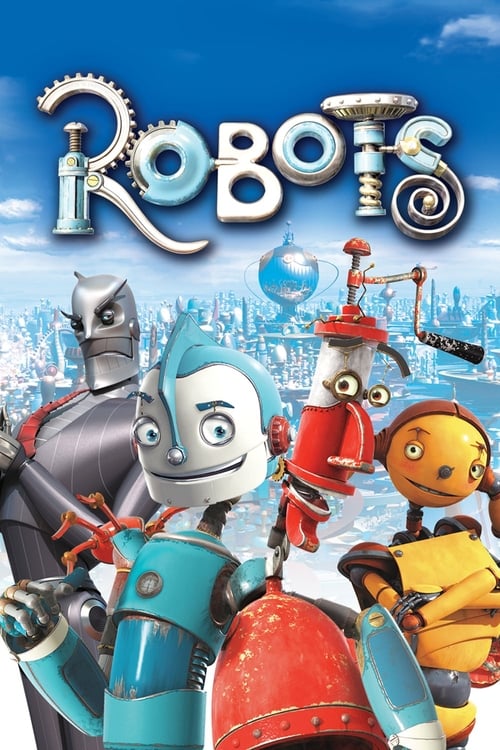
Robots
Rodney Copperbottom is a young robot inventor who dreams of making the world a better place, until the evil Ratchet takes over Bigweld Industries. Now, Rodney's dreams – and those of his friends – are in danger of becoming obsolete.
Despite a significant budget of $75.0M, Robots became a box office success, earning $262.5M worldwide—a 250% return.
2 wins & 22 nominations


Plot Structure
Story beats plotted across runtime


Narrative Arc
Emotional journey through the story's key moments
Story Circle
Blueprint 15-beat structure
Arcplot Score Breakdown
Weighted: Precision (70%) + Arc (15%) + Theme (15%)
Robots (2005) showcases strategically placed dramatic framework, characteristic of Chris Wedge's storytelling approach. This structural analysis examines how the film's 15-point plot structure maps to proven narrative frameworks across 1 hour and 30 minutes. With an Arcplot score of 7.4, the film balances conventional beats with creative variation.
Characters
Cast & narrative archetypes

Rodney Copperbottom
Fender Pinwheeler
Ratchet
Cappy
Bigweld
Phineas T. Ratchet (Madame Gasket)
Piper Pinwheeler
Aunt Fanny
Main Cast & Characters
Rodney Copperbottom
Played by Ewan McGregor
An idealistic young inventor from Rivet Town who dreams of becoming a great inventor like his hero Bigweld and helping make the world a better place.
Fender Pinwheeler
Played by Robin Williams
A quirky, fast-talking robot who befriends Rodney and becomes his guide through Robot City despite his own struggles.
Ratchet
Played by Greg Kinnear
The corrupt, upgrade-obsessed executive who takes over Bigweld Industries and seeks to eliminate outmoded robots for profit.
Cappy
Played by Halle Berry
A dedicated Bigweld Industries executive who believes in the company's original mission and helps Rodney uncover the truth.
Bigweld
Played by Mel Brooks
The legendary inventor and former head of Bigweld Industries whose motto was "See a need, fill a need" before mysteriously disappearing.
Phineas T. Ratchet (Madame Gasket)
Played by Jim Broadbent
Ratchet's domineering mother who runs the Chop Shop and orchestrates the plan to melt down outmoded robots.
Piper Pinwheeler
Played by Amanda Bynes
Fender's feisty younger sister who is tough, resourceful, and helps the group with her mechanical skills.
Aunt Fanny
Played by Jennifer Coolidge
Fender's large-bottomed, warm-hearted aunt who provides shelter and maternal support to the outmoded robots.
Structural Analysis
The Status Quo at 1 minutes (1% through the runtime) establishes Rodney Copperbottom is "born" (assembled) in Rivet Town to working-class parents who dream of giving him opportunities. His father installs a voice box, establishing a world where robots build and raise other robots.. Notably, this early placement immediately immerses viewers in the story world.
The inciting incident occurs at 10 minutes when Rodney decides to leave Rivet Town and journey to Robot City to meet his hero Bigweld and become an inventor. His parents support him despite their fears.. At 11% through the film, this Disruption aligns precisely with traditional story structure. This beat shifts the emotional landscape, launching the protagonist into the central conflict.
The First Threshold at 22 minutes marks the transition into Act II, occurring at 24% of the runtime. This illustrates the protagonist's commitment to After being rejected and thrown out of Bigweld Industries, Rodney chooses to stay in Robot City rather than return home defeated. He meets Fender and the outmodes who live in the slums., moving from reaction to action.
At 44 minutes, the Midpoint arrives at 49% of the runtime—precisely centered, creating perfect narrative symmetry. Structural examination shows that this crucial beat Rodney and friends find Bigweld hiding in his mansion. Initially it seems like a victory—they found him! But Bigweld has given up and refuses to help, revealing he's become a recluse who abandoned his own principles., fundamentally raising what's at risk. The emotional intensity shifts, dividing the narrative into clear before-and-after phases.
The Collapse moment at 65 minutes (72% through) represents the emotional nadir. Here, Rodney gives up and decides to return home to Rivet Town, defeated. His dreams of making a difference are dead. His father figure (Bigweld) failed him, his friends are in danger, and he believes he cannot succeed., shows the protagonist at their lowest point. This beat's placement in the final quarter sets up the climactic reversal.
The Second Threshold at 71 minutes initiates the final act resolution at 79% of the runtime. Rodney returns to Robot City with new resolve. He reunites with Cappy and rallies the outmodes. Together they storm Bigweld Industries to stop Ratchet and save the robots being sent to the Chop Shop., demonstrating the transformation achieved throughout the journey.
Emotional Journey
Robots's emotional architecture traces a deliberate progression across 15 carefully calibrated beats.
Narrative Framework
This structural analysis employs proven narrative structure principles that track dramatic progression. By mapping Robots against these established plot points, we can identify how Chris Wedge utilizes or subverts traditional narrative conventions. The plot point approach reveals not only adherence to structural principles but also creative choices that distinguish Robots within the animation genre.
Chris Wedge's Structural Approach
Among the 4 Chris Wedge films analyzed on Arcplot, the average structural score is 7.2, reflecting strong command of classical structure. Robots represents one of the director's most structurally precise works. For comparative analysis, explore the complete Chris Wedge filmography.
Comparative Analysis
Additional animation films include The Bad Guys, Puss in Boots and Violet Evergarden: Eternity and the Auto Memory Doll. For more Chris Wedge analyses, see Epic, Ice Age and Monster Trucks.
Plot Points by Act
Act I
SetupStatus Quo
Rodney Copperbottom is "born" (assembled) in Rivet Town to working-class parents who dream of giving him opportunities. His father installs a voice box, establishing a world where robots build and raise other robots.
Theme
Rodney's father tells him: "You can shine no matter what you're made of." This establishes the film's theme about individual worth beyond social class or appearance.
Worldbuilding
Rodney grows up in Rivet Town, inventing gadgets and idolizing Bigweld, the philanthropic inventor. His family struggles financially but supports his dreams. We see the world of robots with parts, upgrades, and economic disparity.
Disruption
Rodney decides to leave Rivet Town and journey to Robot City to meet his hero Bigweld and become an inventor. His parents support him despite their fears.
Resistance
Rodney travels to Robot City and discovers it's not what he expected. He arrives at Bigweld Industries only to find Bigweld missing and the company taken over by Ratchet, who has discontinued spare parts in favor of expensive upgrades.
Act II
ConfrontationFirst Threshold
After being rejected and thrown out of Bigweld Industries, Rodney chooses to stay in Robot City rather than return home defeated. He meets Fender and the outmodes who live in the slums.
Mirror World
Rodney meets Cappy, a Bigweld Industries executive who secretly disagrees with Ratchet's policies. She represents the insider who still believes in Bigweld's original mission and will help Rodney see his own worth.
Premise
Rodney sets up a repair shop to fix outmodes using his inventive skills. He gains a following and reputation, embodying Bigweld's original ideals. Meanwhile, Ratchet plots to eliminate spare parts entirely and force all robots to upgrade or be destroyed.
Midpoint
Rodney and friends find Bigweld hiding in his mansion. Initially it seems like a victory—they found him! But Bigweld has given up and refuses to help, revealing he's become a recluse who abandoned his own principles.
Opposition
Ratchet intensifies his plan, sending sweepers to round up outmodes for the Chop Shop where they'll be melted down. Rodney's repair shop is destroyed. Fender is captured. The situation grows increasingly desperate as Ratchet consolidates power.
Collapse
Rodney gives up and decides to return home to Rivet Town, defeated. His dreams of making a difference are dead. His father figure (Bigweld) failed him, his friends are in danger, and he believes he cannot succeed.
Crisis
On the train home, Rodney sees his own invention—the family's dishwasher fix—still working, reminding him of his father's words. He realizes he doesn't need Bigweld's approval; he can shine on his own and must save his friends.
Act III
ResolutionSecond Threshold
Rodney returns to Robot City with new resolve. He reunites with Cappy and rallies the outmodes. Together they storm Bigweld Industries to stop Ratchet and save the robots being sent to the Chop Shop.
Synthesis
Rodney leads the outmodes in battle against Ratchet's forces. Bigweld, inspired by Rodney's courage, emerges from hiding to help. They defeat Ratchet and his mother, destroy the Chop Shop, and restore Bigweld Industries to its original mission. Rodney becomes Bigweld's partner.
Transformation
Rodney returns to Rivet Town as a successful inventor and co-leader of Bigweld Industries, bringing upgrades to his parents. He has become the change he wanted to see, proving you can shine no matter what you're made of.