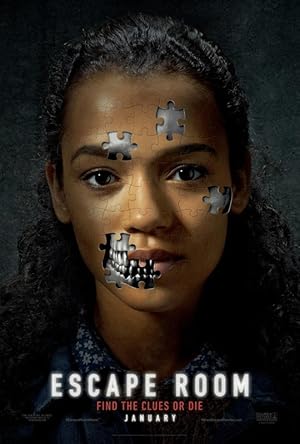
Escape Room
Six strangers are given mysterious black boxes with tickets to an immersive escape room for a chance to win tons of money. Being locked in several rooms with extreme conditions, they discover the secrets behind the escape room and must fight to survive and to find a way out.
Despite its small-scale budget of $9.0M, Escape Room became a massive hit, earning $155.7M worldwide—a remarkable 1630% return. The film's fresh perspective engaged audiences, proving that strong storytelling can transcend budget limitations.
2 wins & 7 nominations


Plot Structure
Story beats plotted across runtime


Narrative Arc
Emotional journey through the story's key moments
Story Circle
Blueprint 15-beat structure
Arcplot Score Breakdown
Weighted: Precision (70%) + Arc (15%) + Theme (15%)
Escape Room (2019) exhibits strategically placed plot construction, characteristic of Adam Robitel's storytelling approach. This structural analysis examines how the film's 15-point plot structure maps to proven narrative frameworks across 1 hour and 39 minutes. With an Arcplot score of 7.7, the film showcases strong structural fundamentals.
Characters
Cast & narrative archetypes

Zoey Davis
Ben Miller
Amanda Harper
Jason Walker
Mike Nolan
Danny Khan
Main Cast & Characters
Zoey Davis
Played by Taylor Russell
A physics student with social anxiety who uses her intellect to survive the deadly escape rooms.
Ben Miller
Played by Logan Miller
A stockroom worker and everyday guy who becomes an unlikely survivor through determination.
Amanda Harper
Played by Deborah Ann Woll
A tough Iraq War veteran struggling with PTSD who applies military tactics to the rooms.
Jason Walker
Played by Jay Ellis
A wealthy, arrogant stock trader who initially tries to control the group.
Mike Nolan
Played by Tyler Labine
A truck driver and escape room enthusiast who has survived dangerous situations before.
Danny Khan
Played by Nik Dodani
A young escape room fanatic and gamer who is eager but naive about the real danger.
Structural Analysis
The Status Quo at 1 minutes (1% through the runtime) establishes Zoey Davis studies alone in her college dorm room, anxious and isolated, struggling with social interaction. Establishes her as brilliant but traumatized, avoiding human connection.. Of particular interest, this early placement immediately immerses viewers in the story world.
The inciting incident occurs at 11 minutes when The six strangers gather in the escape room waiting area. What seems like a harmless game is disrupted when the room begins heating up rapidly - the "game" is revealed to be a death trap.. At 12% through the film, this Disruption aligns precisely with traditional story structure. This beat shifts the emotional landscape, launching the protagonist into the central conflict.
The First Threshold at 24 minutes marks the transition into Act II, occurring at 24% of the runtime. This shows the protagonist's commitment to The group witnesses their first death - the frozen room claims a victim when they fail to solve the puzzle in time. This eliminates any doubt: participate in the game or die. They choose to continue forward rather than give up., moving from reaction to action.
At 49 minutes, the Midpoint arrives at 49% of the runtime—precisely centered, creating perfect narrative symmetry. Structural examination shows that this crucial beat The group discovers they are all sole survivors of previous tragedies (plane crash, building collapse, mine cave-in, etc.). False defeat: they realize they weren't randomly chosen - they were selected as "winners" for a game designed for past survivors. The stakes raise exponentially., fundamentally raising what's at risk. The emotional intensity shifts, dividing the narrative into clear before-and-after phases.
The Collapse moment at 73 minutes (74% through) represents the emotional nadir. Here, Amanda sacrifices herself to save Zoey in the hospital room trap, dying as poison gas fills the space. Zoey loses her mirror world character and thematic guide. The "whiff of death" - both literal death and the death of Zoey's hope that trust and connection can work., indicates the protagonist at their lowest point. This beat's placement in the final quarter sets up the climactic reversal.
The Second Threshold at 79 minutes initiates the final act resolution at 80% of the runtime. Zoey realizes the entire building is the game - the rooms are puzzle pieces revealing the GameMasters' control center. She synthesizes her puzzle-solving brilliance with Amanda's warrior courage, choosing to fight back rather than just escape. New information: the GameMasters are watching., demonstrating the transformation achieved throughout the journey.
Emotional Journey
Escape Room's emotional architecture traces a deliberate progression across 15 carefully calibrated beats.
Narrative Framework
This structural analysis employs systematic plot point analysis that identifies crucial turning points. By mapping Escape Room against these established plot points, we can identify how Adam Robitel utilizes or subverts traditional narrative conventions. The plot point approach reveals not only adherence to structural principles but also creative choices that distinguish Escape Room within the action genre.
Adam Robitel's Structural Approach
Among the 3 Adam Robitel films analyzed on Arcplot, the average structural score is 7.4, reflecting strong command of classical structure. Escape Room represents one of the director's most structurally precise works. For comparative analysis, explore the complete Adam Robitel filmography.
Comparative Analysis
Additional action films include The Bad Guys, Puss in Boots and Venom: The Last Dance. For more Adam Robitel analyses, see Insidious: The Last Key, Escape Room: Tournament of Champions.
Plot Points by Act
Act I
SetupStatus Quo
Zoey Davis studies alone in her college dorm room, anxious and isolated, struggling with social interaction. Establishes her as brilliant but traumatized, avoiding human connection.
Theme
Zoey's professor tells her she needs to "engage with the world" and "trust people" - stating the thematic question of whether survival requires isolation or connection.
Worldbuilding
Introduction of six strangers receiving mysterious puzzle boxes inviting them to an escape room with a $10,000 prize. Each character established with their flaws: Jason (arrogant), Ben (stock boy), Amanda (Iraq vet), Mike (truck driver), Danny (escape room enthusiast). All are isolated in different ways.
Disruption
The six strangers gather in the escape room waiting area. What seems like a harmless game is disrupted when the room begins heating up rapidly - the "game" is revealed to be a death trap.
Resistance
The group debates whether the danger is real, tries to escape, and realizes they must work together to solve puzzles. Danny takes a mentor role explaining escape room mechanics. They survive the oven room and enter a frozen cabin, establishing the pattern: solve or die.
Act II
ConfrontationFirst Threshold
The group witnesses their first death - the frozen room claims a victim when they fail to solve the puzzle in time. This eliminates any doubt: participate in the game or die. They choose to continue forward rather than give up.
Mirror World
Amanda opens up about her Iraq War trauma to Zoey, creating the film's key thematic relationship. Both are survivors of past trauma, representing two different responses: Amanda fights, Zoey hides. Their bond carries the theme of trust vs. isolation.
Premise
The "fun and games" of deadly escape rooms: upside-down billiards room, psychedelic room, ice lake room. The group solves increasingly complex puzzles while being picked off one by one. Zoey emerges as the puzzle-solving leader despite her anxiety.
Midpoint
The group discovers they are all sole survivors of previous tragedies (plane crash, building collapse, mine cave-in, etc.). False defeat: they realize they weren't randomly chosen - they were selected as "winners" for a game designed for past survivors. The stakes raise exponentially.
Opposition
The remaining players turn on each other as paranoia sets in. Jason becomes increasingly aggressive and selfish. Ben and Zoey try to maintain cooperation. The rooms become more sadistic and personal, targeting their specific traumas. The unseenGameMasters tighten control.
Collapse
Amanda sacrifices herself to save Zoey in the hospital room trap, dying as poison gas fills the space. Zoey loses her mirror world character and thematic guide. The "whiff of death" - both literal death and the death of Zoey's hope that trust and connection can work.
Crisis
Zoey processes Amanda's death in darkness and despair. Only she and Ben remain. She faces her dark night: return to isolation or honor Amanda's sacrifice by continuing to trust and fight. Jason's body reveals a clue about the GameMasters.
Act III
ResolutionSecond Threshold
Zoey realizes the entire building is the game - the rooms are puzzle pieces revealing the GameMasters' control center. She synthesizes her puzzle-solving brilliance with Amanda's warrior courage, choosing to fight back rather than just escape. New information: the GameMasters are watching.
Synthesis
Zoey and Ben sabotage the control room, confronting the Gamemaster. They destroy the facility and escape. Zoey finds evidence of the wider conspiracy. She reports to police but the evidence vanishes - the organization covers its tracks. She refuses to stay silent.
Transformation
Zoey boards a plane despite her trauma (airplane crash survivor), partnering with Ben to hunt down the organization. Mirrors Status Quo: once isolated and afraid, she now engages with the world, trusts others, and fights back. Transformed from victim to hunter.