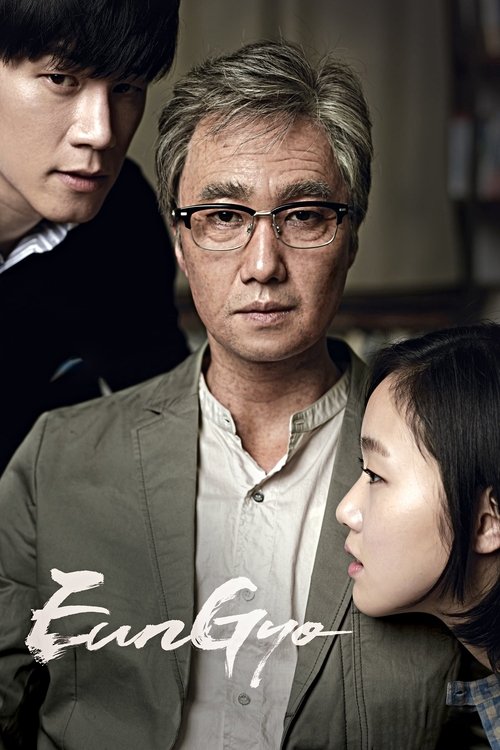
Eungyo
A reclusive elderly poet feels the fire of his youth when gamine schoolgirl Eun-gyo enters his life, to the chagrin of the old man's assistant.
The film earned $9.0M at the global box office.

Plot Structure
Story beats plotted across runtime


Narrative Arc
Emotional journey through the story's key moments
Story Circle
Blueprint 15-beat structure
Arcplot Score Breakdown
Weighted: Precision (70%) + Arc (15%) + Theme (15%)
Eungyo (2012) demonstrates strategically placed plot construction, characteristic of Jung Ji-woo's storytelling approach. This structural analysis examines how the film's 15-point plot structure maps to proven narrative frameworks across 2 hours and 9 minutes. With an Arcplot score of 7.3, the film balances conventional beats with creative variation.
Characters
Cast & narrative archetypes

Lee Jeok-yo
Han Eun-gyo
Seo Ji-woo
Main Cast & Characters
Lee Jeok-yo
Played by Park Hae-il
A 70-year-old celebrated poet who becomes obsessed with a teenage girl, struggling between artistic inspiration and inappropriate desire.
Han Eun-gyo
Played by Kim Go-eun
A 17-year-old high school student who becomes the muse and object of desire for an elderly poet, navigating complex relationships with innocence and awakening.
Seo Ji-woo
Played by Kim Moo-yul
A 30-year-old aspiring poet and Lee Jeok-yo's protégé who falls genuinely in love with Eun-gyo, torn between loyalty to his mentor and his own desires.
Structural Analysis
The Status Quo at 2 minutes (2% through the runtime) establishes Lee Jeok-yo, a celebrated 70-year-old poet, lives in quiet isolation in his traditional Korean house with his protégé Seo Ji-woo. The opening establishes Jeok-yo's world of literary prestige, creative routine, and the mentor-student dynamic that defines his current existence.. Notably, this early placement immediately immerses viewers in the story world.
The inciting incident occurs at 15 minutes when Eungyo, a beautiful 17-year-old high school student, arrives at the house to study. Her youthful energy and beauty immediately captivate the elderly poet. This disruption introduces vitality and desire into Jeok-yo's ordered world, sparking something long dormant in him.. At 12% through the film, this Disruption aligns precisely with traditional story structure. This beat shifts the emotional landscape, launching the protagonist into the central conflict.
The First Threshold at 31 minutes marks the transition into Act II, occurring at 24% of the runtime. This shows the protagonist's commitment to Jeok-yo makes the active decision to write a novel titled "Eungyo," transforming his passive observation into active pursuit. This choice crosses a line from innocent admiration to obsessive focus, committing him to a path that will consume him and irrevocably change all three lives., moving from reaction to action.
At 64 minutes, the Midpoint arrives at 50% of the runtime—precisely centered, creating perfect narrative symmetry. The analysis reveals that this crucial beat False victory: Jeok-yo completes significant portions of his novel and believes he has formed a genuine connection with Eungyo. Perhaps a moment of intimacy or understanding between them suggests success. However, this apparent triumph masks the growing tension with Ji-woo and the unsustainable nature of the obsession. The stakes are raised., fundamentally raising what's at risk. The emotional intensity shifts, dividing the narrative into clear before-and-after phases.
The Collapse moment at 95 minutes (74% through) represents the emotional nadir. Here, The relationship between Jeok-yo and Ji-woo reaches a breaking point. A confrontation reveals harsh truths about exploitation, jealousy, and the true nature of their relationships with Eungyo. The whiff of death: either a literal threat of scandal ending Jeok-yo's career/reputation, or the metaphorical death of the mentor-student bond and the poet's illusions about himself., shows the protagonist at their lowest point. This beat's placement in the final quarter sets up the climactic reversal.
The Second Threshold at 102 minutes initiates the final act resolution at 79% of the runtime. A moment of clarity or final decision about how to resolve the situation. Jeok-yo either accepts the truth about his actions and their consequences, or makes a final choice regarding the novel, Eungyo, and his relationship with Ji-woo. New information or synthesis of what he has learned enables him to see his situation clearly for the first time., demonstrating the transformation achieved throughout the journey.
Emotional Journey
Eungyo's emotional architecture traces a deliberate progression across 15 carefully calibrated beats.
Narrative Framework
This structural analysis employs a 15-point narrative structure framework that maps key story moments. By mapping Eungyo against these established plot points, we can identify how Jung Ji-woo utilizes or subverts traditional narrative conventions. The plot point approach reveals not only adherence to structural principles but also creative choices that distinguish Eungyo within the drama genre.
Comparative Analysis
Additional drama films include After Thomas, South Pacific and Dirty Dancing: Havana Nights.
Plot Points by Act
Act I
SetupStatus Quo
Lee Jeok-yo, a celebrated 70-year-old poet, lives in quiet isolation in his traditional Korean house with his protégé Seo Ji-woo. The opening establishes Jeok-yo's world of literary prestige, creative routine, and the mentor-student dynamic that defines his current existence.
Theme
Ji-woo or another character makes a comment about beauty, inspiration, and what artists sacrifice for their work. The theme of the corrupting nature of obsession and the price of artistic inspiration is subtly introduced through dialogue about the nature of a muse.
Worldbuilding
The world of Korean literary elite is established. Jeok-yo's reputation as a master poet, his relationship with Ji-woo as both mentor and employer, their daily routines, and the traditional house that serves as both home and creative sanctuary. Jeok-yo's age and awareness of his mortality subtly colors his perspective.
Disruption
Eungyo, a beautiful 17-year-old high school student, arrives at the house to study. Her youthful energy and beauty immediately captivate the elderly poet. This disruption introduces vitality and desire into Jeok-yo's ordered world, sparking something long dormant in him.
Resistance
Jeok-yo debates internally about his growing fascination with Eungyo. He observes her, finds excuses to interact with her, and struggles between his artistic appreciation of her beauty and his inappropriate desire. Ji-woo notices the poet's interest. Jeok-yo feels creatively reinvigorated but hesitates to fully act on his obsession.
Act II
ConfrontationFirst Threshold
Jeok-yo makes the active decision to write a novel titled "Eungyo," transforming his passive observation into active pursuit. This choice crosses a line from innocent admiration to obsessive focus, committing him to a path that will consume him and irrevocably change all three lives.
Mirror World
Ji-woo's own feelings for Eungyo are revealed. As the younger man who also desires her, he serves as a mirror to Jeok-yo—showing what the old poet once was and can never be again. This subplot carries the theme of generational rivalry and the impossibility of reclaiming lost youth.
Premise
The "promise of the premise"—the dangerous dance between poet and muse. Jeok-yo writes feverishly, Eungyo continues to visit, and the relationship deepens in ambiguous ways. Both men compete for her attention. The creative and romantic obsession intertwine as Jeok-yo explores this morally complex territory, producing his most inspired work in years.
Midpoint
False victory: Jeok-yo completes significant portions of his novel and believes he has formed a genuine connection with Eungyo. Perhaps a moment of intimacy or understanding between them suggests success. However, this apparent triumph masks the growing tension with Ji-woo and the unsustainable nature of the obsession. The stakes are raised.
Opposition
The conflict between Jeok-yo and Ji-woo intensifies as the mentor-student relationship deteriorates into rivalry. Questions arise about authorship, exploitation, and who Eungyo truly cares for. The poet's flaws—his selfishness, possessiveness, and inability to see beyond his own desire—catch up with him. External pressures mount as the inappropriate nature of his obsession becomes harder to hide.
Collapse
The relationship between Jeok-yo and Ji-woo reaches a breaking point. A confrontation reveals harsh truths about exploitation, jealousy, and the true nature of their relationships with Eungyo. The whiff of death: either a literal threat of scandal ending Jeok-yo's career/reputation, or the metaphorical death of the mentor-student bond and the poet's illusions about himself.
Crisis
Jeok-yo faces the consequences of his obsession. In darkness and isolation, he must confront what he has become and what he has destroyed. The cost of his artistic inspiration becomes clear. He processes the loss of his relationship with Ji-woo, perhaps the loss of Eungyo, and the tarnishing of his legacy.
Act III
ResolutionSecond Threshold
A moment of clarity or final decision about how to resolve the situation. Jeok-yo either accepts the truth about his actions and their consequences, or makes a final choice regarding the novel, Eungyo, and his relationship with Ji-woo. New information or synthesis of what he has learned enables him to see his situation clearly for the first time.
Synthesis
The resolution plays out. Decisions about the novel's fate, the truth about authorship, and the final configuration of relationships between Jeok-yo, Ji-woo, and Eungyo. The consequences of obsession are fully realized. Questions of morality, art, and exploitation find their answers as the story concludes.
Transformation
The closing image mirrors the opening but shows the transformation. Jeok-yo remains in his traditional house, but the world has irrevocably changed. The cost of his obsession is visible—relationships destroyed, innocence lost, reputation potentially damaged. The final image captures what has been gained in art and lost in humanity.