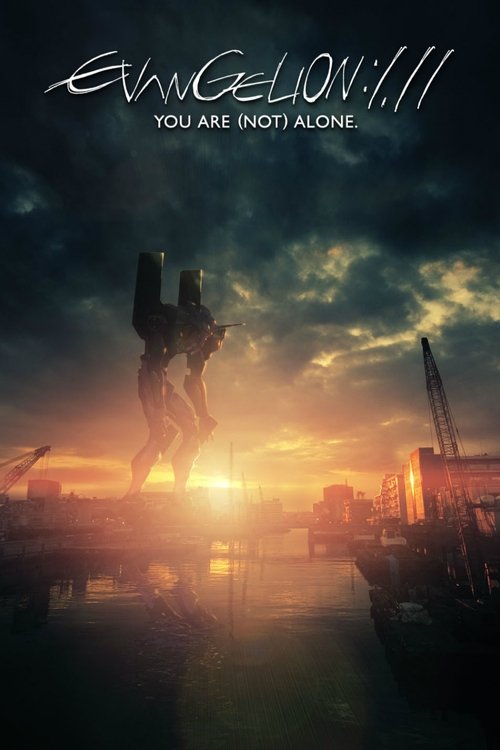
Evangelion: 1.0 You Are (Not) Alone
After the Second Impact, Tokyo-3 is being attacked by giant monsters called Angels that seek to eradicate humankind. The child Shinji’s objective is to fight the Angels by piloting one of the mysterious Evangelion mecha units. A remake of the first six episodes of GAINAX’s famous 1996 anime series. The film was retitled “Evangelion: 1.01” for its DVD release and “Evangelion: 1.11” for a release with additional scenes.
Despite its modest budget of $7.0M, Evangelion: 1.0 You Are (Not) Alone became a financial success, earning $20.1M worldwide—a 187% return.
3 wins & 1 nomination


Plot Structure
Story beats plotted across runtime


Narrative Arc
Emotional journey through the story's key moments
Story Circle
Blueprint 15-beat structure
Arcplot Score Breakdown
Weighted: Precision (70%) + Arc (15%) + Theme (15%)
Evangelion: 1.0 You Are (Not) Alone (2007) demonstrates meticulously timed dramatic framework, characteristic of Masayuki's storytelling approach. This structural analysis examines how the film's 15-point plot structure maps to proven narrative frameworks across 1 hour and 41 minutes. With an Arcplot score of 6.8, the film balances conventional beats with creative variation.
Characters
Cast & narrative archetypes

Shinji Ikari
Rei Ayanami
Misato Katsuragi
Gendo Ikari
Ritsuko Akagi
Ryoji Kaji
Main Cast & Characters
Shinji Ikari
Played by Megumi Ogata
A reluctant 14-year-old boy summoned by his estranged father to pilot a giant mecha and fight mysterious beings called Angels.
Rei Ayanami
Played by Megumi Hayashibara
A mysterious, emotionally detached pilot of Evangelion Unit-00 with an enigmatic connection to NERV's secrets.
Misato Katsuragi
Played by Kotono Mitsuishi
NERV's operations director and Shinji's guardian, a complex woman hiding trauma beneath a carefree exterior.
Gendo Ikari
Played by Fumihiko Tachiki
The cold, calculating commander of NERV and Shinji's emotionally distant father, orchestrating humanity's defense with hidden motives.
Ritsuko Akagi
Played by Yuriko Yamaguchi
NERV's head scientist responsible for the Evangelion units, a rational pragmatist caught between duty and personal conflicts.
Ryoji Kaji
Played by Koichi Yamadera
A special inspector for NERV who works multiple angles, charming yet secretive with his own investigative agenda.
Structural Analysis
The Status Quo at 1 minutes (1% through the runtime) establishes The world after Second Impact: a desolate, flooded Tokyo-3 under threat. Shinji Ikari is alone, distant from his father, summoned to a city he doesn't know for reasons unclear.. Notably, this early placement immediately immerses viewers in the story world.
The inciting incident occurs at 13 minutes when Shinji witnesses the wounded Rei and his father's willingness to send her to die. He is forced to make a choice: pilot the Eva or abandon humanity. The Third Angel's attack makes inaction impossible.. At 13% through the film, this Disruption is delayed, allowing extended setup of the story world. This beat shifts the emotional landscape, launching the protagonist into the central conflict.
The First Threshold at 25 minutes marks the transition into Act II, occurring at 25% of the runtime. This demonstrates the protagonist's commitment to Unit-01 goes berserk and defeats the Third Angel on its own, saving Shinji. Though not his conscious choice, he survives his first Angel battle and crosses into the life of an Eva pilot., moving from reaction to action.
At 51 minutes, the Midpoint arrives at 51% of the runtime—precisely centered, creating perfect narrative symmetry. Notably, this crucial beat The Fifth Angel (Ramiel) appears with overwhelming defensive and offensive capabilities. Shinji's standard combat approach fails utterly. NERV must risk everything on an untested plan, raising the stakes to existential levels., fundamentally raising what's at risk. The emotional intensity shifts, dividing the narrative into clear before-and-after phases.
The Collapse moment at 76 minutes (75% through) represents the emotional nadir. Here, Ramiel counterstrikes and severely damages Unit-00. Rei is critically wounded protecting Shinji. He screams her name in anguish, facing the potential death of someone he has begun to care about—a devastating emotional low., shows the protagonist at their lowest point. This beat's placement in the final quarter sets up the climactic reversal.
The Second Threshold at 81 minutes initiates the final act resolution at 80% of the runtime. Shinji fires the final shot and destroys Ramiel. He rushes to rescue Rei from the burning Unit-00, choosing connection over fear. He commits fully to protecting those he cares about., demonstrating the transformation achieved throughout the journey.
Emotional Journey
Evangelion: 1.0 You Are (Not) Alone's emotional architecture traces a deliberate progression across 15 carefully calibrated beats.
Narrative Framework
This structural analysis employs systematic plot point analysis that identifies crucial turning points. By mapping Evangelion: 1.0 You Are (Not) Alone against these established plot points, we can identify how Masayuki utilizes or subverts traditional narrative conventions. The plot point approach reveals not only adherence to structural principles but also creative choices that distinguish Evangelion: 1.0 You Are (Not) Alone within the animation genre.
Masayuki's Structural Approach
Among the 2 Masayuki films analyzed on Arcplot, the average structural score is 6.7, demonstrating varied approaches to story architecture. Evangelion: 1.0 You Are (Not) Alone represents one of the director's most structurally precise works. For comparative analysis, explore the complete Masayuki filmography.
Comparative Analysis
Additional animation films include The Bad Guys, Puss in Boots and Violet Evergarden: Eternity and the Auto Memory Doll. For more Masayuki analyses, see Evangelion: 2.0 You Can (Not) Advance.
Plot Points by Act
Act I
SetupStatus Quo
The world after Second Impact: a desolate, flooded Tokyo-3 under threat. Shinji Ikari is alone, distant from his father, summoned to a city he doesn't know for reasons unclear.
Theme
Misato tells Shinji about the Angels and humanity's survival: "This is your duty." The film's central question is posed: Will you run away or face the burden placed on you?
Worldbuilding
Introduction to NERV, the Evangelion project, and Gendo's cold demand that Shinji pilot Unit-01. The world's apocalyptic stakes, Shinji's isolation, and the emergence of the Third Angel are established.
Disruption
Shinji witnesses the wounded Rei and his father's willingness to send her to die. He is forced to make a choice: pilot the Eva or abandon humanity. The Third Angel's attack makes inaction impossible.
Resistance
Shinji resists but reluctantly enters Unit-01. His first battle is disastrous—he's untrained, terrified, and nearly killed. Misato and Ritsuko guide him through protocols, but he is unprepared for the reality of combat.
Act II
ConfrontationFirst Threshold
Unit-01 goes berserk and defeats the Third Angel on its own, saving Shinji. Though not his conscious choice, he survives his first Angel battle and crosses into the life of an Eva pilot.
Mirror World
Shinji moves in with Misato and begins attending school. He meets Toji, Kensuke, and especially Rei Ayanami, whose quiet suffering mirrors his own isolation and presents an alternative response to pain.
Premise
Shinji trains as a pilot, battles the Fourth and Fifth Angels, and struggles with his role. He experiences small victories and bonding moments with Misato and his classmates, exploring what it means to be needed and connected.
Midpoint
The Fifth Angel (Ramiel) appears with overwhelming defensive and offensive capabilities. Shinji's standard combat approach fails utterly. NERV must risk everything on an untested plan, raising the stakes to existential levels.
Opposition
Operation Yashima: Shinji must snipe Ramiel with all of Japan's power diverted to his rifle while Rei shields him. The pressure intensifies as each second could mean annihilation. Shinji confronts his fear and dependence on others.
Collapse
Ramiel counterstrikes and severely damages Unit-00. Rei is critically wounded protecting Shinji. He screams her name in anguish, facing the potential death of someone he has begun to care about—a devastating emotional low.
Crisis
In the aftermath of Rei's near-death, Shinji processes the terror of loss and his helplessness. He is forced to confront the cost of connection and whether he can continue bearing this burden.
Act III
ResolutionSecond Threshold
Shinji fires the final shot and destroys Ramiel. He rushes to rescue Rei from the burning Unit-00, choosing connection over fear. He commits fully to protecting those he cares about.
Synthesis
Shinji successfully saves Rei from the entry plug. The operation succeeds, and the bond between them deepens. Shinji has proven he can act decisively when others' lives are at stake, integrating his need for connection with his duty.
Transformation
Rei smiles for the first time, and Shinji smiles back. The lonely, passive boy from the opening has become someone capable of connection, sacrifice, and courage—transformed by his choice to reach out to another.