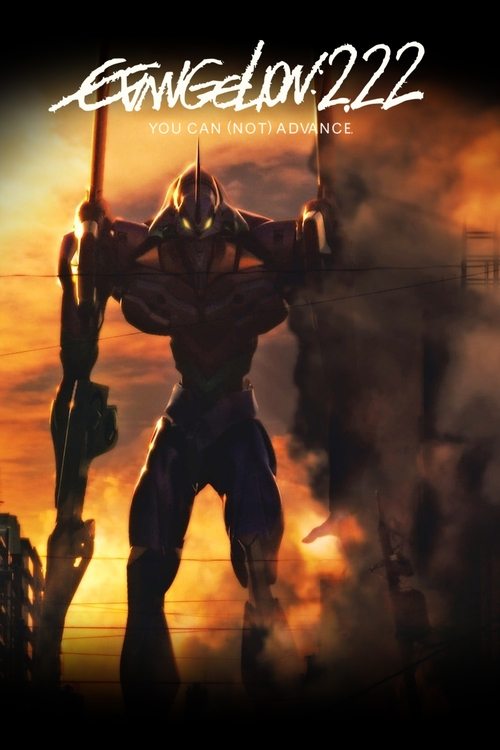
Evangelion: 2.0 You Can (Not) Advance
Under constant attack by monstrous creatures called Angels that seek to eradicate humankind, U.N. Special Agency NERV introduces two new EVA pilots to help defend the city of Tokyo-3: the mysterious Makinami Mari Illustrous and the intense Asuka Langley Shikinami. Meanwhile, Gendo Ikari and SEELE proceed with a secret project that involves both Rei and Shinji.
Despite its modest budget of $10.0M, Evangelion: 2.0 You Can (Not) Advance became a financial success, earning $44.3M worldwide—a 343% return. The film's innovative storytelling engaged audiences, confirming that strong storytelling can transcend budget limitations.
1 win & 2 nominations


Plot Structure
Story beats plotted across runtime


Narrative Arc
Emotional journey through the story's key moments
Story Circle
Blueprint 15-beat structure
Arcplot Score Breakdown
Weighted: Precision (70%) + Arc (15%) + Theme (15%)
Evangelion: 2.0 You Can (Not) Advance (2009) exemplifies carefully calibrated plot construction, characteristic of Masayuki's storytelling approach. This structural analysis examines how the film's 15-point plot structure maps to proven narrative frameworks across 1 hour and 52 minutes. With an Arcplot score of 6.5, the film balances conventional beats with creative variation.
Characters
Cast & narrative archetypes

Shinji Ikari
Rei Ayanami
Asuka Langley Shikinami
Mari Illustrious Makinami
Misato Katsuragi
Gendo Ikari
Ritsuko Akagi
Kaworu Nagisa
Main Cast & Characters
Shinji Ikari
Played by Megumi Ogata
Reluctant teenage pilot of EVA Unit-01 who struggles with self-worth and seeks validation from his distant father.
Rei Ayanami
Played by Megumi Hayashibara
Mysterious pilot of EVA Unit-00 with a quiet demeanor who begins developing emotions and human connections.
Asuka Langley Shikinami
Played by Yuko Miyamura
Fiercely competitive pilot of EVA Unit-02 who masks deep insecurity with aggressive confidence and superiority.
Mari Illustrious Makinami
Played by Maaya Sakamoto
Enigmatic and cheerful pilot of EVA Unit-05 who enjoys combat and operates with mysterious objectives.
Misato Katsuragi
Played by Kotono Mitsuishi
NERV operations director who serves as guardian to Shinji while balancing professional duty with personal trauma.
Gendo Ikari
Played by Fumihiko Tachiki
Cold and calculating commander of NERV who prioritizes his secret agenda over his relationship with his son.
Ritsuko Akagi
Played by Yuriko Yamaguchi
Chief scientist at NERV responsible for EVA development and maintenance with complex loyalties.
Kaworu Nagisa
Played by Akira Ishida
Mysterious silver-haired boy who appears briefly and shows special interest in Shinji.
Structural Analysis
The Status Quo at 1 minutes (1% through the runtime) establishes Shinji arrives at NERV, now more confident than before, greeting Misato and the familiar world of Eva piloting that has become his new normal.. The analysis reveals that this early placement immediately immerses viewers in the story world.
The inciting incident occurs at 14 minutes when The Seventh Angel attacks and Asuka's Unit-02 is defeated, forcing Shinji to witness failure and raising the stakes of combat. The routine is shattered.. At 13% through the film, this Disruption is delayed, allowing extended setup of the story world. This beat shifts the emotional landscape, launching the protagonist into the central conflict.
The First Threshold at 28 minutes marks the transition into Act II, occurring at 25% of the runtime. This shows the protagonist's commitment to Shinji makes the active choice to protect others and embraces his role as a pilot, deciding to fight not because he's told to, but because he wants to protect Rei and the people around him., moving from reaction to action.
At 57 minutes, the Midpoint arrives at 51% of the runtime—precisely centered, creating perfect narrative symmetry. Of particular interest, this crucial beat False victory: The pilots successfully defeat a powerful Angel together in synchronized combat, and Shinji reaches a peak of confidence and connection with others. Everything seems to be working., fundamentally raising what's at risk. The emotional intensity shifts, dividing the narrative into clear before-and-after phases.
The Collapse moment at 85 minutes (76% through) represents the emotional nadir. Here, Shinji triggers Third Impact while attempting to rescue Rei from the Angel. Unit-01 awakens in berserk god-mode, and the world begins to end. His desire to save one person causes near-apocalypse - the ultimate "whiff of death" as reality itself starts to collapse., shows the protagonist at their lowest point. This beat's placement in the final quarter sets up the climactic reversal.
The Second Threshold at 90 minutes initiates the final act resolution at 80% of the runtime. Rei, reborn from the Angel, reaches into Unit-01's core and pulls Shinji back to reality, choosing him over her duty to Gendo. Love and human connection literally pull him back from oblivion., demonstrating the transformation achieved throughout the journey.
Emotional Journey
Evangelion: 2.0 You Can (Not) Advance's emotional architecture traces a deliberate progression across 15 carefully calibrated beats.
Narrative Framework
This structural analysis employs structural analysis methodology used to understand storytelling architecture. By mapping Evangelion: 2.0 You Can (Not) Advance against these established plot points, we can identify how Masayuki utilizes or subverts traditional narrative conventions. The plot point approach reveals not only adherence to structural principles but also creative choices that distinguish Evangelion: 2.0 You Can (Not) Advance within the animation genre.
Masayuki's Structural Approach
Among the 2 Masayuki films analyzed on Arcplot, the average structural score is 6.7, demonstrating varied approaches to story architecture. Evangelion: 2.0 You Can (Not) Advance takes a more unconventional approach compared to the director's typical style. For comparative analysis, explore the complete Masayuki filmography.
Comparative Analysis
Additional animation films include The Bad Guys, Puss in Boots and Violet Evergarden: Eternity and the Auto Memory Doll. For more Masayuki analyses, see Evangelion: 1.0 You Are (Not) Alone.
Plot Points by Act
Act I
SetupStatus Quo
Shinji arrives at NERV, now more confident than before, greeting Misato and the familiar world of Eva piloting that has become his new normal.
Theme
Ryoji Kaji tells Shinji, "You're still a kid, so act like one. You don't need to force yourself to be an adult" - establishing the theme of accepting oneself and not rushing growth.
Worldbuilding
Introduction to the new status quo: Shinji is now an established pilot, Mari Illustrious Makinami appears as a new pilot, daily life at NERV continues with Rei, Asuka arrives as the aggressive Second Child, and the routine of Angel battles.
Disruption
The Seventh Angel attacks and Asuka's Unit-02 is defeated, forcing Shinji to witness failure and raising the stakes of combat. The routine is shattered.
Resistance
Shinji struggles with his relationship to Rei and begins to understand his role. He attempts to connect with Rei emotionally, visiting her apartment and trying to help her. Asuka joins the team creating new dynamics.
Act II
ConfrontationFirst Threshold
Shinji makes the active choice to protect others and embraces his role as a pilot, deciding to fight not because he's told to, but because he wants to protect Rei and the people around him.
Mirror World
Shinji's deepening relationship with Rei serves as the emotional core. He sees her smile for the first time at the dinner party, representing human connection and the possibility of breaking through emotional walls.
Premise
The "promise of the premise" - spectacular Eva combat sequences, developing relationships between pilots, Shinji growing more confident and proactive, bonding moments with Rei, and the team working together against increasingly dangerous Angels.
Midpoint
False victory: The pilots successfully defeat a powerful Angel together in synchronized combat, and Shinji reaches a peak of confidence and connection with others. Everything seems to be working.
Opposition
The Tenth Angel attacks and absorbs Rei and Unit-00. Despite orders to stand down, Shinji's emotional attachment and determination to save Rei puts him in conflict with NERV command. The stakes escalate beyond his control.
Collapse
Shinji triggers Third Impact while attempting to rescue Rei from the Angel. Unit-01 awakens in berserk god-mode, and the world begins to end. His desire to save one person causes near-apocalypse - the ultimate "whiff of death" as reality itself starts to collapse.
Crisis
The aftermath of Near Third Impact. Shinji is trapped in Unit-01's core, absorbed into the Eva. Darkness and the weight of what he's done. The horror of his actions and their consequences sink in.
Act III
ResolutionSecond Threshold
Rei, reborn from the Angel, reaches into Unit-01's core and pulls Shinji back to reality, choosing him over her duty to Gendo. Love and human connection literally pull him back from oblivion.
Synthesis
Shinji emerges from Unit-01. The world is saved but irrevocably changed. NERV deals with the aftermath. Shinji faces the consequences of his choice but also the proof that human connection matters - Rei chose to save him.
Transformation
Kaworu descends from the moon with the Mark.06, Lance of Longinus piercing Unit-01's core. "This time, I'll make you happy, Shinji Ikari." The transformation shows Shinji has connected with others but at a terrible cost - the next cycle begins.