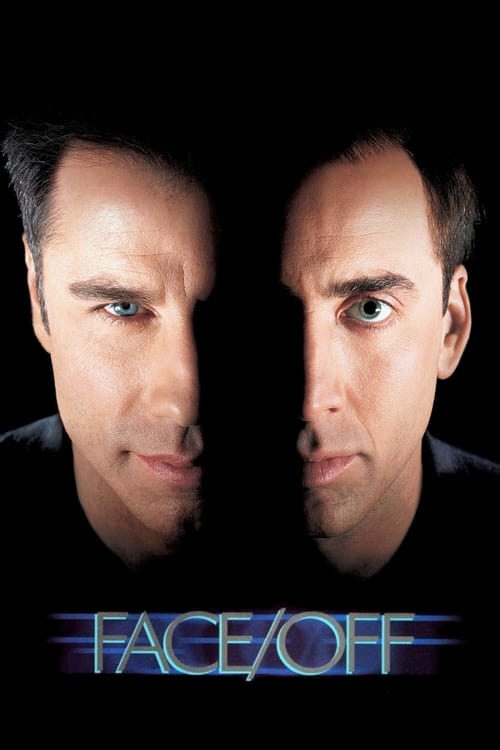
Face/Off
In order to foil a terrorist plot, an FBI agent undergoes facial transplant surgery and assumes the identity of a criminal mastermind. The plan turns sour when the criminal wakes up prematurely and seeks revenge.
Despite a significant budget of $80.0M, Face/Off became a financial success, earning $245.7M worldwide—a 207% return.
Nominated for 1 Oscar. 11 wins & 23 nominations


Plot Structure
Story beats plotted across runtime


Narrative Arc
Emotional journey through the story's key moments
Story Circle
Blueprint 15-beat structure
Arcplot Score Breakdown
Weighted: Precision (70%) + Arc (15%) + Theme (15%)
Face/Off (1997) showcases precise plot construction, characteristic of John Woo's storytelling approach. This structural analysis examines how the film's 15-point plot structure maps to proven narrative frameworks across 2 hours and 19 minutes. With an Arcplot score of 7.5, the film showcases strong structural fundamentals.
Characters
Cast & narrative archetypes

Sean Archer
Castor Troy
Eve Archer
Pollux Troy
Sasha Hassler
Jamie Archer
Dr. Malcolm Walsh
Main Cast & Characters
Sean Archer
Played by John Travolta
FBI Special Agent obsessed with capturing terrorist Castor Troy after Troy killed Archer's son. Undergoes face transplant to assume Troy's identity.
Castor Troy
Played by Nicolas Cage
Sadistic terrorist and criminal mastermind. His face is transplanted onto Archer, while he awakens and takes Archer's face to infiltrate the FBI.
Eve Archer
Played by Joan Allen
Sean Archer's wife who struggles with her husband's obsession with revenge. Unknowingly lives with Castor (in Sean's body) during the switch.
Pollux Troy
Played by Alessandro Nivola
Castor Troy's younger brother and loyal accomplice. More nervous and less confident than his brother, provides key information under duress.
Sasha Hassler
Played by Gina Gershon
Drug dealer and single mother who had a relationship with Castor Troy. Develops genuine connection with Sean (in Castor's body) at Erehwon Prison.
Jamie Archer
Played by Dominique Swain
Teenage daughter of Sean and Eve Archer. Rebellious and distant from her father due to his obsession with work and revenge.
Dr. Malcolm Walsh
Played by Colm Feore
Surgeon who performs the experimental face transplant procedure. Later murdered by Castor (in Sean's body) to cover up the switch.
Structural Analysis
The Status Quo at 1 minutes (1% through the runtime) establishes FBI Agent Sean Archer plays with his young son on a carousel. Castor Troy takes a sniper shot at Archer, killing his son instead. Establishes Archer's world of grief and obsession with revenge six years later.. Of particular interest, this early placement immediately immerses viewers in the story world.
The inciting incident occurs at 16 minutes when Archer finally captures Castor Troy at the airport after a massive shootout. Troy falls into a coma. Archer appears to have achieved his six-year mission, but this victory triggers the true disruption to come.. At 12% through the film, this Disruption aligns precisely with traditional story structure. This beat shifts the emotional landscape, launching the protagonist into the central conflict.
The First Threshold at 35 minutes marks the transition into Act II, occurring at 25% of the runtime. This shows the protagonist's commitment to Archer agrees to the experimental face-swap surgery, surrendering his identity to become Castor Troy. An irreversible choice to enter a mirror world where he must inhabit his enemy's life. Surgery sequence completes the transformation., moving from reaction to action.
At 70 minutes, the Midpoint arrives at 50% of the runtime—precisely centered, creating perfect narrative symmetry. Of particular interest, this crucial beat Troy-as-Archer confronts Archer-as-Troy in prison, revealing he has stolen Archer's life, family, and identity. False defeat: Archer is trapped in prison as Troy with no way to prove his real identity. The stakes raise catastrophically., fundamentally raising what's at risk. The emotional intensity shifts, dividing the narrative into clear before-and-after phases.
The Collapse moment at 103 minutes (74% through) represents the emotional nadir. Here, Archer's allies are killed trying to help him. Troy systematically destroys evidence of the face-swap. The doctor who performed the surgery is dead. Archer appears to have lost everything—his face, identity, family, and any proof of who he really is. Symbolic death of his former self., illustrates the protagonist at their lowest point. This beat's placement in the final quarter sets up the climactic reversal.
The Second Threshold at 111 minutes initiates the final act resolution at 80% of the runtime. Archer realizes he must use what he learned as Troy—ruthlessness, criminal connections, and understanding of Troy's psychology—combined with his own values. He synthesizes both identities to plan his counter-attack. Information from Troy's world enables the final confrontation., demonstrating the transformation achieved throughout the journey.
Emotional Journey
Face/Off's emotional architecture traces a deliberate progression across 15 carefully calibrated beats.
Narrative Framework
This structural analysis employs structural analysis methodology used to understand storytelling architecture. By mapping Face/Off against these established plot points, we can identify how John Woo utilizes or subverts traditional narrative conventions. The plot point approach reveals not only adherence to structural principles but also creative choices that distinguish Face/Off within the action genre.
John Woo's Structural Approach
Among the 9 John Woo films analyzed on Arcplot, the average structural score is 7.1, reflecting strong command of classical structure. Face/Off represents one of the director's most structurally precise works. For comparative analysis, explore the complete John Woo filmography.
Comparative Analysis
Additional action films include The Bad Guys, Puss in Boots and Venom: The Last Dance. For more John Woo analyses, see Red Cliff, Paycheck and Hard Target.
Plot Points by Act
Act I
SetupStatus Quo
FBI Agent Sean Archer plays with his young son on a carousel. Castor Troy takes a sniper shot at Archer, killing his son instead. Establishes Archer's world of grief and obsession with revenge six years later.
Theme
Archer's daughter or wife mentions "You're not the same man I married" or discusses identity and who people truly are beneath the surface, establishing the theme of identity versus appearance.
Worldbuilding
Introduction to Archer's fractured family life, his obsessive hunt for Castor Troy, the FBI operation tracking Troy, and Troy's relationship with his brother Pollux. Establishes the psychological toll of Archer's vendetta.
Disruption
Archer finally captures Castor Troy at the airport after a massive shootout. Troy falls into a coma. Archer appears to have achieved his six-year mission, but this victory triggers the true disruption to come.
Resistance
FBI learns Troy planted a biological bomb somewhere in LA. Only the comatose Troy knows its location. Archer debates the extreme solution: a face transplant surgery to impersonate Troy and extract information from Pollux in prison. Resistance and ethical debate.
Act II
ConfrontationFirst Threshold
Archer agrees to the experimental face-swap surgery, surrendering his identity to become Castor Troy. An irreversible choice to enter a mirror world where he must inhabit his enemy's life. Surgery sequence completes the transformation.
Mirror World
Archer-as-Troy enters the supermax prison and meets Pollux. Also encounters Troy's mistress and young son later, discovering his enemy's hidden humanity. The relationship with these "mirror" figures will teach Archer about identity beyond revenge.
Premise
Archer navigates prison as Troy, extracting bomb location from Pollux. Meanwhile, the real Castor Troy awakens from his coma, discovers what happened, forces the doctor to give him Archer's face, and kills all witnesses. The premise: two mortal enemies trapped in each other's lives.
Midpoint
Troy-as-Archer confronts Archer-as-Troy in prison, revealing he has stolen Archer's life, family, and identity. False defeat: Archer is trapped in prison as Troy with no way to prove his real identity. The stakes raise catastrophically.
Opposition
Troy enjoys Archer's life, seducing his wife and bonding with his daughter. Archer must escape prison and survive as Troy in the criminal underworld. Opposition intensifies as Troy gains power in the FBI while Archer loses allies and credibility.
Collapse
Archer's allies are killed trying to help him. Troy systematically destroys evidence of the face-swap. The doctor who performed the surgery is dead. Archer appears to have lost everything—his face, identity, family, and any proof of who he really is. Symbolic death of his former self.
Crisis
Archer's dark night of the soul. He must confront that he has become what he hunted—a man living Troy's life, with Troy's lover and son. He processes the loss and finds new resolve by embracing the humanity he discovered in his enemy's world.
Act III
ResolutionSecond Threshold
Archer realizes he must use what he learned as Troy—ruthlessness, criminal connections, and understanding of Troy's psychology—combined with his own values. He synthesizes both identities to plan his counter-attack. Information from Troy's world enables the final confrontation.
Synthesis
Finale: Archer-as-Troy rallies Troy's criminal gang, stages an assault on the FBI building/funeral, and confronts Troy-as-Archer. Massive boat chase and final showdown. Archer kills Troy, retrieves his face, and proves his identity to his family.
Transformation
Archer, restored to his own face, brings home Troy's young son to adopt—a mirror of the opening carousel scene but transformed. He has let go of revenge, embraced forgiveness, and gained a son to replace the one he lost. The family is whole but changed.